A security camera is cheap to buy and can be expensive to own. The recorded clips — the entire point of a camera — are often locked behind a monthly plan, so the sticker price is only the deposit. This page is the opposite of that: four cameras that write their footage to local storage, a microSD card or built-in memory, so the day you unbox it is the last time it costs you anything.
"No subscription" means something specific here. It means you can review a recorded event — not just a live view — without paying a cent. Ring and Blink will happily show you a live feed for free, but the moment you want to see what happened while you were out, you need a plan. Every camera below skips that step. The trade is that you manage the storage yourself: a card fills, and you either let it overwrite the oldest footage or you swap it. For most homes that is a fair deal, and over three years it is a large amount of money.
One honest caveat up front: we don't run a camera lab. We compiled published specs, confirmed each camera's local-storage and ecosystem support from the manufacturer's own Amazon listing and support docs, and computed the multi-year cost. Where a measured figure came from someone else's testing, we say so. That is the honest version of "how we chose," and it is the same method on every page here. For the wider field including the subscription cameras, see the main camera roundup.
Why local storage wins the long game
The math is not subtle. A subscription-free camera costs you its hardware price and nothing else. A subscription camera costs you its hardware price plus a fee every month for as long as you own it. At even $4.99 a month — the current Ring Home Basic rate for a single device — that is roughly $180 over three years, on top of the camera. Add a second and third camera and the gap widens fast, because most plans charge per device until you buy the whole-home tier. The table below runs the arithmetic so you can see where the lines cross.
Local storage also means your footage lives in your house. If the internet drops, a locally-recording camera keeps writing to its card; a cloud-only camera goes blind. That is the core of the local vs cloud storage argument, and it is why we lead with local cameras wherever they do the job as well as a subscription one — even though the subscription products tend to pay us more.
What you give up without a plan
Being fair to the other side: subscriptions buy real things. Off-site cloud backup survives a thief who walks off with the camera or its card. Longer event history — 30, 60, 180 days — lets you scroll back further than a small card allows. And the smartest AI (rich package, person and facial alerts) is often gated behind the paid tier. If those matter more to you than the fee, a plan is a legitimate choice; the subscription-cost breakdown lays out exactly what each brand charges. But none of that is required to have a working, recording camera, and this page is for the buyer who wants the recording without the bill.
How the four line up
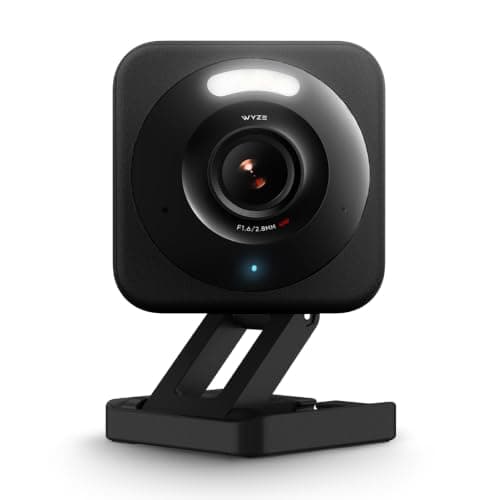
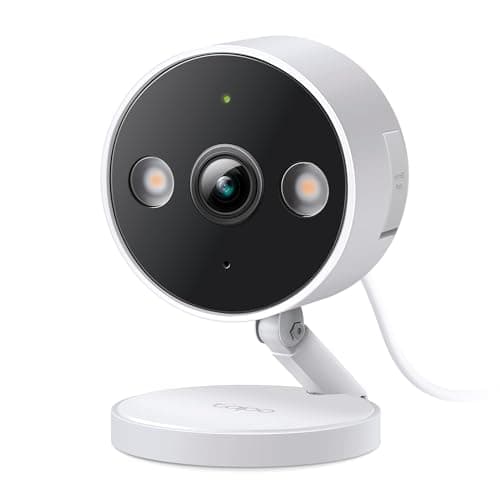
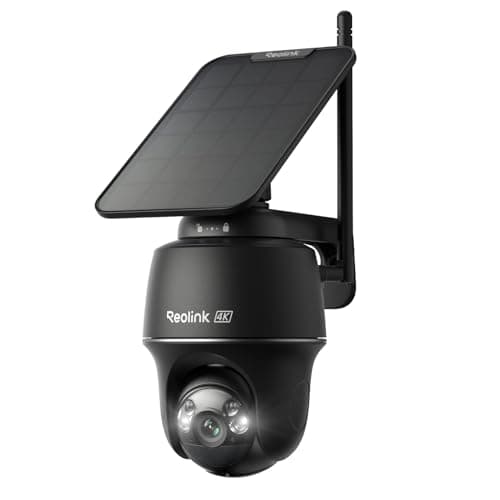
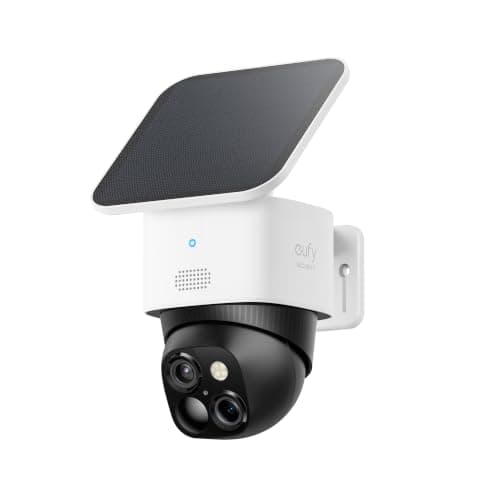
The eufy SoloCam S340 is the pick for most people because it removes the one chore the others keep: it charges itself from the sun and stores footage in 8GB of built-in memory, so there is no card to buy and, in a sunny spot, nothing to recharge. The Wyze Cam v4 is the budget answer — 2.5K and color night vision for the price of a takeaway, recording free to a microSD card. The Tapo C120 is the wired pick for a doorway or driveway where you want true continuous recording rather than motion clips, and where a power outlet is nearby — the two budget cameras are close enough that we put them head to head in Wyze Cam v4 vs Tapo C120, where the free-smart-alerts question settles it. The Reolink Argus PT Ultra is the splurge: 4K on a head that pans and tilts, solar-charged, still with no plan, for the buyer who wants the sharpest wire-free picture on the list and the most room to keep it.
None of the four support Matter or Apple HomeKit Secure Video today, so you will live in the brand's own app plus Alexa or Google. That is worth knowing before you buy — Matter camera support has barely started, as the Matter guide explains — but it changes nothing about the no-fee promise.
How to actually choose among the four
Start with power, because it decides the shortlist. If there is an outlet near the mount and you want genuine 24/7 recording, the wired Tapo C120 is the cheapest way there. If the spot has no power, you want battery or solar: the eufy S340 and Reolink Argus PT Ultra both charge from the sun, and the Wyze v4 can run wired or on a spot with easy access to recharge.
Then match storage to how much you review
The eufy's 8GB built-in memory is the least hands-on option — nothing to buy — but it is also the smallest, so a busy camera overwrites older clips sooner. A microSD camera (Wyze, Tapo, Reolink) lets you size the card to your habits: a 256GB card holds far more history than the eufy's 8GB, at the cost of buying and inserting it. If you rarely scroll back more than a day or two, the built-in memory is fine; if you want weeks of history, buy a big card.
Finally, size the image to the job
Resolution matters most where you need to read detail — a face at the door, a plate on the drive. There the 4K Reolink and 3K eufy pull ahead. For a general "is something moving in the yard" camera, the 2.5K Wyze and 2K+ Tapo are more than enough and save you money that buys a second camera. Coverage is the other half, and both of the solar cameras get it the same way — by physically turning rather than by using a wider lens. The eufy pans a full 360 degrees and tilts 70 to follow motion; the Reolink pans 355 degrees and tilts 140 behind a 110-degree-diagonal lens, with auto-tracking. Either can replace two fixed cameras, with the caveat that a head which has to turn can catch something mid-event if it starts off to one side.
Where the no-fee question gets decided elsewhere
Two adjacent cases are worth knowing about. On floodlight cameras the fee gap is unusually stark — two otherwise comparable units at the same 2,000 lumens, one recording to a card for nothing and one requiring a plan to save a single clip, compared in eufy Floodlight E340 vs Ring Floodlight Cam Wired Plus. And if you want continuous recording rather than event clips with no fee at all, the wired route is the answer — what is a PoE security camera explains how it works.
The no-fee option for a lit wall
One gap worth filling on this page: if the spot you need covered is an exterior corner that should also be lit, a floodlight camera does both jobs, and the no-subscription version of that exists. The eufy E340 records to a microSD card or a HomeBase with no plan at all, on a head that turns a full 360 degrees. The install is harder than anything else here, which is why we wrote it up separately in our eufy Floodlight Cam E340 review.