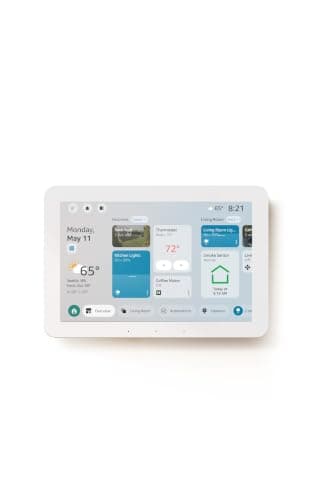
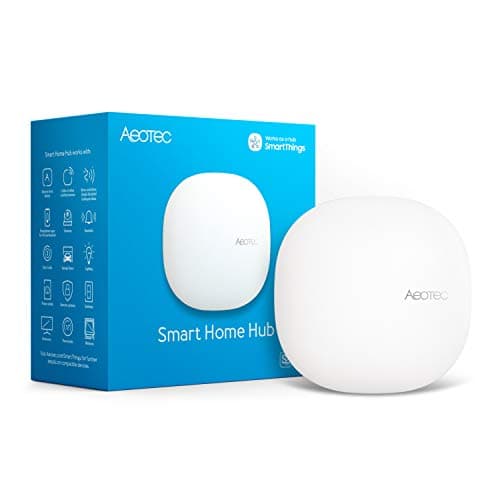
These are both real smart home hubs, neither charges a subscription for local control, and yet they could hardly feel more different in the hand. The Aeotec Smart Home Hub is a headless box that runs the full SmartThings platform and is one of the rare hubs carrying both Zigbee and Z-Wave radios - a power-user's brain that hides in a closet. The Amazon Echo Hub is an 8-inch touchscreen you mount on the wall, an Alexa control panel with a built-in Zigbee hub plus Thread and Matter. One is about maximum protocol reach; the other is about a friendly, visible home on the wall. The right choice is entirely about which of those you actually want - and which missing feature you can live without.
As with every page here, the specs and the matrix come from each maker's own listing and documentation, read on the date in our methodology. We researched these units rather than bench-testing them, we do not assign numeric scores, and where a maker does not claim a protocol we mark it "No" or "Not listed" instead of guessing.
The two forks that decide it
Almost everyone lands cleanly on one side before any other spec matters, and it comes down to two questions. First: do you own Z-Wave gear, or want the depth of SmartThings? If yes, only the Aeotec can help - it carries a Z-Wave radio and runs the SmartThings platform, and the Echo Hub does neither. Second: do you want a touchscreen on the wall and do you live in Alexa? If yes, the Echo Hub is built exactly for that, and the headless Aeotec is not. It is unusual for a comparison to be this tidy, but these two really do split along those lines. If the radio names still read as alphabet soup, our Zigbee vs Z-Wave explainer is five minutes well spent first.
Aeotec Smart Home Hub: the multi-protocol power tool
The Aeotec's pitch is depth of support and a mature platform. It runs the full SmartThings software - one of the largest automation catalogs in the space - and it is one of the very few current hubs to carry both a Zigbee and a Z-Wave radio in the same box. That dual-radio hardware is the reason to buy it: if you have accumulated Z-Wave sensors, locks or switches over the years, this is the hub that keeps all of it alive under one modern roof, and it acts as a Matter gateway so newer Matter devices come along too. Alexa and Google Assistant both provide voice control, so it is not locked to a single assistant. The full picture is in our Aeotec Smart Home Hub review.
Its gaps are just as clear. There is no Apple HomeKit support, so an Apple Home devotee is out of luck. And it is headless - there is no screen at all, which means every interaction happens through the SmartThings app or a voice assistant, never a panel on the wall. For a tinkerer with a pile of Z-Wave gear and a SmartThings account, none of that is a dealbreaker; for someone who wanted a glanceable dashboard by the front door, it is the wrong shape entirely.
Amazon Echo Hub: the Alexa home on the wall
The Echo Hub's pitch is a visible, approachable home. It is an 8-inch smart-home control panel designed for Alexa and Alexa+, and behind the touchscreen sits a genuine hub: a built-in Zigbee hub plus Thread and Matter support, capable of driving thousands of compatible devices. Mount it by the door and it becomes both the dashboard you tap - to arm, dim, check a camera - and the brain that hosts your mesh devices. Notably, it lists Thread, which the Aeotec does not, so the newest Thread-based accessories have a home here. The deeper look is in our Amazon Echo Hub review.
Its gaps mirror the Aeotec's. There is no Z-Wave radio, so a house built on Z-Wave sensors cannot move onto it. And it is an Alexa device through and through - the listing does not name Google Home or Apple Home, so it is a hard ecosystem lock to Alexa. If Alexa is already your world, that is exactly what you want; if it is not, the Echo Hub asks you to switch, where the Aeotec at least speaks both Alexa and Google.
Reading the matrix
Put the two side by side and the split is unmistakable. The Aeotec wins the Z-Wave and Google columns and offers the SmartThings depth; the Echo Hub wins the Thread and screen columns and the Alexa-native experience. They tie on Matter (a gateway versus built-in support) and on Zigbee, and neither one does Apple HomeKit - the Aeotec explicitly, the Echo Hub simply not listed. There is no overall "better" here; there is only which column describes the gear and the ecosystem already in your house. If Apple Home is your world, by the way, neither of these is your hub - our Matter vs Thread vs Zigbee guide and the best smart home hubs roundup point to the HomeKit-friendly options instead.
Who should buy which
Buy the Aeotec Smart Home Hub if you already own Z-Wave devices, or you want the broadest protocol reach and the mature SmartThings platform, and you do not need a screen. The dual Zigbee and Z-Wave radios are its whole reason to exist, and no other box in this comparison keeps older Z-Wave gear alive. It is our pick here for the power user precisely because it does the most - it is the serious multi-protocol brain of the two. Skip it only if you specifically want a wall dashboard, or you live in Apple Home, both of which it cannot do.
Buy the Amazon Echo Hub if you live in Alexa and want the home on the wall: a mounted 8-inch panel with Thread and Matter built in, hosting your mesh devices and giving you a single glanceable dashboard. The only reasons to walk away are Z-Wave, which it cannot do, and ecosystem lock, because it commits you to Alexa. For the huge number of Alexa households that just want a friendly, visible hub, it is the more approachable buy. If you are weighing the Echo Hub against a HomeKit-friendly controller instead, our Echo Hub vs Aqara M3 matchup covers that fork, and the Aqara M3 vs Aeotec comparison pits the Aeotec against a Thread-and-HomeKit box.
The verdict
Both hubs are capable and subscription-free, so nobody buying either is making a mistake - they are built for different people. The Aeotec earns the edge as our pick because its combination of Zigbee, Z-Wave, SmartThings and a Matter gateway is the most protocol-complete foundation on this page, and it is the only one that keeps legacy Z-Wave gear alive. The Echo Hub is the better buy for a specific, very common reader: the Alexa household that wants a touchscreen on the wall and modern Zigbee, Thread and Matter support behind it. Decide whether you value maximum protocol reach or a visible Alexa dashboard, and the choice makes itself. The full method behind these calls is on the methodology page.