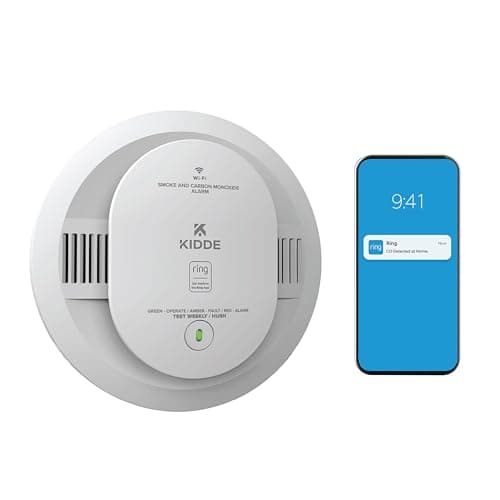
This is the strangest category on this site, and it is worth saying why before recommending anything in it. A smart smoke alarm is two products welded together. One of them is a life-safety device with a certification, a sensor chemistry and an expiry date. The other is a radio that sends a push notification. Only one of those two halves will ever save anyone, and it is not the half the marketing is about.
So the ranking below starts from a question most roundups skip entirely: is this thing an alarm, or is it a microphone? Two of the five picks here detect nothing whatsoever. That is not a criticism - they are honest about it, they are cheap, and for a house full of alarms that are only three years old they are the correct purchase. But a buyer who does not know the difference can spend the price of a takeout dinner and believe they have bought fire detection, and that is the kind of misunderstanding this page exists to prevent.
The usual caveat applies and applies harder here: we do not run a test lab, and we did not set anything on fire. Every specification below was read off the manufacturer's own published documentation on the date in the sources, and where a maker does not publish a figure we say so instead of filling the gap. There are five such gaps on this page. Our methodology explains the whole process.
Five questions decide this purchase
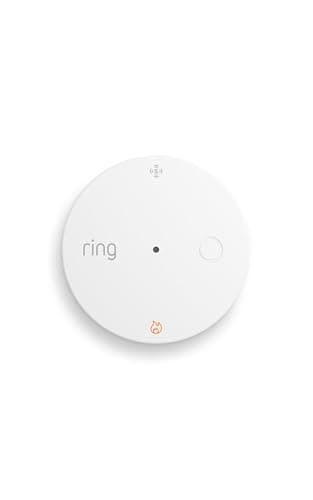
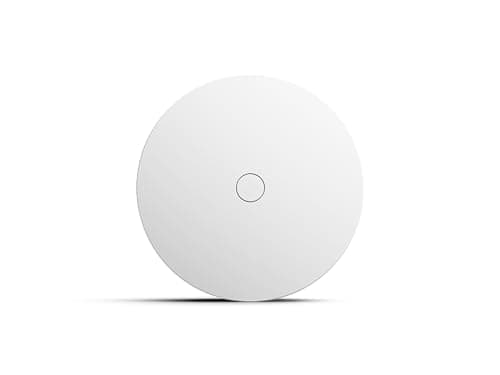
1. Is it an alarm or a listener? This is the fork everything else hangs off. A smart alarm replaces the disc on your ceiling: it has a photoelectric smoke chamber, an electrochemical CO cell, a horn and a certification. A listenersits beside the alarm you already own and recognizes the sound it makes. Ring says its listener "does not detect fire, smoke or carbon monoxide"; SimpliSafe says its listener "will not detect smoke or carbon monoxide in your home". Both statements are on the makers' own pages, and both companies deserve credit for the clarity. If your alarms are recent and working, a listener is the smart buy. If they are old, no notification fixes that.
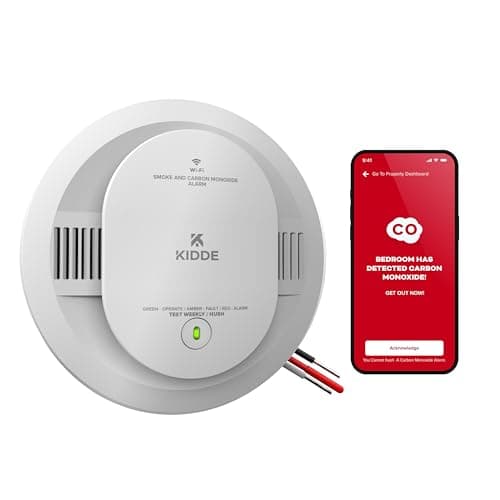
2. What does the smart half actually run on? Three different answers on this page, with three different failure modes. The two Kidde alarms and the First Alert use your Wi-Fi- 2.4 GHz only, per Kidde and Ring - so a dead router means a loud alarm and a silent phone. The hardwired Kidde needs mains power for the Wi-Fi at all, which Kidde states plainly, so a power cut takes the smart half with it. Ring's listener uses Amazon Sidewalk and needs neither, which is genuinely useful and depends entirely on a network you do not control. And the SimpliSafe listener talks to your alarm panel, which is the only route on this page that ends with someone else being told.
3. Which app owns your fire alarm?This is the ecosystem question, and the honest answer for this category is bleak: there is no universal route. The Kidde alarms split into a Ring-app line and a Kidde-app line - the same hardware platform, two different accounts. First Alert's SC5 is the Google Home answer and only the Google Home answer. SimpliSafe's listener works with SimpliSafe. Nobody here publishes Apple Home support, and nobody here is a Matter device. Our smart home ecosystem guide is the page to read if you are choosing a side before you buy hardware.
4. What do the batteries cost you, in effort?Three answers again. Kidde's battery alarm takes two AA cells changed once a year, and Kidde names the only three part numbers it accepts while telling you not to use lithium. First Alert's SC5 takes six CR123A lithium cells, which is a battery you buy on purpose. Ring's listener claims up to ten years on two AAs. The hardwired Kidde runs on mains with AA backup. Across eight alarm locations that difference is the difference between a chore you do every spring and one you do twice a decade. There is more on this trade in battery vs wired devices.
5. Does anyone other than you get told?A push notification is only as useful as your attention. Two picks here can escalate: Ring's smoke and CO monitoring is published at $5 a month or $50 a year with trained agents who confirm and can request dispatch, and SimpliSafe's listener routes into a monitoring plan you may already pay for. Everything else on this page stops at your phone. Whether that matters is the same question we work through in do you need a monitoring plan.
Certification first, connectivity second
The specification that matters most on a smoke alarm is the least exciting one. Smoke alarms are certified to UL 217 and CO alarms to UL 2034, and the recent editions of UL 217 are the reason modern alarms are better at telling a smoldering sofa apart from a browning steak. First Alert publishes UL conformance on the SC5 - though, awkwardly, its own two websites name different editions, which we quote in that pick rather than smoothing over. SimpliSafe requires the alarms its listener monitors to be UL 217 and UL 2034 certified. Kidde does not print a UL listing on the individual product pages for either alarm we picked, which is a real gap on a life-safety product and we are not going to pretend otherwise.
The corollary is the rule that decides more of this purchase than any feature: the U.S. Fire Administration says to "replace the entire smoke alarm every 10 years". Ring builds that into its listener's requirements - it expects the alarm it listens to to be ten years old or less. If your alarms are approaching a decade, you are not shopping for a notification. You are shopping for alarms, and the smart part is a bonus you get on the way.
Matter has barely arrived here, and the reason is honorable
This site exists to answer compatibility questions, so here is the uncomfortable finding for 2026: not one of the five picks on this page is a Matter device, and unlike leak sensors, where the industry simply has not bothered, there is a defensible reason. A Matter contact sensor that drops a message is an annoyance. A smoke alarm that does it is a different kind of failure, and the certification bar for life-safety hardware is high enough that very few companies have cleared it.
Matter-certified smoke and CO alarms do exist - Sensereo's MSC-1 runs Matter over Thread, and Heiman has certified Matter CO alarms - but the coverage we could verify puts Sensereo's alarms outside the US market and not UL-listed, and identifies Heiman's S1-M as the only Matter smoke detector meeting UL 217's 10th edition. We searched Amazon for it on the date in our sources and could not find it listed, so it is not a pick here; a buy button pointing at a product you cannot buy is worse than no recommendation.
The practical consequence: buy the alarm that fits the ecosystem you are actually in today, and accept that in this one category the app is proprietary. Our what works with Matter guide tracks where support genuinely exists, and is Matter worth it is the honest answer on whether to wait. Here, do not wait - a ten-year-old alarm is a worse problem than a proprietary app.
Nest Protect is gone, and that changed the whole category
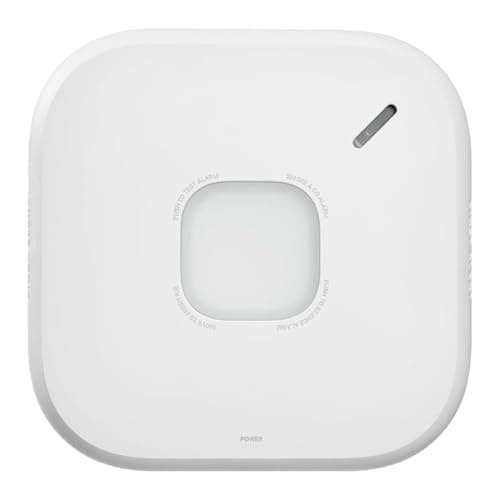
For a decade the default answer to "which smart smoke alarm?" was Nest Protect. Google discontinued it, and in March 2025 First Alert and Google Nest announced a life-safety partnership whose product is the First Alert SC5 - announced at an estimated US price around $129.99, listed on the Google Store, using the Nest Protect mounting bracket and able to interconnect with the Nest Protects already on your ceiling.
That single decision is why this page looks the way it does. Google left the category and licensed its way back in; Amazon went the other direction and put Ring's name on Kidde hardware. If you are replacing a Nest Protect, the SC5 is the path of least resistance and the only one that keeps your remaining Protects in the same interconnect group. If you are starting fresh and you are not a Google household, you are choosing between Ring's ecosystem and Kidde's own app - which is exactly the choice the top pick and the hardwired pick on this page represent.
What happens when the power or the internet goes out
House fires and power cuts are not unrelated events, so this is not hypothetical. Every alarm here keeps sounding: the sensing and the horn run off batteries or off the AA backup in the hardwired unit, and that behavior is not optional in a certified alarm. What varies is whether anyone gets told. The Wi-Fi picks go quiet on the network side the moment the router does. The hardwired Kidde loses Wi-Fi with the mains, by Kidde's own statement. Ring's Sidewalk listener depends on neighborhood bridges that a wide outage also takes down. Only the SimpliSafe route, sitting behind a base station with its own backup and cellular path, is designed for the case where your house has no power at all.
We work through the same failure modes across the rest of a system in do home security systems work without Wi-Fi and smart home during a power outage.
Count the alarms and their ages before you count features
Walk the house with a step stool and read the date printed on the back of every alarm. That single number decides your purchase more than anything on this page. Alarms under about seven years old are worth keeping, and a listener beside each one is the cheap, honest upgrade. Alarms near or past ten years are due for replacement whatever you decide about apps, because the U.S. Fire Administration's guidance is to replace the entire alarm every ten years - and you may as well buy the smart one while you are up the ladder.
Cover the right rooms, not the most rooms
The official placement guidance is short and most homes fail it: put smoke alarms "inside and outside each bedroom and sleeping area" and "on every level of the home", choose interconnected alarms "so that when one sounds, they all sound", and test them monthly. Interconnection is the part people skip and the part that matters at 3am, because a basement fire that only rings in the basement wakes nobody. It is also the reason two of our picks are worth their price: Kidde's wire-free interconnect links up to 24 devices with no wire at all, and the hardwired Kidde puts alerts on an interconnect loop that already exists.
Do not replace seven alarms to get one notification
The most expensive mistake in this category is buying five or six smart alarms. You almost never need to. If your house is hardwired and interconnected, Kidde says a single smart alarm on the loop puts mobile alerts on every alarm in the house. If your alarms are battery units in date, a listener beside the two that matter most - the hallway outside the bedrooms and the level with the furnace - covers the realistic case for a fraction of a full replacement. Spend the difference on water leak detectors, which cover a failure that is far more likely and completely uncovered in most homes.
Buy CO detection where CO actually comes from
Every alarm pick here is a combination smoke and CO unit, which is the right default in a house with any gas appliance, an attached garage, a fireplace or a fuel-burning furnace. In an all-electric apartment with no attached garage the CO half is close to redundant, and a smoke-only smart alarm - Kidde sells the same platform in a smoke-only trim in both the Ring-app and Kidde-app lines - costs meaningfully less. Match the sensor to the hazard rather than buying the longest feature list.
Decide whether a phone alert is enough
This is the fork that justifies a subscription or rules one out. If someone is home most of the time and the house is small enough that an 85 dB horn reaches every bed, alarms alone genuinely cover you and you should not pay monthly for anything. The case for monitoring is the empty house: a fire that starts on the first morning of a two-week trip is bounded only by when a neighbor notices. Ring publishes smoke and CO monitoring at $5 a month or $50 a year, which is the cheapest professional fire response we found; SimpliSafe routes fire into a plan you may already be paying for. Our DIY home security systems roundup covers what else that subscription buys, and the vacation checklist is the page to read before you leave.
Where this fits alongside the rest of the sensor layer
Smoke and CO are the life-safety half of a sensor layer whose other half is intrusion and water. If you are building the whole thing, the sequence that gets the most protection per dollar is: alarms in date and interconnected first, then leak detectors under the washer and the water heater, then door and window sensors on the openings a burglar would actually use. Our guide to how security sensors work explains the mechanisms, and how to choose a home security system covers where all of it sits relative to a panel and a plan.