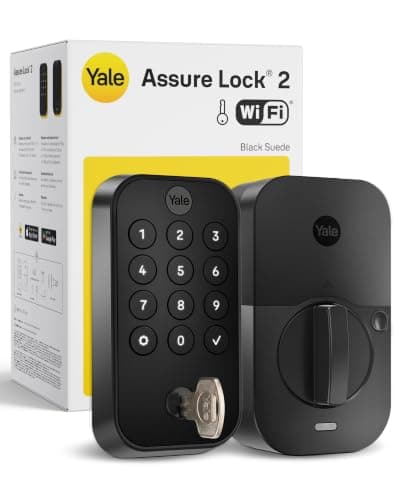
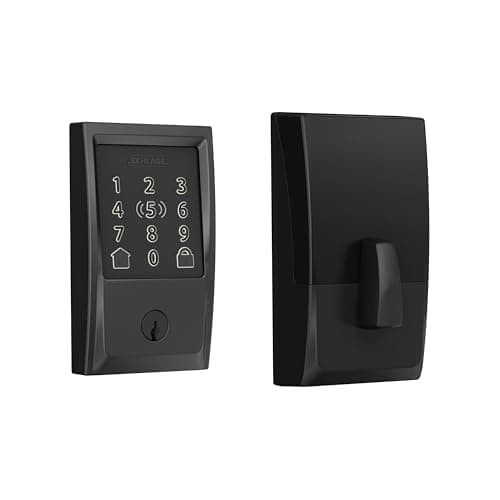
On the door, the Schlage Encode Plus and the Yale Assure Lock 2 look like the same product: both are full-replacement deadbolts with a flat touchscreen keypad, both drop into a standard bored door, and both cost you nothing per month to run. If you were choosing on hardware alone you could flip a coin. But you should not choose on hardware alone, because these two locks are pointed at different homes. The Schlage is built for an Apple household. The Yale is built for an Alexa or Google one. Get that match right and either lock is excellent; get it wrong and you will spend the next few years in the wrong app.
The one thing that decides it: which ecosystem you live in
The Schlage Encode Plus is the Apple pick, and it is not close. Its listing names Apple HomeKit and, more importantly, Apple Home Key - the feature that lets you tap an iPhone or Apple Watch against the lock to open it, with no app to launch and no code to punch. It also works with Alexa. What its listing does not name is Google Home. So the Schlage is the lock for a household on Apple, or on Apple plus Alexa, and the wrong lock for a Google-first home.
The Yale Assure Lock 2, in the Wi-Fi configuration we are comparing here, is the mirror image. Its listing names Alexa and Google - the pairing the Schlage cannot match - so a Google household is covered where the Schlage leaves them out. What the Yale's Wi-Fi configuration does not name is Apple HomeKit or Apple Home Key. We report only the platforms a listing actually claims and mark the rest "Not listed" rather than assume them, so on that standard the Yale is an Alexa-and-Google lock and the Schlage is the Apple one. That is the entire decision in a sentence. For the wider view of what each platform does for a lock, our smart lock ecosystem compatibility guide is the explainer behind this comparison.
Apple Home Key vs the swappable module
Each lock has a signature feature, and they are not the same kind of thing. The Schlage's is Apple Home Key - a convenience feature you feel every single day. Walk up with your phone in your pocket, tap, and you are in. There is no faster or more Apple-native way to open a door, and for an iPhone household it is the reason to buy this lock over any other. The trade is that it is a full-size deadbolt body, physically chunkier than the sleekest designs, and its Google absence is a hard line for a Google home.
The Yale's signature is structural rather than day-to-day: the connectivity lives in a module you can swap, so the way the lock connects is not fixed at purchase the way the Schlage's built-in Wi-Fi is. The intent of the design is that you can change the module later instead of replacing the whole lock. That flexibility is genuinely rare and it is the Yale's best argument - but it comes with a catch that is the exact reason we keep repeating "read the exact configuration." Because the lock's smarts depend on the module fitted, the capabilities of "the Assure Lock 2" are whatever that specific variant ships with, and it is easy to read about one and buy another. We pull the Yale apart on this point in our full Yale Assure Lock 2 review, and give the Schlage the same treatment in the Schlage Encode Plus review.
Where they agree
Plenty, actually, which is why the ecosystem question carries so much weight - it is one of the few real differences. Both are full-replacement deadbolts, so you remove your existing deadbolt entirely and fit the new lock in its place, giving you fresh hardware on both sides of the door rather than a retrofit over old parts. Both put a flat touchscreen keypad on the exterior, so you can hand out entry codes to family and guests without cutting a key. Both give you remote lock and unlock and door-status checks from your phone - the Schlage through built-in Wi-Fi, the Yale through its Wi-Fi module. And, critically, neither charges a subscription for any of it: the connected features are part of the lock, not a plan you renew.
Both also read "No Matter" in our matrix. Matter for locks is real and growing, but neither of these specific listings claims it as of our review date, so we do not claim it for them. If future-proofing around Matter is a priority for you, confirm the exact model and firmware before buying rather than trusting the brand name, because Matter support on locks often rides on a particular module or update.
Who should buy which
Buy the Schlage Encode Plus if you live in Apple Home.If your phones are iPhones and you want to tap-to-unlock with Apple Home Key, or you simply want the lock to appear in Apple Home alongside the rest of your gear, the Schlage is the answer and the Yale is not - the Yale's Wi-Fi configuration does not name either Apple platform. The Schlage also suits an Apple-plus-Alexa home, since it names both. The only Apple household that should hesitate is one that also leans hard on Google, because the Schlage listing does not name Google.
Buy the Yale Assure Lock 2 if you live on Alexa or Google - especially Google, which the Schlage leaves out entirely. You also buy the Yale if the swappable-module idea appeals: if you like the thought that the lock you fit today can be rewired to a different connection later, that is a Yale-only trait here. Just go in having read the exact configuration on the listing, because the module is what determines what the lock can do. Both of these are full-replacement deadbolts; if you want to see them ranked against the retrofit and low-profile alternatives too, our best smart locks roundup has the whole field. And if your real question is retrofit versus full deadbolt rather than Apple versus Google, our August vs Schlage comparison is the other lock decision worth reading.
One honest caveat, the same one on every page here: we do not run a lock lab. We compared these two from each lock's own Amazon listing and manufacturer documentation, wrote down only the platforms each one actually names, and flagged the exact places a listing goes quiet rather than filling the gap with a guess. This is a researched comparison, not a hands-on test.
Start with your phone and your speaker
The fastest way to choose is to look at what is already in your house. If your phones are iPhones and your smart-home app is Apple Home, buy the Schlage Encode Plus - HomeKit and Apple Home Key are exactly what you are set up to use, and tap-to-unlock is the feature you will notice every day. If your speakers are Echos or Google Nest and your home runs on Alexa or Google, buy the Yale Assure Lock 2, which names both and, unlike the Schlage, covers Google.
Then weigh flexibility against tap-to-unlock
If neither ecosystem is settled and you want to hedge, the Yale's swappable-module design is the more future-flexible chassis - the connection is not welded in. If, instead, you already know you are an Apple home and you just want the single best door experience for it, the Schlage's Apple Home Key is the payoff and flexibility is beside the point. There is no wrong answer here, only a wrong match: both are subscription-free full-replacement deadbolts with a keypad, so the ecosystem fit is what you are really buying.