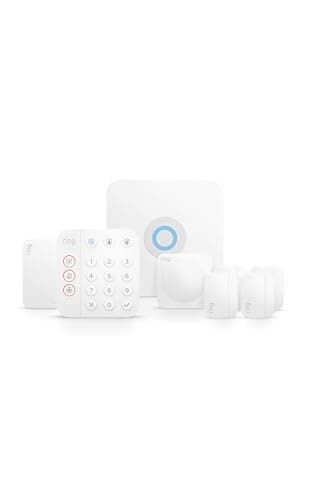
Update, 2 October 2026 — the abode iota is no longer stocked on Amazon. Its listing now reads "Currently unavailable", and Amazon carries abode accessories only — sensors, sirens, a keypad, a key fob, all of which require an abode hub it no longer sells there. abode still sells the iota direct, so this is a stocking change rather than a discontinued product, but we have removed its buy link from this page rather than send you to a dead listing. The Ring Alarm is the only system here you can buy through us today.
The comparison below is left intact, because the trade it explains is still the real one if you are choosing between these two systems. Two things to know before you read it: abode is now a direct purchase, and no kit we can currently link to supports Apple Home — so if HomeKit is the reason you are here, abode direct is still the answer and we simply cannot sell it to you. If what you actually wanted was an alarm with no monthly fee and footage that stays in the house, our eufy Alarm 5-Piece kit with HomeBase 3 now holds that slot in our roundups.
The Ring Alarm and the abode iota are the two DIY alarm kits we recommend most, and on paper they look almost interchangeable: both are contract-free, both install in an afternoon with no tools, and — the part that surprises people — both self-monitor for free. Arm either one, trip a sensor, and it sirens and pings your phone with no plan on file. So the decision is not really "which is safer" or "which is cheaper to buy." It comes down to the ecosystem your home runs on, and what you'd pay if you ever decided you want a monitoring center. One practical caveat, added in October 2026: only the Ring Alarm is still stocked on Amazon, so the abode is a direct purchase from abode rather than a one-click add to cart.
Here is the short version. The Ring Alarmis the Alexa pick. It has the widest accessory range of any DIY system, it arms and disarms by voice on an Echo, and if you ever add professional monitoring, Ring's plan is the cheapest of the two. The abode iotais the Apple pick. It is the only one here that works with Apple HomeKit, and its hub has a camera built into it, so the brain of the system also watches the room. The trade is monitoring cost: abode Pro costs meaningfully more per month than Ring's plan, so a buyer who knows they want 24/7 dispatch pays less with Ring over time.
We researched both systems' hardware contents and monitoring plans off the manufacturers' own listings and plan pages and computed the multi-year cost — these are researched, not hands-on tested. If you want the full write-ups, the Ring Alarm review and the abode iota review each go deeper than we can here. And because both self-monitor free, they anchor our best no-subscription systems roundup — the money page if avoiding a monthly fee is your whole goal.
Ecosystem: the decision that actually matters
Everything else about these kits is close enough that the ecosystem breaks the tie. If your home already runs on Alexa, or you simply want the biggest catalog of add-on sensors and cameras to grow into, Ring is the natural home. Arming by voice, pulling a Ring camera onto an Echo Show, adding a fourth or fifth door sensor years later — that is where Ring is strongest, and none of it requires a plan. Neither system supports Matter for the alarm itself, so don't buy either expecting cross-brand magic there.
If you're an iPhone household that wants the alarm to live in Apple Home, abode is the only choice of the two — Ring simply doesn't do HomeKit. abode also speaks Alexa and Google, so it isn't Apple-exclusive; it's just the one that adds Apple to the list. The built-in hub camera is the other abode-only draw: the same box that runs the alarm also records the room, which is tidy in a small apartment or a single main entry where you don't want a separate camera on the shelf.
Monitoring cost: where Ring pulls ahead
Both are free to self-monitor, so this only matters if you think you'll eventually want a professional monitoring center. When you do, the gap is real: Ring's plan is the least expensive of the two, while abode Pro sits at the top end. Over a few years of paying monthly, that difference compounds into real money — the table below lays it out. If you're still deciding whether to pay for monitoring at all, that's its own question, and our best home security systems ranking sets both of these against the wider field on exactly that axis.
Who should buy which
Buy the Ring Alarm if your home runs on Alexa, you want the widest accessory range to grow into, or you think you might add professional monitoring later and want the cheapest plan to do it. It is the safer default for most households and our overall top pick of the two. It is also the better base if you plan to build out a larger system over time, since the sensor and camera catalog is so much deeper.
Buy the abode iota ifyou're an iPhone household that wants the alarm in Apple Home, or you like the idea of one hub that also serves as a camera. It self-monitors free just like Ring, so you only pay abode's higher monitoring rate if and when you choose to. For a small home or apartment where the all-in-one design removes a separate camera, it can be the tidier buy despite the pricier plan — you will just be ordering it from abode directly, since as of October 2026 Amazon no longer lists it.
What both share
Whichever you pick, you get a contract-free DIY kit you can run with no monthly fee indefinitely: adhesive sensors, a base station that plugs into an outlet, and app setup in an afternoon. The only thing a plan ever adds on either system is 24/7 professional dispatch and cellular backup — genuinely useful, entirely optional. If your household usually has a phone in reach, free self-monitoring covers a lot of homes on both systems; if you want a guaranteed response when you're unreachable, weigh the monitoring cost above, and read our no-subscription guide for the honest take on when free is enough.