Skip to content
Latch & Hub

Systems · Security Systems

The Best No-Subscription Home Security Systems for 2026

Three systems you can run with no monthly fee, forever. Each one sirens and alerts your phone with no plan and no contract — a monitoring fee only ever buys optional 24/7 dispatch and cellular backup. We show the true cost both ways.

By Stephen V.Updated How we choose
#ad

We earn a commission when you buy through our Amazon links, at no extra cost to you. It never changes our rankings — where the subscription-free or cheaper option is the better buy, we say so. How this works.

If your goal is a home security system with no monthly fee, the good news is simpler than the marketing makes it sound: every system on this page self-monitors for free, forever. Arm it, trip a sensor, and the base station sounds a loud siren while a push alert lands on your phone — no plan, no contract, no card on file. That is a genuinely different deal from a traditional ADT- or Vivint-style provider, where the equipment is bundled into a multi-year agreement and the monthly bill is mandatory. Here, the bill is optional, and this page is for the buyer who intends to never pay it.

We rank these on the one thing a no-fee buyer actually cares about: how well the system works with no monthly fee. The honest headline is that all three do the core job for free. Where they differ is the ecosystem they live in — Ring and Alexa versus Apple HomeKit — and what happens the day you decide you might want a monitoring center after all. Because these are DIY, contract-free kits, that decision stays yours the whole way through, which is the same argument we make in the broader best home security systems ranking.

A quick word on what "no subscription" is not. This is not the same page as our best DIY, no-contract systems roundup — that one is about installing the kit yourself without an electrician. Plenty of DIY systems still nudge you toward a plan. This page is strictly about the no-monthly-fee reality: the systems that are fully useful with nothing on the meter. The two overlap because the same three kits happen to be excellent at both, but the question each answers is different.

One caveat up front, the same one on every page here: we don't run a break-in lab. We researched each system's hardware contents and monitoring plans off the manufacturer's own listings and plan pages, computed the multi-year cost, and weighed aggregated owner sentiment — these picks are researched, not hands-on tested. Where a figure is the maker's published claim rather than something we measured, we say so. How we're paid is on the affiliate disclosure, and our full process is on the methodology page.

The short answer

Quick picks

Tap any row for the full write-up.

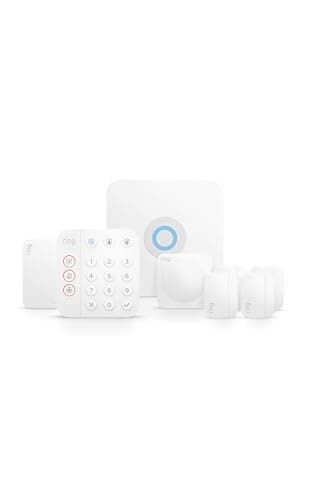
  • Ring Alarm 8-Piece Kit (2nd Gen)
    01 Ring Alarm 8-Piece Kit (2nd Gen)Top pick

    The no-fee system most people should start with: a complete DIY kit that sirens and alerts your phone for free, forever, with the cheapest optional 24/7 monitoring here if you ever change your mind.

    Best for: Most homes that never want a bill · No Matter — Ring/Alexa app

    $249.99View on Amazon

    #ad · we may earn a commission from this link to Ring Alarm 8-Piece Kit (2nd Gen)

  • abode iota All-In-One Kit
    02 abode iota All-In-One Kit

    The all-in-one no-fee pick for a HomeKit household: one hub with a camera built in that works with Apple Home, Alexa and Google, self-monitors free, and never signs you to a contract.

    Best for: Apple HomeKit homes avoiding fees · Works with HomeKit, Alexa & Google

    $249.99View on Amazon

    #ad · we may earn a commission from this link to abode iota All-In-One Kit

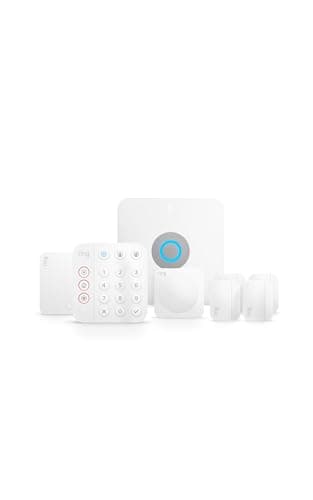
  • Ring Alarm Pro
    03 Ring Alarm Pro

    The no-fee kit for anyone also due a new router: a Ring Alarm base with a full eero Wi-Fi 6 mesh router inside. It self-monitors free like the standard kit, but the premium only pays off if you actually want the router.

    Best for: No-fee buyers replacing a router · No Matter — Ring/Alexa app

    $249.99View on Amazon

    #ad · we may earn a commission from this link to Ring Alarm Pro

#ad · Live prices from the Amazon Product API, as of Jul 26, 2026. Where we have no verified live price we show none — we would rather leave a gap than print a number that has rotted.

3-year cost: self-monitored (free) vs adding a monitoring plan (for contrast)
ProductHardwareMonthly3-yr fees3-yr total
Ring Alarm 8-Piece — self-monitoredFree self-monitoring: app alerts + siren, no professional dispatch. Contract-free.$250$0$0$250
abode iota — self-monitoredFree self-monitoring, contract-free. Works with HomeKit, Alexa & Google.$250$0$0$250
Ring Alarm Pro — self-monitoredFree self-monitoring; base has a built-in eero Wi-Fi 6 router.$250$0$0$250
Ring Alarm 8-Piece — Ring Home Standard (for contrast)Adds 24/7 pro monitoring + cellular backup. Confirm current pricing.$250$10/mo$360$610
abode iota — abode Pro (for contrast)Adds 24/7 pro monitoring + 4G cellular backup. Confirm current pricing.$250$27/mo$972$1,222

Hardware figures are approximate MSRP context for the comparison; the live, date-stamped price is on each product's buy button. Fees are the published plan rates at the time of writing — always confirm current pricing with the brand.

In detail

The picks, in full

01

Ring Alarm 8-Piece Kit (2nd Gen)

Top pick
Ring Alarm 8-Piece Kit (2nd Gen)
$249.99View on Amazon

Price as of Jul 26, 2026. Amazon's price at checkout is the one that counts.

#ad · we may earn a commission from this link to Ring Alarm 8-Piece Kit (2nd Gen)

The no-fee system most people should start with: a complete DIY kit that sirens and alerts your phone for free, forever, with the cheapest optional 24/7 monitoring here if you ever change your mind.

  • 8-piece DIY kit
  • Base station + keypad
  • Door/window + motion sensors
  • Range extender included
  • Optional 24/7 pro monitoring
  • Works with Alexa
Matter: No Matter — Ring/Alexa appFee: Free self-monitored; about $10/mo for 24/7 pro monitoringResearched, not hands-on tested

Good

  • Self-monitoring is genuinely free — a loud siren and a push alert to your phone with no plan at all, indefinitely
  • If you ever do want a monitoring center, Ring's optional plan is the least expensive here and still contract-free
  • Enormous accessory range, so growing the system later is a five-minute app job rather than a re-buy

Less good

  • Free self-monitoring means no monitoring center dispatch — if you miss the alert, no one calls the police for you
  • Cellular backup only switches on with the paid plan, so a cut phone line or dead internet leaves the free tier silent

Skip it if: you want your alarm in Apple Home — Ring doesn't support HomeKit, so an iPhone-first household that insists on Home app control should look at the abode iota below.

02

abode iota All-In-One Kit

abode iota All-In-One Kit
$249.99View on Amazon

Price as of Jul 26, 2026. Amazon's price at checkout is the one that counts.

#ad · we may earn a commission from this link to abode iota All-In-One Kit

The all-in-one no-fee pick for a HomeKit household: one hub with a camera built in that works with Apple Home, Alexa and Google, self-monitors free, and never signs you to a contract.

  • All-in-one hub with built-in camera
  • Motion + door/window sensors, key fob
  • Works with HomeKit, Alexa & Google
  • DIY installation
  • Optional 24/7 pro monitoring
  • Contract-free
Matter: Works with HomeKit, Alexa & GoogleFee: Free self-monitored; about $26.99/mo abode Pro for 24/7 monitoringResearched, not hands-on tested

Good

  • The only pick here that works with Apple HomeKit, alongside Alexa and Google — and it self-monitors free either way
  • The hub has a camera built in, so the brain of the system also watches the room without a second box on the shelf
  • Contract-free, with a free self-monitoring tier and no obligation to ever pay a plan

Less good

  • If you later decide you want 24/7 professional monitoring, abode's plan costs noticeably more per month than Ring's
  • Smarter extras like an extended event timeline and cellular backup sit behind that paid plan, not the free tier

Skip it if: you already know you'll want 24/7 professional monitoring and the lowest possible monthly bill — abode's monitored plan is the priciest of the three, so the Ring kit is the cheaper route to a plan.

03

Ring Alarm Pro

Ring Alarm Pro
$249.99View on Amazon

Price as of Jul 26, 2026. Amazon's price at checkout is the one that counts.

#ad · we may earn a commission from this link to Ring Alarm Pro

The no-fee kit for anyone also due a new router: a Ring Alarm base with a full eero Wi-Fi 6 mesh router inside. It self-monitors free like the standard kit, but the premium only pays off if you actually want the router.

  • Base station + built-in eero Wi-Fi 6 router
  • Local video storage via Ring Edge (with plan)
  • Internet + cellular backup (with plan)
  • Optional 24/7 pro monitoring
  • Works with Alexa
Matter: No Matter — Ring/Alexa appFee: Free self-monitored; about $10/mo for 24/7 pro monitoringResearched, not hands-on tested

Good

  • Replaces your router and your alarm brain in one box — the built-in eero is a genuine Wi-Fi 6 mesh unit
  • Self-monitors free exactly like the standard 8-piece kit: siren plus app alert, no plan required
  • If you ever add a plan, Ring's is the cheapest here and unlocks local video and backup internet

Less good

  • The two headline features — local video storage (Ring Edge) and backup internet — are gated behind a paid Ring plan, so the free tier doesn't use them
  • You're paying a premium over the standard kit for a router, which is wasted money if your current one is fine

Skip it if: your current router is fine — the Pro's whole reason to exist is the built-in eero, and without needing it you're paying more for the same free-monitoring experience the standard kit gives you.

What free self-monitoring actually gives you

Self-monitoring is the whole reason these systems can cost nothing per month. When a sensor trips, the base station sounds its siren and the app fires a notification to your phone. You see which door or window opened, you can view any built-in camera, and you decide what to do — dismiss it, sound the siren again, or call the police yourself. For a great many homes, especially ones where someone usually has a phone in reach, that loop is genuinely enough. The siren alone deters most opportunistic intruders, and the alert reaches you anywhere with a signal. None of that costs a cent on any of the three picks here.

What free self-monitoring gives up — the honest part

Two things, and it's worth being clear-eyed about both. First, there is no monitoring center. With free self-monitoring, no one is watching the alarm around the clock, so if you miss the alert — phone on silent, in a meeting, asleep, out of signal — nobody calls the fire department or dispatches police on your behalf. That is the single job a paid plan adds. Second, on the free tier there is no cellular backup. If an intruder cuts your internet, or the power and broadband simply drop, the system can lose its path to your phone until it comes back. Cellular backup rides along with the professional plan on all three systems, so the free tier leans on your home Wi-Fi. Neither gap makes these systems unsafe — a siren still sounds locally — but a no-fee buyer should know exactly what the fee would have bought. If you're weighing that trade seriously, our DIY vs monitored guide is the honest long version.

Match the free system to your phone

Since all three self-monitor free, the deciding factor is the ecosystem. If your home runs on Alexa, or you just want the widest and cheapest accessory range, the Ring Alarm is the natural fit — and if you ever do add a plan, Ring's is the least expensive here. If you're an iPhone household that wants the alarm to appear in Apple Home, the abode iota is the only pick that speaks HomeKit, and its hub has a camera built in. We put those two head to head in Ring Alarm vs abode iota, which is the fastest way to settle the choice between the two best no-fee systems.

Don't pay for a base station you don't need

The Ring Alarm Pro is a fine no-fee system — it self-monitors free just like the standard kit — but you're paying a premium for the eero Wi-Fi 6 router built into its base. If your current router is fine, that value evaporates and the standard 8-piece kit is the smarter, cheaper buy. Only reach for the Pro if you were about to spend on a new mesh router anyway. Our Ring Alarm review covers the standard kit — our top pick — in full depth if you want to see exactly what the cheaper brain includes before you decide.
How we chose

We don't run a test lab

We don't wire every one of these into a test rig, and we won't write "in our testing" as if we do. What we did instead: pulled each product's published specifications, confirmed its Matter/Thread/HomeKit support from the manufacturer's own documentation, added up the real 3-year cost with any monthly fee included, and read the aggregated verified-buyer sentiment. Every pick is chosen against that published method. Where a number came from someone else, we name and link them in Sources.

Questions

Frequently asked

Can you use a home security system with no monthly fee?
Yes. All three systems here — the Ring Alarm, the abode iota and the Ring Alarm Pro — self-monitor for free with no plan and no contract. When a sensor trips you get a loud siren and a push alert to your phone, and you decide what to do. A monthly fee is entirely optional and only adds professional monitoring and cellular backup. This is the main way these differ from traditional providers like ADT or Vivint, which require a contract and a mandatory monthly bill.
What does free self-monitoring miss compared with a paid plan?
Two things. There's no monitoring center, so if you miss the alert no one dispatches police or fire for you — you are the responder. And there's no cellular backup on the free tier, so the system leans on your home internet; if that drops, its path to your phone can drop with it until it recovers. The local siren still sounds either way. A paid plan is simply how you buy those two safeguards, and on these systems it stays optional and cancellable.
Is a no-contract, self-monitored system as safe as a monitored one?
For deterrence and awareness, largely yes — the siren and the instant alert do most of the practical work, and you own the hardware outright with no lock-in. The difference is who responds. A monitored system has a center that can dispatch help even when you can't answer; a self-monitored one depends on you seeing the alert. If your household almost always has a phone in reach, free self-monitoring is genuinely enough for many homes. If you want a guaranteed response when you're unreachable, that's exactly what the optional plan buys — see our DIY vs monitored comparison.
Can I install these systems myself?
Yes — all three are designed for DIY. Sensors stick on with adhesive, the base station plugs into an outlet, and setup runs through the app in an afternoon. There's no drilling into wiring and no professional installer required, which is part of why there's no mandatory fee.

Keep reading

Receipts

Sources

We do not run a test lab, and we do not pretend to. Compatibility and subscription-cost claims come from the manufacturer's own documentation and the live retailer listing, read on the dates shown. Read our full method.