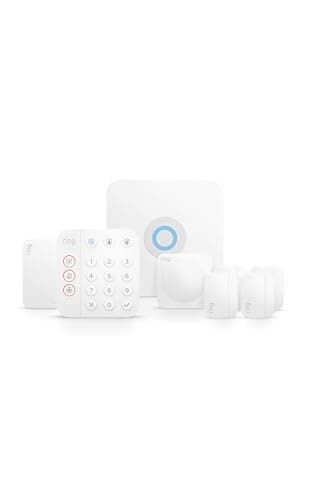
Ring and Vivint sit at opposite ends of the home-security spectrum, which is exactly why people cross-shop them. Ring is a do-it-yourself kit you order, stick up in an afternoon, and monitor for free if you like. Vivint is a full-service system: a technician comes to your home, installs professional-grade equipment, and a monitoring center watches it around the clock for a monthly fee. This comparison is here to be honest about that gap — and upfront about one thing most pages bury: we recommend and link the Ring Alarm because it's the system we can point you to buy through our Amazon program. Vivint isn't sold on Amazon and is bought direct through a sales consultation, so there's no buy button for it here. We'll still give you the straight comparison so you can decide.
Installation: DIY vs a technician visit
This is the first real fork. Ring is genuinely DIY — the sensors are adhesive-backed, the base station plugs into an outlet, and setup happens in the app in an afternoon with no tools and no one in your home. Vivint is the opposite by design: it requires professional installation, which the company folds in free when you sign a monitoring agreement or charges an install fee for otherwise. That professional install is a genuine convenience for some buyers — someone else plans the sensor placement and mounts everything — but it also means a scheduled appointment, a salesperson, and a system you don't set up (or fully control) yourself. If self-install is the whole appeal for you, that's Ring's lane, and our best DIY security systems roundup covers the field.
Contracts and monitoring: the biggest difference
Here is where the two really part ways. Ring is contract-free: you own the hardware outright, you can self-monitor for nothing, and any professional-monitoring plan is optional and cancellable month to month. Vivint, by contrast, requires professional monitoring to function, and if you finance the equipment you typically commit to a multi-year contract — commonly in the range of three to five years. You can go month to month with Vivint only if you buy the equipment outright up front. So the honest framing is: Ring can cost you nothing per month, while Vivint is a recurring monthly commitment by design. What that fee buys — a staffed monitoring center, a polished app, professional-grade gear — is real value to some households, but it is a very different financial shape from Ring.
Monthly cost: Ring is dramatically cheaper to run
On price, there is no contest for the budget-minded buyer. Ring's optional 24/7 professional monitoring runs about twenty dollars a month, and its self-monitoring is free. Vivint's professional monitoring starts higher and climbs quickly once cameras and smart-home add-ons are in the plan, and that's before any financed equipment cost stacked on top. The table below lays the published details side by side; treat every figure as a starting point and confirm current pricing with each company, since plans and promotions change constantly and Vivint quotes are tailored per home. If keeping the monthly bill low is your priority, the no-subscription systems guide makes the case for a free-to-run setup in full.
Hardware and smart home: premium vs flexible
Vivint's strength is a tightly integrated, professionally installed ecosystem — its own cameras, doorbell, sensors and panel, all designed to work together and set up for you. Ring answers with a huge, self-serve accessory catalog and deep Alexa integration, so you can start small and add sensors, keypads and Ring cameras yourself over time. Neither works with Apple HomeKit, so an iPhone-first household that wants the alarm in the Home app should skip both and look at the abode iota instead, which abode now sells direct rather than on Amazon. Vivint works with Alexa and Google Home; Ring centers on Alexa. For most buyers the deciding factors aren't the radios — they're the install model, the contract, and the monthly cost.
Why we point you to Ring
To be plain: our buy links go through Amazon, and Ring is on Amazon while Vivint is sold only through its own consultation process. That's part of why Ring is our pick here — but it isn't the only reason, and we wouldn't recommend it if the value weren't real. For the large majority of homes, a DIY system you can self-monitor for free, with no contract and a much lower monthly cost, is simply the better financial deal, which is why Ring also leads our main systems roundup. Vivint is a legitimate, capable premium system — if you genuinely want someone else to design, install and monitor everything and don't mind paying for it, it may be worth a quote. You'd just arrange that on Vivint's own site, not here.
Buy Ring if...
You want to install it yourself, you like the idea of self-monitoring free to start, you'd rather never sign a contract, or you simply want a proven kit you can order today with a live price. That describes most buyers, which is why Ring is our recommendation between the two. The full write-up is in the Ring Alarm review, and if you want the cheapest way to run it, the no-subscription systems guide shows how to pay nothing monthly.
Consider Vivint if...
You specifically want a hands-off, full-service experience — a professional to design and install the system, premium integrated hardware, and one company monitoring everything — and you don't mind a higher monthly cost and, if you finance, a multi-year contract. It's a legitimate premium system; just one you'd buy direct after a consultation rather than through us. Still weighing the monitoring question itself? The DIY vs monitored guide is the honest version of that decision.