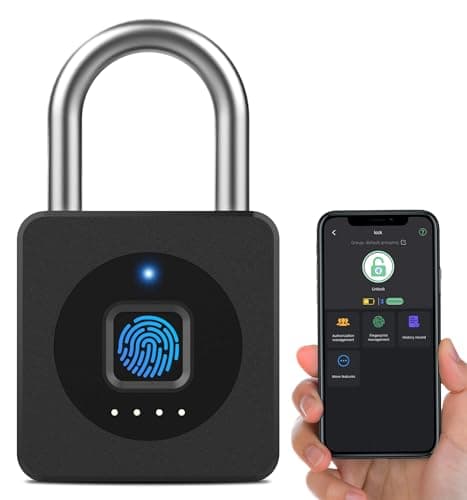
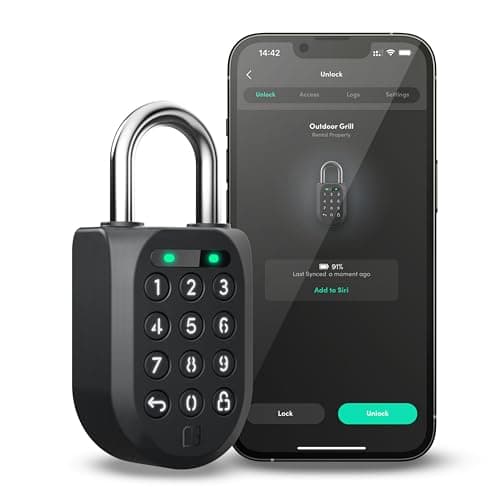
A smart padlock is not a small smart lock. A smart deadbolt lives on a front door, inside Wi-Fi range, in a climate-controlled hallway, wired into an ecosystem that can tell you it is open. A padlock hangs on a side gate, a shed, a storage unit, a trailer hitch or a locker — usually out of Wi-Fi range, usually in the weather, and usually shared with someone who is not standing next to you. Every spec that decides the purchase follows from that.
So we did not rank these on app screenshots. We ranked them on three questions, in this order: can you give someone access when the lock has no signal, how do you get in when the battery is flat, and is the body rated for anything you can hold the brand to. One honest caveat first, the same one on every page here: we do not run a lock lab and we did not cut any of these open. Every figure below is the manufacturer's or seller's own published claim, read on the date in this page's spec stamp, and where two published sources disagree we say so instead of picking the flattering one.
Sharing access is the whole point, and Wi-Fi is the problem
The reason to pay four times the price of a combination padlock is not the fingerprint. It is that you can let a landscaper through the side gate on Tuesday without meeting them there, and take that access away on Wednesday. The catch is that the gate has no internet, which rules out the mechanism most smart-home gear uses — a cloud account talking to a device over Wi-Fi.
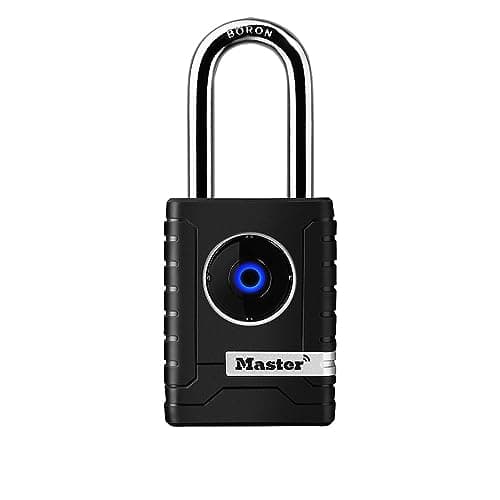
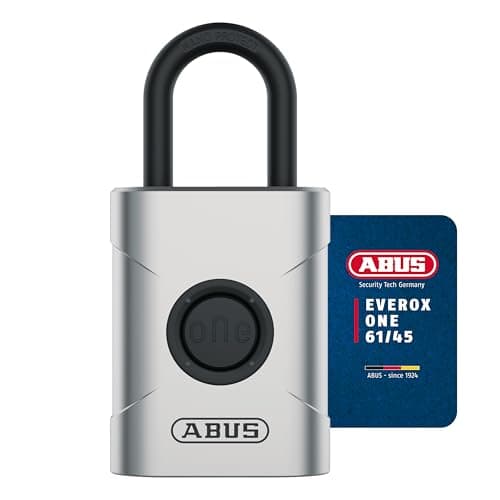
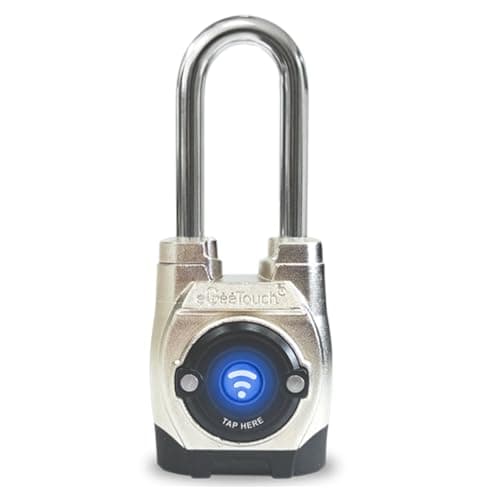
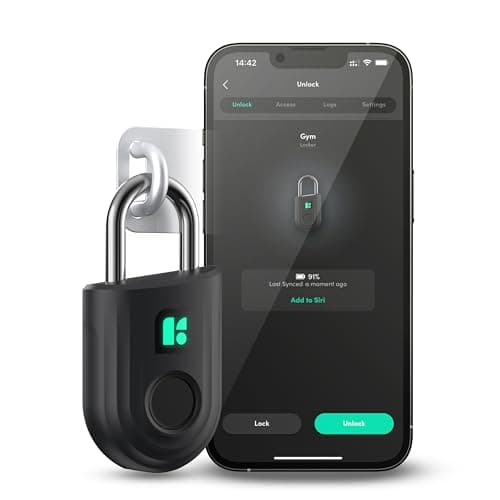
There are exactly three answers to this in the field, and each pick here uses one of them. igloohome's offline PIN codes are the cleverest: the app generates a one-time, time-limited, recurring or custom code using its algoPIN system, and the lock validates it on its own hardware, with no connection at either end. You send a code by text and it simply works. eGeeTouch uses a physical NFC tag — you hand over a token that opens the lock on a tap, which is the most practical option for a crew, a tenant or anyone who will not install your app. Master Lock and ABUS use Bluetooth keys in an app: you invite a user, they install the app, and they must be standing at the lock. That last approach works, but every person you share with becomes an app install and an account.
If the padlock is only ever opened by you, all three are equivalent and you should buy on build. The moment other people are involved, offline codes or a tag will save you real friction. This is the same tradeoff we walk through for door hardware in best smart locks for Airbnb and rentals, where guest access is the entire job.
What happens when the battery dies
On a deadbolt this is a solved problem: nearly every one keeps a keyway, and the ones that do not usually take a 9-volt jump. On a padlock it is the single biggest risk in the category, because most smart padlocks deliberately have no keyhole at all — no keyway means nothing to pick, rake or snap, which is a genuine security gain and a genuine maintenance liability at the same time.
The Master Lock is the outlier and the reason it ranks second despite thinner documentation: you can punch a backup directional code straight into the lock with no phone, and if the cell dies while the lock is shut you can hold a 9-volt battery against the contacts to wake it. igloohome's Padlock Lite publishes a Type-C jumpstart, which means any power bank in your bag gets you in. The Padlock 2, the ABUS and the eGeeTouch have no published fallback beyond charging or replacing the cell in place — fine on a shed you walk past daily, bad on a lock that hangs somewhere you visit twice a year with no tools. Read each pick's battery line as a maintenance commitment, not a spec. Our smart lock battery guide covers how these warnings usually arrive, and how much warning you actually get.
Ratings you can hold a brand to, and vague words you cannot
Padlock listings are a minefield of adjectives. "Heavy duty," "anti-cut" and "weatherproof" mean nothing on their own; a rated number means something. Only one lock here publishes attack ratings: igloohome states 15 kN of cutting force, 5 kN of pulling force and 100 Nm of twisting force on a 0.34 in shackle. eGeeTouch publishes a material standard instead, ASTM grade F3, which it says withstands 1,124 lb. Master Lock names the alloy (boron) and the diameter (9 mm) but no force figure. ABUS names hardened Nano Protect steel and a double locking mechanism but no force figure either. And the budget eLinkSmart publishes nothing of the kind — which is exactly what you are accepting when you pay a small fraction of the price.
Weather sealing splits the same way. igloohome's IPX7 and its seven passed MIL-STD 810H tests, and ABUS's IP66 plus IP68, are numbers. Master Lock's "weather resistant" is a phrase. eGeeTouch's grade 6 ASTM salt-spray result is the one to look for if you live near the coast, where corrosion kills padlocks long before anyone tries to cut them. None of this means the unrated locks are bad — it means you cannot compare them, and where a number is missing we have said so rather than filled the gap.
The honest limit: padlocks are not part of your smart home
This site exists largely to sort out ecosystem compatibility, so it matters that we say this plainly: not one padlock here speaks Matter, Thread or Zigbee, and none of them appear in Apple Home or Google Home. They are Bluetooth (and in eGeeTouch's case NFC) devices with their own apps. The closest anything gets is igloohome, whose separately sold Bridge adds remote access and Alexa support on top of the lock — a second box and a second purchase, and still not Matter.
That is not a flaw so much as a category fact, and it is worth knowing before you shop, because it changes what "smart" buys you. A smart padlock gets you keyless entry, shareable and revocable access, and a log of who opened it. It does not get you a routine that locks the shed when you leave the house, and it will not show up alongside your door locks in one app. If what you actually want is a lock inside your smart-home ecosystem, you want a deadbolt, and our lock compatibility guide maps which of those work with what.
Measure the hasp before you read another spec
More smart padlocks get returned for fit than for features. Two numbers decide it: the shackle diameter, which has to pass through your hasp, chain link or locker hole, and the shackle clearance, which is the opening you have to fit around whatever you are securing. A locker hasp wants something like the Padlock Lite's 6 mm shackle; a gate chain wants the eGeeTouch long-shackle body or the Master Lock's 9 mm boron shackle. Go thick on a locker and it simply will not thread; go thin on a gate and you have bought a deterrent, not a lock. Where a brand publishes conflicting clearance figures — as Master Lock and its dealers do on this model — measure your own hardware and treat the smaller number as the one to plan around.
Pick your access-sharing method, then the lock
Decide up front who else opens this lock and how. If the answer is "only me," buy on build and weather sealing. If it is "my partner and occasionally a contractor," you want igloohome's offline PIN codes, because a code sent by text needs nothing installed at either end. If it is "a rotating crew," or anyone you cannot rely on to install an app, the eGeeTouch NFC tags are the practical answer — a physical token you hand over and take back, still logged in the audit trail. Only choose a Bluetooth-invite lock like the ABUS or the Master Lock if every person involved will happily run the manufacturer's app.
Treat the battery as a maintenance schedule
Rechargeable or replaceable is a real fork, not a detail. A rechargeable cell (igloohome, eGeeTouch, eLinkSmart) means no coin cells to source and a USB-C port that doubles as your rescue route — but it also means you go out with a cable or a power bank twice a year. A replaceable CR2 (ABUS) means you swap a cell every couple of years and never think about charging, but a dead cell on a lock with no fallback is a lockout. Whichever you buy, write the install date on the inside of the shed door. A padlock is the one lock in your house nobody looks at until it will not open.
Be honest about what the padlock is protecting
The single best way to overspend here is to buy a rated, sealed, MIL-STD-tested body for a gym locker, and the single best way to regret saving money is to hang an unrated one on a shed full of tools. Match the lock to the loss. Low-stakes convenience — a locker, a suitcase, a cabinet — is exactly where the cheap fingerprint padlocks earn their place. Anything a thief would work at for more than a few seconds deserves a body with a published force rating, and for outbuildings you actually care about, a padlock is one layer next to a door or window sensor that tells you when it has been opened at all.