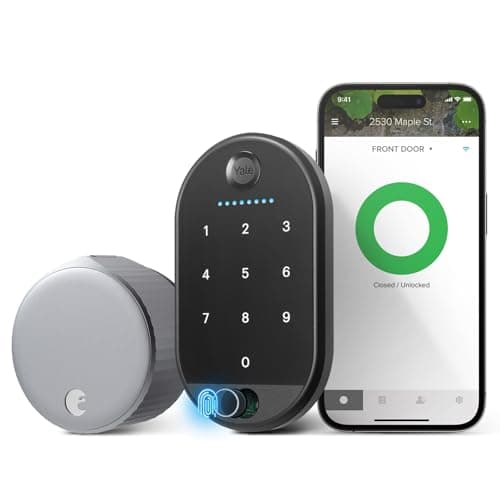
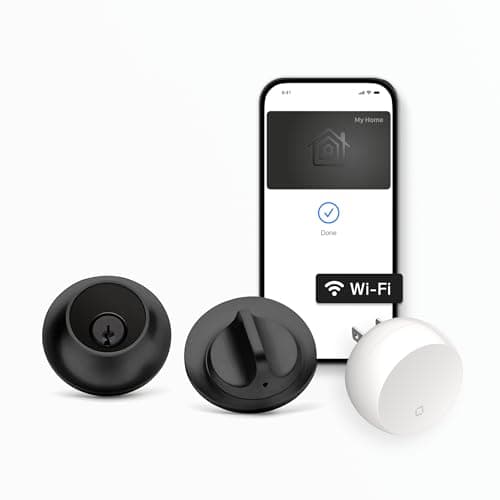
The Level Lock+ and the August Wi-Fi Smart Lock get shortlisted together constantly, but they are not really the same kind of product, and that is the key to choosing between them. The Level Lock+ is a full-replacement deadbolt that hides nearly all of its smart hardware inside the door, so it looks like an ordinary lock while doing Apple Home Key. The August is a retrofitthat clamps onto the inside of the deadbolt you already have, keeps your exterior and your keys, and motorizes what is there. So "which is better" is really two questions in one: do you want to replace the whole deadbolt or keep it, and do you want Apple Home Key or Google and SmartThings? Answer whether you own the door, and the winner nearly picks itself.
The verdict up front
For an owner who wants the nicest all-round lock, the Level Lock+ is our pick here. It is the only one of the two that lists Apple Home Key, it hides completely in the door so nothing announces that the lock is smart, and its listing names the broadest platform set of the pair - Apple, Alexa and Google. If you own your home, care how the door looks, or live anywhere near the Apple ecosystem, the Level is the more capable and more elegant choice, and it is our top pick for that reason.
The August wins one situation and wins it cleanly: you rent, or you want to keep your existing keys and leave the outside of the door untouched. Because it installs only on the inside, a landlord never has to know, your keys keep working for anyone who needs the old-fashioned way in, and it comes off in minutes when you move. For a renter, or an Alexa/Google/SmartThings household that wants remote control without changing the door, the August is not a compromise - it is the right tool.
The core difference: hidden full replacement vs keep-your-keys retrofit
The Level Lock+ replaces the whole deadbolt. You remove your existing lock and fit the Level in its place, and the point of the design is that once it is in, you cannot tell. Nearly all of the smart hardware lives inside the door bore, so from either side it reads as a plain deadbolt with no keypad, no glowing panel, nothing that says "smart lock" to a passerby. That discretion is its signature. The trade is that it is a full swap - you are changing the hardware on the door - and it carries a premium price precisely for hardware you deliberately cannot see.
The August takes the opposite path. It mounts on the interior side of your existing deadbolt and turns the thumbturn you already have, so the exterior of the door does not change at all - same hardware, same keyway, same physical keys in your pocket. You are adding brains to the lock you own rather than swapping the lock, which is why the install is quick and fully reversible. The trade is the mirror image of the Level's: you inherit whatever exterior deadbolt you already have, warts and all, and the August does not upgrade or replace that outside hardware.
Neither approach is "better" in the abstract. A hidden full-replacement lock is the better tool when you own the door and want a clean, discreet result; a retrofit is the better tool when you cannot or do not want to touch the outside of the door. That single fork - replace or retrofit - maps almost perfectly onto a question you can answer in one second: do you own this door, or are you borrowing it?
Ecosystem: Apple Home Key vs Google and SmartThings
This is where the two diverge most, and it lines up neatly with the hardware split. The Level Lock+ is the Apple-friendly lock: its listing names Apple, Alexa and Google, and crucially it adds Apple Home Key, so you can tap an iPhone or Apple Watch against the door to open it with no app to launch. The August's listing names Alexa, Google and SmartThings - a great spread for a Google or SmartThings home - but it does not name Apple HomeKit or Apple Home Key, so there is no iPhone tap-to-unlock on the August. Neither lock claims Matter.
Read that carefully, because it is the whole ecosystem story: the Level is the one to buy if you want Apple Home Key or the widest platform coverage, and the August is the one that adds SmartThings for a home built around that hub. The matrix below is the comparison in a glance, and if you want the deeper explainer on what each platform actually does for a lock, our smart lock ecosystem compatibility guide is the piece behind this table. If your home is firmly Apple, the best smart locks for Apple Home roundup ranks the Level against the other iPhone-friendly options.
Install and door impact: the renter question
The install effort tracks the design exactly, and for renters it is decisive. The August is the lighter lift by far: you keep the exterior deadbolt in place and attach the August body to the inside, so there is no drilling, no new bore, and no change to the outside of the door. It is a screwdriver job most people finish well under an hour, and it is fully reversible - unscrew it when you move and the original deadbolt is exactly as you found it. Most leases forbid changing the exterior lock, and the August sidesteps that entirely, which is why it is the renter's lock and not a close call.
The Level asks for a full deadbolt swap. That is still a DIY-friendly job rather than a locksmith call, but you are removing your old deadbolt and fitting a new lock in its place, and you should not do that to a door you do not own. In exchange you get a purpose-built, hidden lock rather than an add-on clamped onto old hardware - the right result for an owner, the wrong project for a renter. If you want the step-by-step for either route before you buy, our how to install a smart lockguide walks through both the retrofit and the full-replacement path, including how to check your door's backset and thickness first.
Keys, keypad and backups
The two locks answer "how does someone without an app get in?" very differently. The August keeps your existing keys as the physical fallback and adds a Keypad Touch, so a guest, cleaner or kid without a phone can punch a code and walk in - no phone required and no key to cut. The Level, by design, ships without an exterior keypad, so out of the box entry is by phone (Apple Home Key or the Level app), a key card, or a traditional key. For a household with a revolving door of visitors, the August's included keypad is a real everyday convenience; for a couple who mostly let themselves in, the Level's hidden, keypad-free look is the point. Either way you keep a mechanical way in, which is worth understanding fully - our guide on whether you can still use a key with a smart lock covers what each design leaves you as a backup.
On connectivity, the two are closer than they look: both have Wi-Fi built in, so remote lock, unlock and activity history work without a separate bridge or hub, and neither charges a subscription for any of it. What still works when the internet drops is the same for both - the lock keeps working locally over Bluetooth and by its physical fallback - and our guide on whether smart locks work without Wi-Fi walks through exactly which features depend on the network and which do not.
Who should buy which
Buy the Level Lock+ if you own your home and want a smart lock nobody can tell is smart. It hides in the door, taps open with Apple Home Key, lists the broadest platform support of the two, and puts Wi-Fi in the lock so you skip a hub. Go in knowing the trade: it is a full deadbolt replacement, it carries a premium for hardware you deliberately cannot see, and there is no keypad by default, so plan to unlock by phone, key card or key.
Buy the August Wi-Fi Smart Lock if you rent, or if you simply want to keep your existing keys and exterior hardware. It mounts inside your current deadbolt, changes nothing outside, keeps your keys working, and comes off clean when you move - all while adding Wi-Fi, the Keypad Touch, and Alexa, Google and SmartThings support. For a renter it is close to the only sensible choice, and for plenty of owners the keep-everything convenience is worth it too.
The one-line rule of thumb: own the door and want a hidden Apple Home Key deadbolt, buy the Level; borrow the door or want to keep your keys, buy the August. There is no universally "better" lock here - there is the right tool for your door and your ecosystem. For the full field, both appear in our best smart locks roundup, and each has a dedicated review (Level / August) if you want the closer look before you decide.
The usual honest caveat applies, the same one on every page here: we did not install and stress-test these two locks in a lab. We read each lock's own Amazon listing and manufacturer documentation for its specs and the ecosystems it actually names, and compared them straight. Where a claim would have to come from hands-on testing, we say so rather than inventing it. Our full method is on the methodology page.