A garage is the room most smart-home advice forgets, and it is the one with the most to gain. It holds the most valuable things in the house after the house itself, it has the biggest door and the weakest lock, the Wi-Fi is worse there than anywhere else, and in winter it is cold enough to be outside the published range of ordinary smart kit. Work through the problems in the order they actually matter and the shopping list is short.
Problem one: nobody knows whether the door is shut
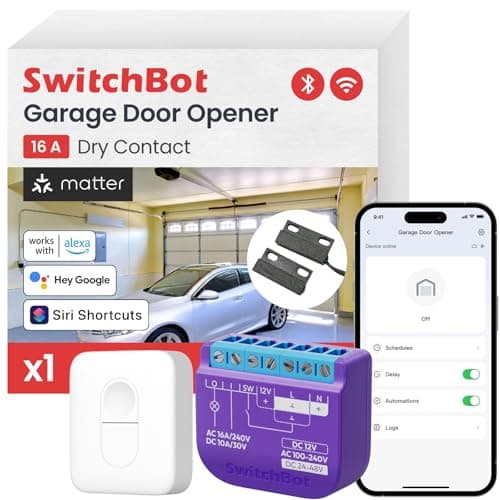
This is the real garage problem, and it is not theft — it is the door left open all night because somebody carried shopping in and did not look back. A smart opener controller solves it twice over: it tells you the state and it lets you do something about it from anywhere.
What separates the good ones from the frustrating ones is whether they report real door state from a sensor, or infer it from the last command they sent. The SwitchBot pick ships with a wired magnetic contact sensor for exactly that reason. The other thing to check is behaviour without the internet, because the garage is where your Wi-Fi is thinnest — SwitchBot states Bluetooth control still works when Wi-Fi is down. Our best smart garage door openers roundup ranks the whole field, including the Chamberlain myQ option for openers that need it, and is worth reading before you buy — opener compatibility is genuinely fiddly and is published per model.
Problem two: the drive is dark and unwatched
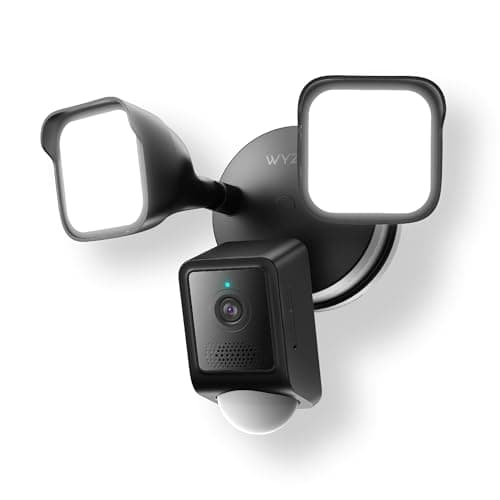
Garages are usually at the side or back of a property, which is where people approach from when they do not want to be seen. A floodlight camera above the door covers the two things that matter in one fitting: light that makes the space usable and unattractive at once, and a recording if something happens anyway.
Mount it so it sees the approach rather than the door itself — you want to recognise someone walking up, not film the top of their head at the threshold. Our guide on where to place security cameras covers heights and angles, and best security cameras for driveways is the specialised version of this choice if the drive is long.
Problem three: the garage is out of range
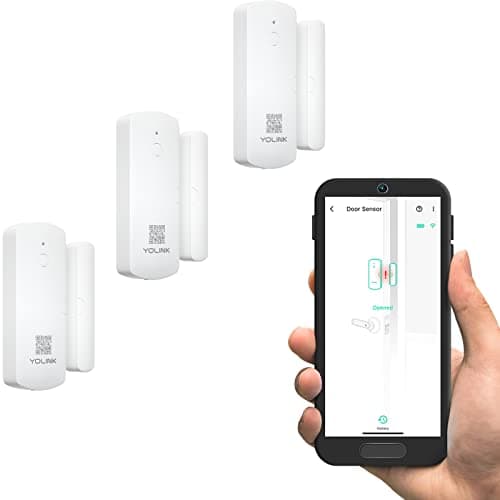
A detached garage is a different radio problem entirely. Wi-Fi through two brick walls and fifteen metres of garden is unreliable at best; Zigbee and Thread meshes need a mains-powered repeater in between, which usually means a plug somewhere there is no socket. This is the one case where a long-range radio earns its place: the YoLink sensors publish up to a quarter of a mile in the open on LoRa, with the hub indoors.
If the garage is attached and your Wi-Fi reaches it comfortably, do not over-buy — a standard contact sensor on the hub you already own does the same job for less. Our door and window sensors roundup covers both cases, and Wi-Fi congestion explains why adding more Wi-Fi devices at the edge of coverage makes everything worse.
Problem four: the cold, and what is plugged in out there
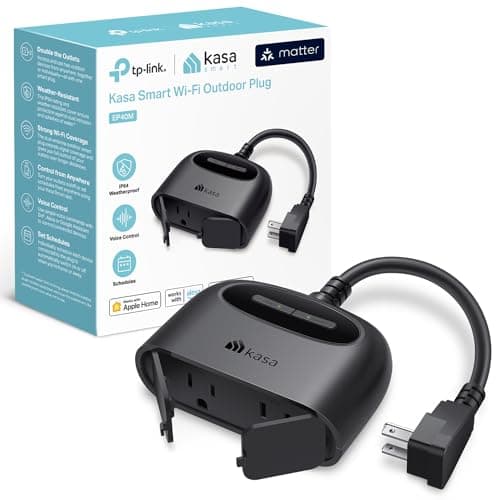
Most smart plugs are specified for indoor use at room temperature. A garage in January is neither. If you are switching a chest freezer, a trickle charger, a dehumidifier or festive lights, use a plug with a published weather rating and a published low-temperature limit — the Kasa pick is rated IP64 and down to -4 F, and it has two outlets so one device covers two jobs.
Two honest limits. A smart plug switches power; it does not know whether the freezer inside is still cold, so if a freezer failure is the fear you want a temperature sensor as well. And do not switch heavy motor loads on a plug rated for half a horsepower. Our best smart plugs roundup covers the indoor options and the energy-monitoring question.
What we would add next, and what we would skip
The next device worth adding is a flood-and-freeze sensor if there is plumbing in the garage — a burst pipe in an unheated space nobody visits daily is the most expensive failure on this list, and our leak detector roundup covers the options. A smart lock on the garage's side door is also worth it if that door is used; a padlock-style lock suits a shed or a gate instead.
What we would skip: a smart bulb as the only garage lighting, because a bulb that needs Wi-Fi to switch on is a poor replacement for a switch in a room where the signal is weakest, and a voice assistant speaker in an unheated garage, which is outside most speakers' published temperature range. Keep the garage's intelligence in devices built for outdoor conditions.
Before you buy anything, check two things in the garage itself
The Wi-Fi, standing where the device will go. Not at the house, not at the back door — at the socket or the opener motor. A phone showing one bar is a device that will drop out weekly. If it is weak, the answer is either a long-range radio (YoLink), a wired device, or fixing coverage first.
The opener's make, model and learn-button colour. Garage controller compatibility is published per opener and the exclusions are specific — some brands and some model years are explicitly unsupported by each controller. Five minutes with a torch at the motor saves a return.
Automations worth building, and one to be careful with
Worth building: a notification if the door has been open for more than ten minutes — the single most useful garage automation there is. Lights on when the door opens after dark. A reminder at bedtime if the door is not shut.
Be careful with: automatic closing on a timer or on geofence. A garage door is a heavy machine, and the only thing between it and a bicycle, a pet or a child is the safety sensor. If you use auto-close, keep the delay long, make sure the opener's photo-eye sensors are clean and aligned, and treat it as a convenience rather than a guarantee. More patterns in smart home security automations.