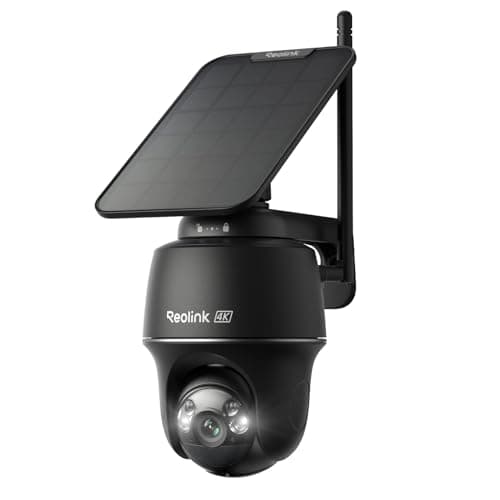
Driveway cameras get bought on the same specs as front-door cameras, and that is why so many of them disappoint. A doorbell has its subject two feet away, lit, and standing still. A driveway has its subject anywhere from 15 to 100 feet away, moving at walking or driving speed, frequently with headlights or a low winter sun pointed straight into the sensor, and almost always out of reach of a plug. Four problems, in that order, decide which camera belongs on a drive.
Problem one: distance eats resolution
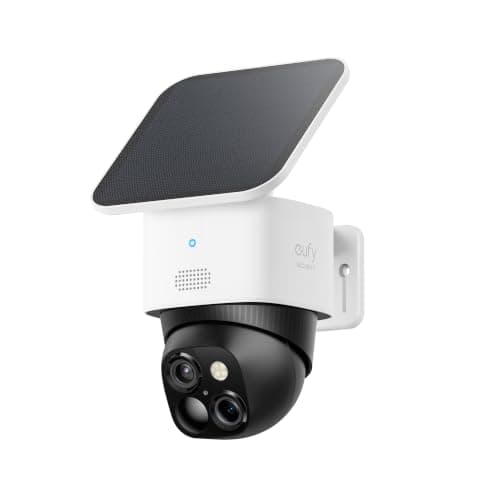
Resolution is not detail, it is detail per degree of view. A 1080p camera with a 140 degree field spreads roughly 1,920 pixels across that whole arc, so a face or a plate 60 feet down a drive lands on a few dozen pixels and no amount of digital zoom invents more. This is the single reason the 4K and 3K picks sit at the top of this page and the 1080p picks sit at the bottom. It is also why the eufy SoloCam S340's second telephoto lens is such a sensible answer to a driveway specifically: rather than cropping a wide frame, it keeps a genuinely tighter one running alongside it. If you only remember one thing from this page, make it this — on a drive, buy pixels first and features second. Our 2K vs 4K comparison works through what the jump actually buys you, and the 4K roundup covers the high-resolution field on its own terms.
Problem two: a car is not a person
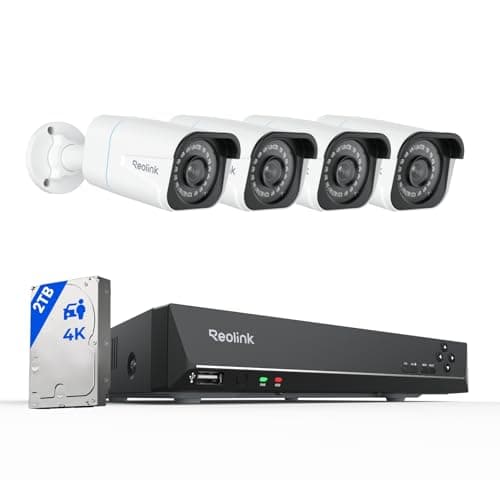
Most camera motion detection was tuned for a human-sized shape crossing the frame at walking pace. A car entering a drive is larger, faster, and often half out of frame by the time a passive infrared sensor has decided anything happened — which is how you end up with twelve clips of a departing bumper. What helps is explicit vehicle detection in the published spec list, which the Reolink RLK8-800B4 NVR states, and a camera that records continuously rather than only on triggers. It is worth knowing which of your alerts come from on-device processing and which need a plan; we lay that out in do security cameras record all the time.
Problem three: there is no outlet out there
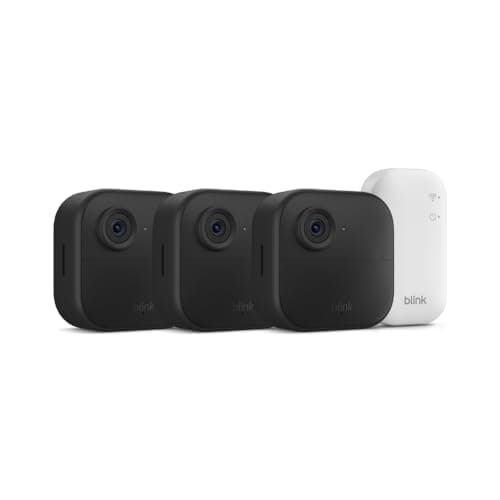
The best view of a driveway is usually from the point furthest from your electrics — a gatepost, a fence line, a tree, the gable end of a detached garage. That leaves three honest options and no fourth. Solar plus battery, which both the Reolink Argus PT Ultra and the eufy SoloCam S340 ship with a panel for, and which works well on a south-facing mount and badly under a conifer. Long-life battery alone, which is the Blink Outdoor 4's pitch and its published two-year figure. Or PoE cable, which is the only one that never needs thinking about again and the only one that involves digging. The trade-off is laid out properly in wired vs wireless security cameras, and if the mount point is genuinely remote, the solar roundup is the page to read next.
Problem four: headlights are a lighting problem, not a camera problem
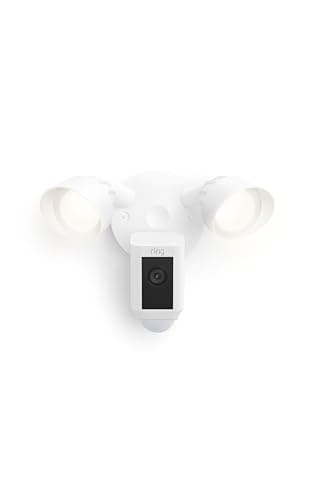
A pair of headlights is the brightest thing most outdoor cameras will ever meet, and the sensor's automatic exposure will protect those highlights by crushing everything around them. The practical fixes are mounting height and angle — above headlight level, angled down the drive rather than straight up it — and adding real light so the camera is not relying on infrared. That is the case for a floodlight camera at the house end, which is the Ring Floodlight Cam Wired Plus's whole job; the wider field is ranked in best floodlight cameras. Our placement guide covers heights and angles in detail, and how security camera night vision works explains why color night vision and infrared behave so differently on a drive.
The honest limit of a driveway camera
No camera on this page will reliably read a license plate on a moving car at night. Plate capture is a specialist job that wants a dedicated narrow-field camera, a fast shutter and usually an infrared illuminator aimed at one fixed point, and anything that claims otherwise from a 140-degree consumer lens is selling you something. What these cameras do well is establish that a vehicle of a given color and body shape arrived at a given minute, and show a person at the near end clearly enough to recognize. For an insurance claim or a police report that is usually the useful material, and it is worth setting the expectation before you spend. What raises your odds most is continuous recording — which is why, if the driveway is genuinely the reason you are buying, the PoE kit is the grown-up answer. See best wired security camera systems for that field, and the eufy E40 versus Reolink RLK8 comparison if you have narrowed it to two kits.
Measure the drive before you choose a camera
Walk out to the end of your driveway and pace it back. Under about 30 feet, any of these cameras will give you a usable image of a person and most will give you a readable plate on a stationary car in daylight — buy on power and light instead. Between 30 and 70 feet, the resolution ranking on this page is the ranking that matters, and a telephoto or a 4K sensor earns its premium. Past about 70 feet you are choosing between a pan-and-tilt head that can zoom in on demand and a second camera mounted closer to the action, and the second camera is almost always the better answer. One camera trying to cover 100 feet of drive is a camera covering none of it well.
Decide now whether you want events or everything
This is the fork that determines which half of this page you buy from. Event recording — the battery picks — gives you clips when something trips a sensor, cheaply and wirelessly, and it misses whatever the sensor does not catch. Continuous recording — the PoE kit — gives you the whole timeline, including the ten minutes before the clip you care about, and costs you a cable run. For most households watching for packages and visitors, events are fine. If the reason you are shopping is a specific incident — a keyed car, a stolen trailer, a neighbor dispute, a repeat delivery problem — buy continuous, because the useful footage is almost never inside a motion clip.
Mount high, aim along the drive, and stay inside your property line
Three practical rules, in order of how often they get broken. Mount above headlight height, around 8 to 10 feet, so oncoming lights are not pointed into the lens. Aim alongthe drive rather than across it, which gives a car several seconds in frame instead of half a second. And frame the shot so it covers your drive, your door and your vehicles rather than your neighbor's windows or the width of a public sidewalk — the legal position is generally comfortable for your own property and gets complicated fast beyond it, which we cover in are home security cameras legal. If a camera on the drive keeps dropping off the network at that distance, why is my security camera offline covers the usual causes before you blame the camera.
Budget for the mount, the card and the light
The camera price on this page is not the project price. A driveway install usually also wants a proper mount or pole bracket, a microSD card for the picks that take one, a solar panel re-site after the first winter, and often a light. Add those in before you compare totals, and compare against what you would spend over three years on a plan — the arithmetic is done for you in security camera subscription costs, and the no-fee field is ranked in best no-subscription security cameras.