Skip to content
Latch & Hub

Ecosystem · Guides

The Best Smart Home Starter Kit Under $100

You don't need a big budget to start - you need three cheap pieces that each do a distinct job. A speaker to control things by voice, a no-fee camera to see, and a smart plug to automate. Together they're a genuine smart home for around a hundred dollars, and you can start with just one.

By Stephen V.Updated How we choose
#ad

We earn a commission when you buy through our Amazon links, at no extra cost to you. It never changes our rankings — where the subscription-free or cheaper option is the better buy, we say so. How this works.

The biggest myth about smart homes is that they are expensive. They can be - but the entry ticket is not. For around a hundred dollars you can assemble a genuine, useful smart home from three cheap pieces that each do a completely different job: something to control things by voice, something to see, and something to automate what you already own. This is not a list of the same gadget three times; it is a starter system, chosen so the three pieces complement each other. And the best part is that you do not have to buy all three at once - each is under fifty dollars and useful on its own, so you can start with one and grow. Here is the kit, and how to build it in the right order.

How we picked - three roles, not three gadgets

A starter kit fails when it is just three random cheap things. It works when each piece fills a distinct role, so together they form a small but complete system. We chose one device for each of the three jobs a smart home actually does: a control layer (a voice speaker that ties everything together), a sensing layer (a camera so the home can be watched), and an action layer(a smart plug that makes ordinary appliances do things on schedule or command). Every pick had to be genuinely affordable - each is under fifty dollars - and, wherever possible, subscription-free, because a cheap device with a monthly fee is not cheap. The result is a kit that costs around a hundred dollars all in and has no built-in running cost. It is the honest opposite of the sprawling, expensive setups people imagine when they hear "smart home."

Start with control: the speaker

If you buy one thing first, make it the speaker, because it is the piece everything else plugs into. A compact Alexa speaker is your control layer: it takes voice commands, runs the routinesthat make several devices act together, handles timers and reminders, and is the thing that makes the whole setup feel like a home you can talk to rather than a collection of apps. On its own it already earns its tiny price as a speaker and assistant; paired with the other two pieces it becomes the brain of the kit. The one decision it forces is ecosystem: a speaker commits you gently toward Alexa, so buy your other devices with Alexa compatibility in mind. If your household is really an Apple or Google one, start with that platform's equivalent instead - our best smart home ecosystem guide helps you choose the control layer that matches your phones.

Add sight: the camera

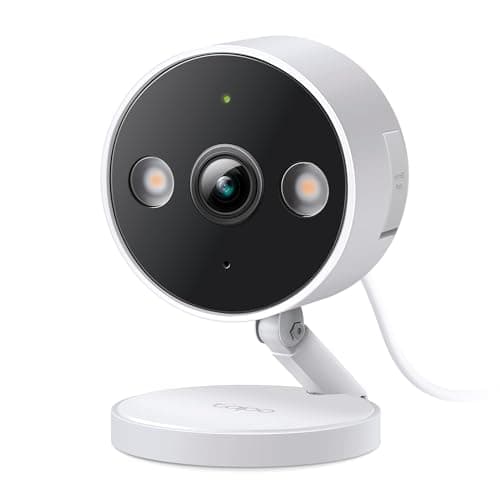
The second piece gives the home eyes, and it is astonishing how little that costs now. A sharp 2K+ indoor/outdoor camera with person, pet and vehicle detection, recording to local storage with no subscription, is the most security-per-dollar in this whole kit. Point it at a doorway, a driveway, a nursery or a back porch and you have real awareness - live view, motion alerts, and a recording you keep without ever paying a fee. Choosing a no-subscription camera at the start is the single best money decision here, because it means adding sight to your home does not add a bill; our no-subscription cameras list is built on exactly that principle. The only real constraint is power - it is a wired camera, so it needs an outlet nearby - which for most first-camera spots (a porch, a room, an entry) is no obstacle at all.

Add action: the smart plug

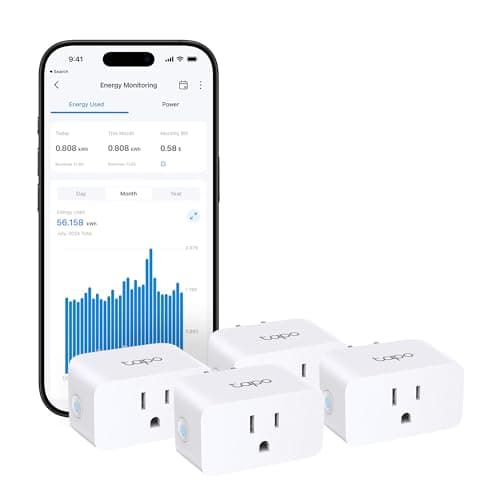
The third piece is the one that surprises people with how much it does for how little. A smart plug makes things you already ownsmart: plug a lamp into it and that lamp now turns on at sunset, responds to "Alexa, turn off the living room," and can fake an occupied house while you are away. Because this plug is Matter-compatible, it works across Alexa, Google and Apple Home, so it will not strand you if you change platforms - and it usually comes as a multi-pack, so you smarten several lamps and appliances at once. It is the cheapest, highest- leverage way to expand a smart home without buying new appliances, and it is where the "convert what you have" philosophy in our dumb-home-to-smart-home guide starts. A speaker and a plug alone - well under the hundred-dollar mark - already gets you scheduled lighting and voice control, which is a real smart home by any honest definition.

How the three work together

Individually these are three cheap gadgets. Together they are a system, and the value is in the combination. The speaker lets you say "good night" and have the plug-controlled lamps switch off. The camera watches the door while the speaker announces motion. A single routine can tie all three: at a set time the lamps go off, the camera is watching, and the house settles for the night - from a hundred dollars of hardware with no monthly fee. That is the whole point of choosing by role rather than grabbing three random discounts: the pieces reinforce each other, and each one you add makes the others more useful.

Where to go from here

This kit is a foundation, not a ceiling, and it is designed to grow in a sensible order. The natural next additions, roughly in priority: a smart lock to bring the front door under control (the upgrade people value most), a video doorbell for the busiest entrance, and - if you want the home to react to things - a hub and some cheap sensors. Each of those is a step up in budget, which is why they are not in a sub-$100 kit, but the three pieces here are exactly the right base to build them onto. If your budget stretches to a fuller setup now, our whole-home starter kit for around $300 adds a doorbell and a sensing hub to this same core, and best budget smart home devices keeps every addition affordable. Start with one piece, prove it to yourself, and expand at your own pace - that is how a smart home should be built.

As with everything here, we did not run these devices through a lab. We chose them for their published specs and their fit as complementary starter pieces, and every price you see is live from Amazon via our price pipeline, stamped with the date we checked it - never a remembered number. The full method is on the methodology page.
The short answer

Quick picks

Tap any row for the full write-up.

  • Amazon Echo Dot (5th Gen)
    01 Amazon Echo Dot (5th Gen)Top pick

    Start here. A compact, inexpensive Alexa speaker is the control layer for everything else - voice commands, routines, timers and reminders - and it's the single device that turns a pile of gadgets into a smart home you can actually talk to. Cheap, and the piece the rest hangs off.

    Best for: The voice-control foundation

    $49.99View on Amazon

    #ad · we may earn a commission from this link to Amazon Echo Dot (5th Gen)

  • TP-Link Tapo C120
    02 TP-Link Tapo C120

    The see-everything piece, and remarkably cheap for what it is: a sharp 2K+ indoor/outdoor camera with person, pet and vehicle detection and subscription-free local storage, so it records without a monthly fee. The most security for the least money in this kit.

    Best for: A no-fee first camera

    $35.99View on Amazon

    $39.9910% off

    #ad · we may earn a commission from this link to TP-Link Tapo C120

  • TP-Link Tapo P110M Smart Plug Mini
    03 TP-Link Tapo P110M Smart Plug Mini

    The automate-what-you-own piece. A Matter-compatible smart plug (in a multi-pack) turns any lamp, fan or appliance into a scheduled, voice-controlled, app-controlled device - and Matter means it works across Alexa, Google and Apple Home. The cheapest way to make ordinary things smart.

    Best for: Smartening lamps and appliances

    $28.69View on Amazon

    $35.9920% off

    #ad · we may earn a commission from this link to TP-Link Tapo P110M Smart Plug Mini

#ad · Live prices from the Amazon Product API, as of Aug 1, 2026. Where we have no verified live price we show none — we would rather leave a gap than print a number that has rotted.

In detail

The picks, in full

01

Amazon Echo Dot (5th Gen)

Top pick
Amazon Echo Dot (5th Gen)
$49.99View on Amazon

Price as of Aug 1, 2026. Amazon's price at checkout is the one that counts.

#ad · we may earn a commission from this link to Amazon Echo Dot (5th Gen)

Start here. A compact, inexpensive Alexa speaker is the control layer for everything else - voice commands, routines, timers and reminders - and it's the single device that turns a pile of gadgets into a smart home you can actually talk to. Cheap, and the piece the rest hangs off.

  • Compact Alexa speaker
  • Voice control + routines
  • Timers, reminders, audio
  • Controls compatible devices
  • The cheapest way into an ecosystem
Fee: None - no subscriptionResearched, not hands-on tested

Good

  • The control layer for the whole kit - voice commands and routines that tie your other devices together
  • Genuinely inexpensive, and doubles as a capable little speaker for music, timers and reminders
  • The easy on-ramp to the Alexa ecosystem, which most affordable smart devices support

Less good

  • It's the brain, not the security - on its own it controls things but doesn't see or protect
  • Commits you toward Alexa, so buy your other devices with Alexa compatibility in mind

Skip it if: your household is built around Apple Home or Google - then start with that ecosystem's equivalent speaker instead, so your control layer matches your phones.

02

TP-Link Tapo C120

TP-Link Tapo C120
$35.99View on Amazon

$39.9910% off

Price as of Aug 1, 2026. Amazon's price at checkout is the one that counts.

#ad · we may earn a commission from this link to TP-Link Tapo C120

The see-everything piece, and remarkably cheap for what it is: a sharp 2K+ indoor/outdoor camera with person, pet and vehicle detection and subscription-free local storage, so it records without a monthly fee. The most security for the least money in this kit.

  • 2K+ (QHD) resolution
  • Indoor / outdoor
  • Person / pet / vehicle detection
  • Color night vision
  • Local storage - no subscription
Fee: None required - local microSDResearched, not hands-on tested

Good

  • Sharp 2K+ image with useful person/pet/vehicle detection, at a genuinely low price
  • Records to local storage with no subscription required - the ongoing cost stays at zero
  • Indoor or outdoor, so it covers a doorway, a room, a driveway or a porch

Less good

  • It's a wired camera, so it needs power nearby - placement is decided by outlets
  • You supply the microSD card for local recording

Skip it if: you need a fully wire-free camera for a spot with no outlet - a battery camera fits that better, though it usually costs more.

03

TP-Link Tapo P110M Smart Plug Mini

TP-Link Tapo P110M Smart Plug Mini
$28.69View on Amazon

$35.9920% off

Price as of Aug 1, 2026. Amazon's price at checkout is the one that counts.

#ad · we may earn a commission from this link to TP-Link Tapo P110M Smart Plug Mini

The automate-what-you-own piece. A Matter-compatible smart plug (in a multi-pack) turns any lamp, fan or appliance into a scheduled, voice-controlled, app-controlled device - and Matter means it works across Alexa, Google and Apple Home. The cheapest way to make ordinary things smart.

  • Matter compatible
  • Alexa, Google, SmartThings
  • Energy monitoring
  • 15A, UL certified
  • Multi-pack
Fee: None - no subscriptionResearched, not hands-on tested

Good

  • Turns any lamp or appliance into a scheduled, voice- and app-controlled smart device with no new hardware
  • Matter-compatible, so it works across Alexa, Google and Apple Home rather than locking you in
  • Comes as a multi-pack and adds energy monitoring, so you smarten several things at once

Less good

  • Controls whatever is plugged into it - it doesn't dim a bulb, it switches the outlet
  • 2.4GHz Wi-Fi only (normal for plugs), so it counts toward your Wi-Fi device load

Skip it if: you want colour or dimmable lighting - that needs a smart bulb, not a plug that simply switches power on and off.

How we chose

We don't run a test lab

We don't wire every one of these into a test rig, and we won't write "in our testing" as if we do. What we did instead: pulled each product's published specifications, confirmed its Matter/Thread/HomeKit support from the manufacturer's own documentation, added up the real 3-year cost with any monthly fee included, and read the aggregated verified-buyer sentiment. Every pick is chosen against that published method. Where a number came from someone else, we name and link them in Sources.

Questions

Frequently asked

Can you really build a smart home for under $100?
Yes - a real, useful one. Three sub-$50 pieces do it: a voice speaker to control things, a subscription-free camera to see, and a smart plug to automate lamps and appliances. Together they land around a hundred dollars with no monthly fee, and you can start with just the speaker and plug for well under $100 and add the camera later.
What should I buy first for a smart home?
The speaker. It's the control layer everything else plugs into - voice commands, routines, timers - and it turns separate gadgets into a home you can talk to. It also gently commits you to an ecosystem, so pick the one that matches your phones (our ecosystem guide helps), then add a camera and a smart plug.
Do any of these need a subscription?
No. The speaker and smart plug have no fees, and the camera records to local storage with no subscription required. Choosing a no-subscription camera at the start is the key money decision - it means adding sight to your home doesn't add a bill. See our no-subscription cameras list for the principle.
What should I add after this starter kit?
In rough priority: a smart lock for the front door (the upgrade people value most), a video doorbell for the busiest entrance, and - if you want the home to react to sensors - a hub with cheap door and motion sensors. Our around-$300 whole-home kit adds a doorbell and sensing hub to this same core.

Keep reading

Receipts

Sources

  • Amazon product listings for each device (specs + ecosystem claims)(read 2026-08-01)

We do not run a test lab, and we do not pretend to. Compatibility and subscription-cost claims come from the manufacturer's own documentation and the live retailer listing, read on the dates shown. Read our full method.