Triple the budget of an entry setup and something changes: you stop covering a corner and start covering the whole home. For around three hundred dollars you can buy five pieces that each play a distinct role - control, a camera, automated plugs, the front door, and room sensing with legacy IR control - and end up with a genuinely capable, subscription-free smart home rather than a scattering of gadgets. This kit is deliberately the under-$100 starter plus two additions that matter most next: the busiest entrance, and the ability to react to the room. Here is the whole kit, why each piece is in it, and the order to buy them.
How we built it - the same role-first logic, wider
The rule is the one from the smaller kit, applied to a bigger canvas: every piece fills a role, and the roles add up to a system. Here that means five jobs. A control layer (the speaker) to run everything by voice and routine. A sensing layer that is now two devices - a camera for a chosen angle and a video doorbell for the front door, because the entrance is the highest-value point in any home. An action layer (the smart plugs) to automate lamps and appliances. And an environment layer(the sensor-and-IR hub) so the home can react to temperature and light and control legacy gear. Almost none of it charges a monthly fee, which is the discipline that keeps a "$300 kit" an actual $300 rather than $300 plus subscriptions forever. Five roles, one coherent home.
The centerpiece: the front door
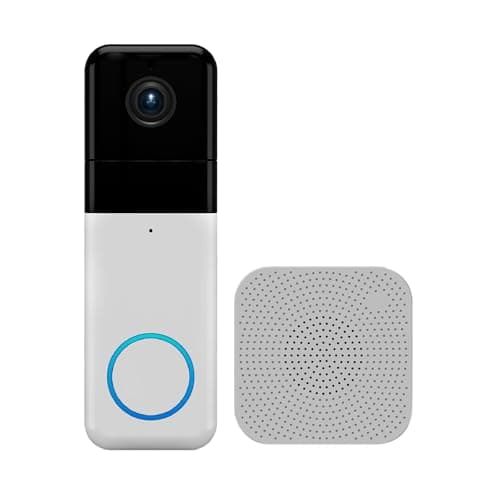
In a whole-home kit the anchor is the video doorbell, because the front door is where a smart home does its most useful work every single day - packages, visitors, the person you were not expecting. This one is sharp 1440 HD, mounts wireless with no doorbell wiring, includes a chime in the box, and - the part that keeps the kit fee-free - records to a microSD card with no subscription. It covers deliveries and callers and gives you a recording you keep for nothing. There are two honest caveats: you supply the card, and because of Wyze's past security history you should treat a unique password and two-factor authentication as non-negotiable. Handle those and it is the most doorbell for the money, which is why it also tops our no-subscription doorbells list. If you would rather a more hands-off ecosystem doorbell, our best video doorbells roundup has the pricier alternatives.
Control, camera and plugs: the core carried over
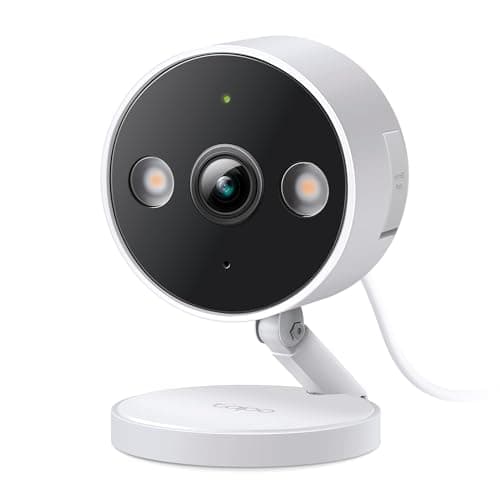
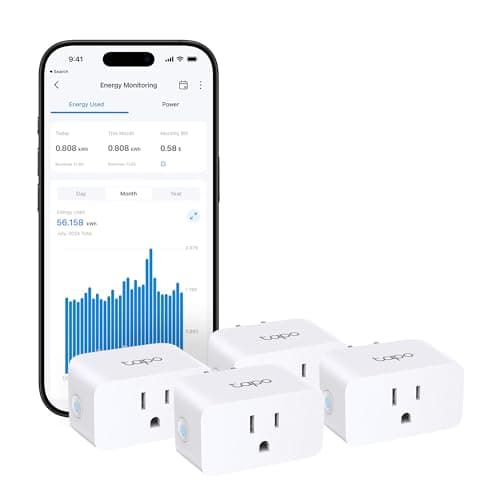
Three of the five pieces are the proven core from the smaller kit, and they do the same jobs here. The speaker is the control layer - voice, routines, the thing that makes five devices behave like one home, and the piece that sets your ecosystem (buy the rest with Alexa in mind, or start on your own platform per the ecosystem guide). The camera adds a second angle the doorbell cannot cover - a back door, a driveway, a room - in sharp 2K+ with no-subscription local recording. The smart plugs, a Matter-compatible multi-pack, turn lamps and appliances into scheduled, voice-controlled devices that fake an occupied house while you are away and switch off on a "good night" command. Together these three are already a real smart home; the doorbell and the hub are what make it a whole-home one.
The new dimension: sensing and IR
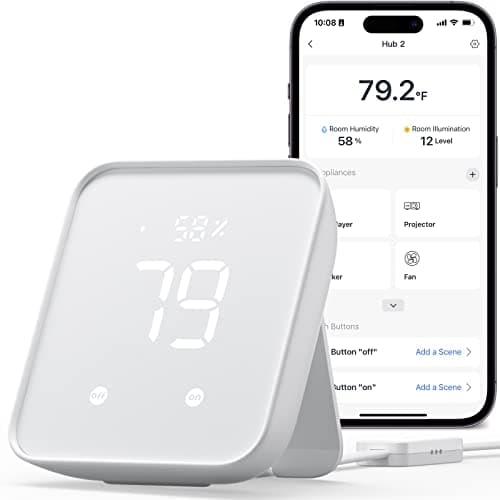
The fifth piece is the one that adds a capability the other four simply do not have: the ability to react to the room. The sensor-and-IR hub reads temperature, humidity and light, so your routines can do things like nudge a fan on when it gets warm or brighten lamps as daylight fades - triggers based on conditions, not just time or voice. Its IR blasteris the sleeper feature: it learns the remotes of old TVs, fans and air conditioners, pulling appliances you already own into the smart home without replacing them, which is pure value. Be clear on what it is not: it bridges SwitchBot's own gear to Matter, but it is not a Zigbee or Thread hub and will not run third-party mesh sensors - that is a job for a full controller like the Aqara Hub M3, a step up in budget covered in our Hub 2 vs M3 comparison. For a $300 kit, sensing plus IR is exactly the right amount of "react to the environment" without paying for a whole-home mesh you are not ready to fill.
The order to buy, and how it grows
You do not need to buy all five at once, and the sensible sequence is: the speaker first (control), then the doorbell (the highest-value security piece), then the plugs (cheap, immediate automation), then the camera for your second angle, and finally the sensor hub once you want the home reacting to conditions. Spread it over a few paydays if you like - each piece is useful the day it arrives and more useful as the others join it. From here, the clear next upgrades are a smart lock to bring the front door's lock under control alongside its camera, and - when you want cheap door and motion sensors driving real security automations - a proper Zigbee/Thread hub. This $300 kit is the base those additions bolt onto cleanly, and it deliberately leaves you a growth path rather than a dead end.
As always, we did not lab-test these devices. We chose them for their published specs and their fit as complementary whole-home pieces, described the trade-offs honestly, and every price you see is live from Amazon via our price pipeline and stamped with the date we checked it - never a remembered number. The full method is on the methodology page.