Skip to content
Latch & Hub

Systems · Security Systems

Ring Alarm vs eufy Alarm: Cheapest Monitoring vs No Fees At All

Two contract-free DIY alarm kits that sound identical in a spec list and are built on opposite bets. Ring sells the hardware cheaply and makes its money on a plan it is very good at. eufy builds the recorder into the hub so there is nothing to rent. Here is which bet suits which house.

By Stephen V.Updated How we choose
#ad

We earn a commission when you buy through our Amazon links, at no extra cost to you. It never changes our rankings — where the subscription-free or cheaper option is the better buy, we say so. How this works.

Verdict

The bottom line

Buy the Ring Alarm 8-Piece Kit if you want the widest accessory range, an Alexa household, and the most mature optional monitoring in DIY security ($19.99/mo on the Ring Pro plan, or $199.99 a year, with cellular backup included). Buy the eufy Alarm 5-Piece Kit with HomeBase 3if the alarm is step one of a camera system and you refuse to rent your own footage: eufy's hub records up to 16 eufy cameras to storage in your house, expandable to 16TB, with no video plan sold at all. Both self-monitor for free, neither needs a contract, and neither works with Apple HomeKit. The decision is not which alarm is better — it is whether you are buying a monitored alarm or a no-fee security system that happens to start with an alarm.

The short answer

Quick picks

Tap any row for the full write-up.

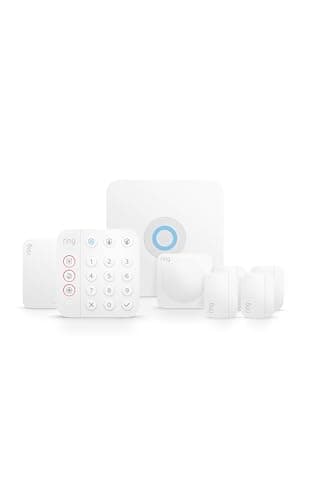
  • Ring Alarm 8-Piece Kit (2nd Gen)
    01 Ring Alarm 8-Piece Kit (2nd Gen)Top pick

    The pick for most homes and the clear pick for an Alexa one. Eight pieces cover a typical house on day one, self-monitoring costs nothing, and the optional Ring Pro plan is the most established monitoring product in DIY security — cellular backup and saved video in the same tier. The trade is that the parts you might eventually want most — cellular backup, saved video, 24/7 dispatch — all sit behind the plan.

    Best for: Alexa homes and anyone who may want 24/7 dispatch · No Matter, no HomeKit — Ring/Alexa app

    • 8-piece DIY kit
    • Base station + keypad
    • 4 contact sensors + motion detector
    • Range extender included
    • Optional 24/7 pro monitoring, $19.99/mo
    • Works with Alexa
    $249.99View on Amazon

    #ad · we may earn a commission from this link to Ring Alarm 8-Piece Kit (2nd Gen)

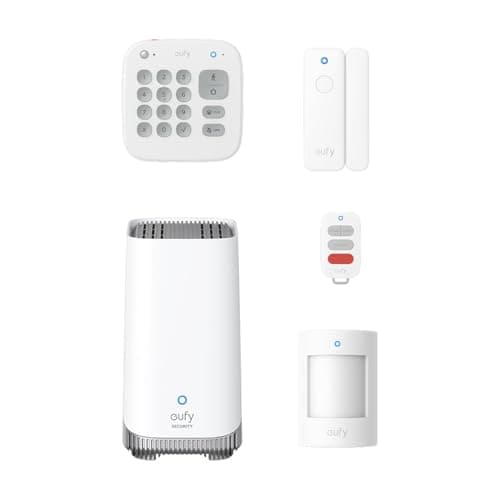
  • eufy Alarm 5-Piece Kit with HomeBase 3
    02 eufy Alarm 5-Piece Kit with HomeBase 3

    The pick for the household that has decided, permanently, not to pay monthly for its own footage. HomeBase 3 carries the 100dB siren and the sensor radios, and it is also a local video recorder for up to 16 eufy cameras with storage expandable to 16TB — so the alarm you buy today is the recorder for the cameras you buy next year. eufy does now sell optional monitoring plans, which is new, but the hardware works completely without one.

    Best for: An alarm that grows into a no-fee camera system · Alexa & Google; no HomeKit, no Matter

    • HomeBase 3 + keypad + motion + 2 entry sensors
    • 100dB siren in the hub
    • 32GB built in, expandable to 16TB
    • Records up to 16 eufy cameras
    • BionicMind facial recognition
    • No video plan sold; monitoring optional
    $282.85View on Amazon

    $344.9518% off

    #ad · we may earn a commission from this link to eufy Alarm 5-Piece Kit with HomeBase 3

#ad · Live prices from the Amazon Product API, as of October 20, 2026. Where we have no verified live price we show none — we would rather leave a gap than print a number that has rotted.

Put these two kits side by side in a spec list and they look like the same product at a slightly different price: a hub, a keypad, some door sensors, a motion detector, an app, no contract, a free self-monitored mode. That resemblance is misleading. Ring sells alarm hardware near cost and runs one of the best-value monitoring businesses in the category; eufy sells a hub that is also a network video recorder and has historically sold nothing recurring at all. You are not choosing between two alarms. You are choosing which of those two business models you want to live inside for the next five years.

What is actually in each box

Ring's 8-Piece Kit is a base station, a keypad, four contact sensors, a motion detector and a range extender. In a typical three-bedroom house that is the front door, the back door, two accessible windows and one room of motion — a complete first layer with nothing else to buy. The eufy kit is five pieces: HomeBase 3, a keypad, a motion sensor and two entry sensors. That is a front door, a back door and one room, which is honest for an apartment and thin for a house. If you are comparing these two on price, compare after you have added the two or three extra eufy entry sensors most houses will want, because the kit prices are not covering the same amount of door.

The hub is where they stop resembling each other. Ring's base station is an alarm controller: it holds the sensor radios, sounds the siren and talks to Ring's cloud. eufy publishes HomeBase 3 as both the alarm hub and a local recorder, with a 100dB siren built in, 32GB of onboard storage and support for a 2.5-inch drive up to 16TB, feeding up to 16 eufy cameras or doorbells and 34 sensors. One of these boxes is the brain of an alarm. The other is the brain of an alarm and the hard disk of a camera system.

The monitoring question, which is the whole comparison

Both systems will sound a siren and push a notification for free, forever. The moment you want a human being to look at the alarm at 3am, the two part company.

Ring's route is unambiguous and cheap. Ring publishes three tiers on its plans page — Ring Solo at $4.99/mo for a single device, Ring Multi at $9.99/mo for every device at one address, and Ring Pro at $19.99/mo or $199.99/yr, which is the tier that includes 24/7 professional monitoring for the alarm. There is no contract and no installation charge, that tier also carries cellular backup and saved video, and Ring has been running it long enough that what you get for the money is not in doubt. If you want monitoring you do not have to think about, Ring is the straightforward answer in this comparison.

eufy's route is newer, cheaper, and split in a way worth understanding before you pick a tier. eufy publishes a Basic Protection Plan at $4.99/mo ($49.99/yr) in which dispatch is something you start — you tap a panic button in the app or on the keypad — and a Plus Protection Plan at $9.99/mo ($99.99/yr) that adds the automatic part: the monitoring center is alerted when the system itself detects a problem while you are away. eufy describes a staged response with a confirmation attempt, a follow-up call and local dispatch if your safety is not confirmed, says the service covers one address per plan, runs false-alarm forgiveness through Noonlight, and lists a home-insurance discount of up to 20% for Plus subscribers.

That matters for two reasons. First, the automatic monitoring most people mean when they say "monitored alarm" is the $9.99 tier, not the $4.99 one — the cheap tier is a panic button with a professional on the other end, which is a different product. Second, at $9.99 eufy is half Ring's price for the equivalent job. The caveats are real but smaller than they look: eufy requires HomeBase firmware 2.1.6 or later, says only selected devices can be set as auto-alarm triggers, runs a seven-day practice mode in which nothing reaches a responder, and does not support smart locks on the service. Ring's plan is the more mature and better-documented product; eufy's is the cheaper one.

If none of that matters because you intend to self-monitor — which is a legitimate choice for a lot of households, and the one do you need a monitoring plan walks through properly — then both systems cost $0 a month and the decision moves entirely to video.

Video is where eufy wins outright

Almost nobody stops at an alarm. The sensor tells you something opened; the camera tells you what it was. So the question that decides this purchase for most people is what each system does when you add cameras.

With Ring, cameras are cloud devices and video history is a plan feature: no plan, no saved clips. That is not a trick — live view and notifications still work — but the recordings you will actually want to show someone live on Amazon's servers and stop existing if you stop paying. With eufy, the HomeBase 3 you already bought for the alarm is the recorder. Add eufy cameras and the footage is written to the hub, in your house, with no video plan on offer to decline. Over three years with four cameras that difference is the largest number in this entire comparison, and it is why the kit appears on our no-subscription security systems list while Ring does not.

The flip side is coverage breadth. Ring's accessory range — panic buttons, extra keypads, flood and freeze sensors, smoke and CO listeners and dozens of camera variants — is deeper than eufy's, and it is all in one app — a Ring house can bolt on a lit, sirened camera at the drive with the Ring Floodlight Cam Wired Plus and have it arm with the alarm. If you want an alarm that eventually watches for water and smoke as well as intruders, Ring gets there with parts that exist today. If you want an alarm that becomes a no-fee four-camera system, eufy gets there and Ring charges you monthly for the privilege.

Reliability, outages and the things neither brand shouts about

Ring publishes a 24-hour battery backup in the base station and sells cellular backup as a plan feature, so a subscribed Ring Alarm keeps reporting through a power cut and a broadband cut. That is a genuine resilience advantage, and it is also the clearest example of Ring's model: the hardware is cheap and the resilience is rented. eufy publishes no cellular backup for this kit, which means a cut internet line leaves you with a very loud local siren and no notifications — the failure mode covered in do home security systems work without Wi-Fi.

Neither system works with Apple HomeKit and neither is a Matter device, so if your house is iPhone-first and you insist on the Home app, this comparison has no winner for you. eufy lists Alexa and Google Assistant; Ring lists Alexa and is the natural pick in an Echo house because the alarm, the cameras and the voice assistant are the same company. Neither of those integrations is a security feature — they are convenience, and both are shallower than the brands imply.

So which one

Pick Ring if you want the deepest accessory list, cellular backup on the alarm, or a house that already runs on Alexa. Pick eufy if you are buying the alarm as the foundation of a camera system you will never pay monthly for — and note that eufy is also the cheaper monitoring bill if you later decide you do want someone answering at 3am. If you are still deciding between a monitored and an unmonitored life, read DIY vs monitored home security before you spend anything — it is a bigger decision than the brand on the keypad.

3-year cost: self-monitored (free) vs each brand's published monitoring plan
ProductHardwareMonthly3-yr fees3-yr total
Ring Alarm 8-Piece — self-monitoredFree self-monitoring; no saved video, no cellular backup$250$0$0$250
eufy Alarm 5-Piece — self-monitoredNo video plan sold; footage recorded to HomeBase 3$283$0$0$283
eufy Alarm 5-Piece — Protection Plan PlusAutomatic 24/7 monitoring with dispatch; Basic tap-to-dispatch is $4.99$283$10/mo$360$643
Ring Alarm 8-Piece — Ring Pro plan24/7 professional monitoring, cellular backup, saved video$250$20/mo$720$970

Hardware figures are approximate MSRP context for the comparison; the live, date-stamped price is on each product's buy button. Fees are the published plan rates at the time of writing — always confirm current pricing with the brand.

In detail

The picks, in full

01

Ring Alarm 8-Piece Kit (2nd Gen)

Top pick
Ring Alarm 8-Piece Kit (2nd Gen)
$249.99View on Amazon

Price as of October 20, 2026. Amazon's price at checkout is the one that counts.

#ad · we may earn a commission from this link to Ring Alarm 8-Piece Kit (2nd Gen)

The pick for most homes and the clear pick for an Alexa one. Eight pieces cover a typical house on day one, self-monitoring costs nothing, and the optional Ring Pro plan is the most established monitoring product in DIY security — cellular backup and saved video in the same tier. The trade is that the parts you might eventually want most — cellular backup, saved video, 24/7 dispatch — all sit behind the plan.

  • 8-piece DIY kit
  • Base station + keypad
  • 4 contact sensors + motion detector
  • Range extender included
  • Optional 24/7 pro monitoring, $19.99/mo
  • Works with Alexa
Matter: No Matter, no HomeKit — Ring/Alexa appFee: Free self-monitored; $19.99/mo Ring Pro for 24/7 monitoringResearched, not hands-on tested

Good

  • Self-monitoring is free and permanent: the siren sounds and your phone buzzes with no plan on the account, which is the baseline a lot of households never move off
  • Monitoring is a known quantity: $19.99/mo or $199.99/yr on the Ring Pro plan, no term to sign, cellular backup and saved video in the same tier, against a plan Ring has run for years
  • The accessory catalog is the real moat — extra contact sensors, keypads, panic buttons, flood and freeze sensors, smoke listeners and Ring cameras all land in one app, so the system grows in whatever direction the house needs
  • Eight pieces is the right starting count for a typical three-bedroom house: four openings and a room of motion coverage, rather than the two openings a five-piece kit covers

Less good

  • Cellular backup, saved video and 24/7 dispatch are all plan features, so the useful version of this system has a monthly cost — budget it as $19.99/mo and not $0 if dispatch is the reason you are buying
  • No Apple HomeKit and no Matter for the alarm, so an iPhone-first household lives in the Ring and Alexa apps whether it wants to or not
  • Ring is cloud-first by design: your event history and saved clips live on Amazon's servers, which is the opposite of what the eufy hub is for

Skip it if: you want video kept in your own house with no plan, or you are building toward a no-fee camera system — the eufy hub is built for exactly that and Ring is not.

02

eufy Alarm 5-Piece Kit with HomeBase 3

eufy Alarm 5-Piece Kit with HomeBase 3
$282.85View on Amazon

$344.9518% off

Price as of October 20, 2026. Amazon's price at checkout is the one that counts.

#ad · we may earn a commission from this link to eufy Alarm 5-Piece Kit with HomeBase 3

The pick for the household that has decided, permanently, not to pay monthly for its own footage. HomeBase 3 carries the 100dB siren and the sensor radios, and it is also a local video recorder for up to 16 eufy cameras with storage expandable to 16TB — so the alarm you buy today is the recorder for the cameras you buy next year. eufy does now sell optional monitoring plans, which is new, but the hardware works completely without one.

  • HomeBase 3 + keypad + motion + 2 entry sensors
  • 100dB siren in the hub
  • 32GB built in, expandable to 16TB
  • Records up to 16 eufy cameras
  • BionicMind facial recognition
  • No video plan sold; monitoring optional
Matter: Alexa & Google; no HomeKit, no MatterFee: No video plan exists; optional monitoring from $4.99/moResearched, not hands-on tested

Good

  • The hub is the recorder. eufy publishes 32GB built-in storage expandable to 16TB on a 2.5-inch drive, with processing done locally, so camera footage stays in the house instead of being rented back month by month
  • It scales much further than five pieces suggests: eufy lists support for up to 16 eufy cameras or doorbells and 34 sensors on one HomeBase 3, plus BionicMind facial recognition to separate family from strangers
  • Optional professional monitoring now exists and undercuts Ring: eufy publishes a Basic plan at $4.99/mo ($49.99/yr) for tap-to-dispatch and a Plus plan at $9.99/mo ($99.99/yr) that adds automatic 24/7 alarm monitoring, with dispatch handled through Noonlight and false-alarm forgiveness
  • Everything arrives pre-configured, so installation is adhesive and a keypad code rather than a pairing session

Less good

  • Five pieces is two openings and one room, so most houses are adding sensors on day one — compare the real cost after you have bought them, not the kit price
  • Monitoring is newer and thinner on detail than Ring's: eufy's guide requires HomeBase firmware 2.1.6 or later, says only selected devices can be set as auto-alarm triggers, and runs a seven-day practice mode before anything reaches a responder
  • No cellular backup is published for this kit and no Apple HomeKit support is listed, so the system leans on your home internet and stays out of the Home app

Skip it if: you need to cover a whole house on day one or you want cellular backup — five pieces is two openings, and eufy publishes no cellular fallback for this kit.

The four questions that settle it

One: will anyone be dispatched?If the honest answer is yes, both brands sell it and eufy sells it for half the money — $9.99/mo on Plus against Ring's $19.99/mo — with Ring offering the longer track record and the better-documented plan. If the answer is no — you want the siren, the alerts and your own judgment — the monitoring column is $0 for both and you should decide on video instead.

Two: how many cameras will exist in three years?Zero or one, and Ring is fine. Three or more, and eufy's hub-as-recorder design changes the arithmetic completely, because Ring charges a monthly fee to keep footage and eufy sells no such plan.

Three: how many openings do you need covered?Count doors and accessible windows before you compare prices. Ring's kit covers four openings out of the box; eufy covers two. Extra sensors are inexpensive on both sides, but the comparison is only fair once both systems cover the same house.

Four: what happens when the internet drops? A subscribed Ring Alarm keeps reporting over cellular with 24 hours of battery in the base station. The eufy kit publishes neither, so it degrades to a local siren. If you live somewhere with flaky broadband, or you are protecting a property you are not standing in, that single line may decide this.
How we chose

We don't run a test lab

We don't wire every one of these into a test rig, and we won't write "in our testing" as if we do. What we did instead: pulled each product's published specifications, confirmed its Matter/Thread/HomeKit support from the manufacturer's own documentation, added up the real 3-year cost with any monthly fee included, and read the aggregated verified-buyer sentiment. Every pick is chosen against that published method. Where a number came from someone else, we name and link them in Sources.

Questions

Frequently asked

Does eufy really have professional monitoring now?
Yes, and it is newer than most articles about eufy suggest. eufy publishes a Basic plan at $4.99/mo ($49.99/yr) where you trigger dispatch yourself from the app or keypad, and a Plus plan at $9.99/mo ($99.99/yr) that adds automatic monitoring when the system detects a problem while you are away, with dispatch run through Noonlight and false-alarm forgiveness included. eufy states the service supports its security devices with smart locks excluded, needs HomeBase firmware 2.1.6 or later, and covers one address per plan. If dispatch is why you are buying, the tier you want is Plus, not Basic.
Which is cheaper over three years?
Self-monitored, the Ring kit is cheaper up front and the two are effectively tied at $0/mo — but the eufy hub also stores camera video for free, which Ring charges for. Monitored, eufy is cheaper on published prices ($9.99 vs $19.99 a month), which over three years is $360 of difference on the fee line alone. The table above runs all four combinations so you can see where the lines cross.
Can I use Ring cameras with the eufy hub, or eufy cameras with Ring Alarm?
No. Both ecosystems are closed: HomeBase 3 records eufy cameras and doorbells only, and Ring Alarm works with Ring cameras in the Ring app. This is the real cost of choosing — not the kit price, but the fact that every camera you buy afterward is chosen for you. Our camera ecosystem compatibility guide maps which brands talk to what.
Do either of them work with Apple Home?
Neither. Ring has never supported HomeKit, and eufy's own compatibility article lists HomeBase 3 as working with Alexa and Google Assistant and explicitly not with Apple HomeKit. Neither alarm is a Matter device either, so there is no back door through a hub. An Apple-first household that insists on the Home app needs a different system entirely.
Is the eufy kit enough for a house, or do I need more sensors?
Plan on more. Five pieces gives you two protected openings and one room of motion, which is an apartment's worth of coverage. A typical house wants four to six openings covered, so budget two to four extra entry sensors — our door and window sensor roundup covers what to add, and how home security sensors work explains where they earn their place.
Can I switch from one to the other later?
Only by replacing everything. Sensors are paired to their own hub and there is no migration path in either direction, so the sensible way to treat this decision is as a five-year one. That is also the argument for thinking about cameras now rather than later: the camera brand you will want in year three is largely decided by the hub you buy in year one.
Which one do you actually recommend?
For most households asking the question in those words: Ring, because the kit covers more doors, the accessory range is deeper and the monitoring option is real and cheap when you want it. For the household that has already decided it will never pay a monthly fee and wants cameras: eufy, without hesitation, because the hub it ships with is the recorder you would otherwise be renting. We have not tested either unit hands-on — these picks come from the makers' published specifications and plan pricing, read on the dates in the sources below.

Keep reading

Receipts

Sources

We do not run a test lab, and we do not pretend to. Compatibility and subscription-cost claims come from the manufacturer's own documentation and the live retailer listing, read on the dates shown. Read our full method.