The hardware is not what a 4G LTE security camera costs. The hardware is a one-off; the mobile data plan is forever. That is why this page ranks the same five cameras our cellular camera roundup covers, but on a completely different axis: what each one does to the bill rather than what it does on a spec sheet. If you want the best camera, read that page. If you want the cheapest one to live with, read this one.
The three things that decide your monthly cost
Where the footage is recorded. This is the big one and almost nobody frames it as a cost question. Every camera on this page can record to local storage. A camera recording locally sends you an alert and a thumbnail; a camera recording to the cloud sends the whole clip, every time, over a metered connection. Set every LTE camera to record locally and the data use drops by an order of magnitude.
How good the detection is. An alert costs data. A false alert costs the same data and gets you nothing. On rural properties - which is where these cameras go - most motion is wildlife and weather, so a camera with on-device AI detection is not just more pleasant, it is cheaper. The Arlo Go 2's published animal detection and the Reolink picks' on-camera AI detection both earn their keep this way.
Resolution, but only for what you actually send. 4K recorded to a card costs no more data than 1080p recorded to a card - the difference only appears when footage crosses the mobile link. So the honest rule is: buy whatever resolution you want for the recording, and be disciplined about live view, which is the one habit that genuinely burns a plan.
Which cameras include a SIM
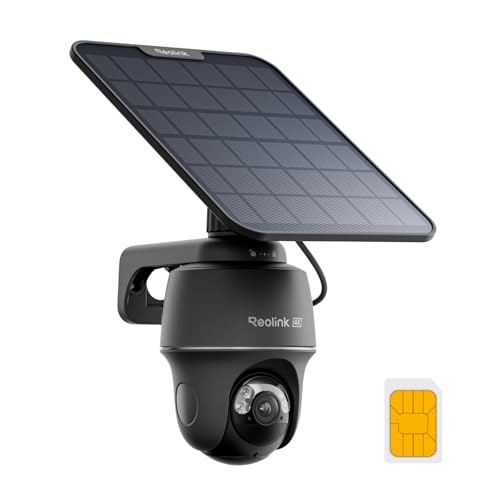
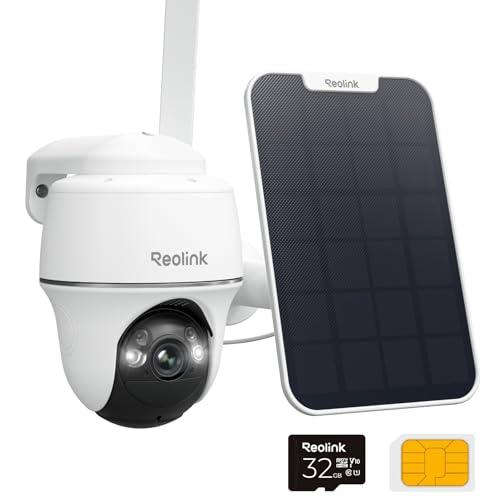
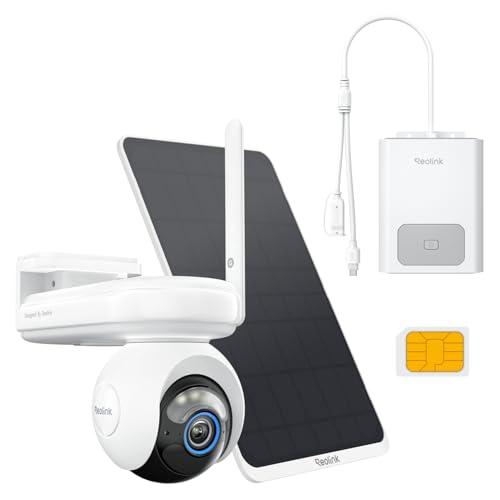
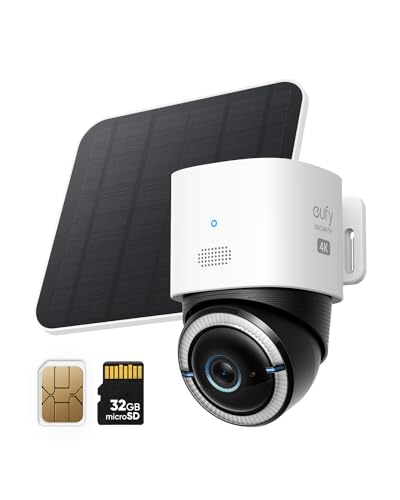
Two of the five listings explicitly include a SIM card: the eufy 4G LTE Cam S330 and the Reolink 2K+ 4G LTE solar camera, which also include a 32GB SD card each. The Arlo Go 2 explicitly does not - its listing says "SIM sold separately". The Reolink Go PT Ultra and the Altas Go PT+ listings do not state it either way, so budget for one.
This single line changes the price order of this page, and it is the most common unpleasant surprise in the category: a camera arrives, there is nothing to put in the SIM slot, and the install waits a week. Check it before you buy, not after.
Duo-mode: the only feature that lowers the bill
The eufy S330 publishes a 4G and Wi-Fi duo-mode. It is the only camera here that can use Wi-Fi when Wi-Fi is available and fall back to cellular when it is not. For a surprising number of real installations - a detached garage, a barn at the edge of range, a seasonal cabin, a property whose router is only on when someone is there - that means the mobile data plan carries a fraction of the traffic it otherwise would.
If the site has no Wi-Fi in range at any point, duo-mode is a feature you are paying for and cannot use, and the Reolink Go PT Ultra is the better buy. That is the whole decision between the top two picks on this page.
The setup that keeps the bill small
Do these four things on the day you install any LTE camera, and the monthly cost stops being a variable. Set recording to local at full resolution. Set alerts to send a notification and a thumbnail rather than a video preview. Turn detection sensitivity down and use zones so the camera is not reporting every branch. And treat remote live view as something you open deliberately, not something you leave running - it is by far the heaviest thing one of these cameras can do.
We deliberately do not publish carrier prices on this page. Mobile plans differ by country, by carrier, by whether you bring your own SIM, and they change often enough that any figure we printed would be wrong somewhere and stale everywhere. We would rather tell you how to make the number small than invent one.
When an LTE camera is the wrong purchase
If the property has usable Wi-Fi, this is the wrong category. A Wi-Fi camera with a card records the same footage with no carrier bill at all, and costs less to buy. If the property has internet but the Wi-Fi does not reach the camera position, run a cable - a PoE system has no monthly cost of any kind. LTE is for places where neither of those is possible, and it is excellent there. Security cameras without Wi-Fi lays out all three options side by side.
How we picked
Every camera here is in our product registry, every specification is quoted from the seller's own live Amazon listing read on 2026-11-21, and every price is pulled live rather than typed in. We do not run a test lab and we have not measured anyone's data consumption - where we do not know a number, we say so instead of printing one. The methodology page explains what that means in practice.
Four rules for keeping an LTE camera cheap to run
Record locally, always. Every camera here can. A camera recording to its own card sends a notification; a camera recording to the cloud sends the whole clip over a metered link. This one setting is the difference between a plan you forget about and a plan you argue with.
Tune detection before you tune anything else. Zones, sensitivity, and person-only alerts where the camera offers them. On a rural property, untuned motion detection will report every deer, every branch and every passing cloud, and each of those is data.
Check the SIM situation before you compare prices. The eufy S330 and the Reolink 2K+ include one. The Arlo Go 2 does not. The other two listings do not say. Price the camera as "camera plus SIM plus plan" and the ranking on this page changes.
Treat live view as a tool, not a habit. Opening a 4K stream over LTE because you are curious is the single most expensive thing you can do with one of these cameras. Check the event thumbnails; open the stream when the thumbnail warrants it.