A solar camera makes a simple promise: mount it once, point its panel at the sky, and never think about charging it again. In a sunny spot that promise mostly holds - a small panel gathers more than a camera sips, so the battery stays topped up on its own. But "solar" on a box hides a real difference that decides how much you actually spend and how hands-off the camera really is: one of the four below includes its panel, and the other three treat solar as an accessory you buy separately. This page sorts that out, and ranks the four on the things that matter for a wire-free camera - whether the panel is in the box, battery life, where the footage goes, and how much of your yard one camera can watch.
The single most important line up front: the eufy SoloCam S340 ships with its solar panel in the box, while the Reolink, Ring and Blink use an optional or bundled solar accessory. That is not a small footnote. It is the difference between one purchase that is done and a purchase that needs a second order before it is truly maintenance-free. Everything else on this page flows from that fact, so we lead with it and keep coming back to it.
One honest caveat before the picks: we do not run a camera lab. We read each camera's own Amazon listing and manufacturer documentation for its resolution, power model, storage and ecosystem support, and compared them straight - crediting no feature a listing does not claim. Where a judgment would need hands-on testing, we say so. For the wider wire-free field, our best wireless cameras roundup is the better starting point; this page is specifically about the ones that charge from the sun.
Included panel vs optional accessory - the split that matters
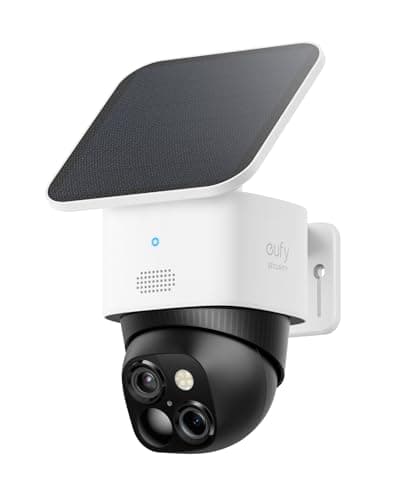
Start with the panel, because it changes the price and the effort. The eufy S340 includes its solar panel, so the camera you unbox is the whole system: mount it, aim the panel at the sky, done. There is no card to buy either, because it records to 8GB of built-in memory. That combination - panel in, storage in, no plan - is why it wins. It is the only pick here that is genuinely finished the day it arrives.
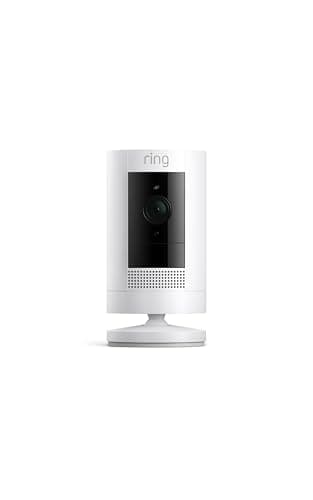
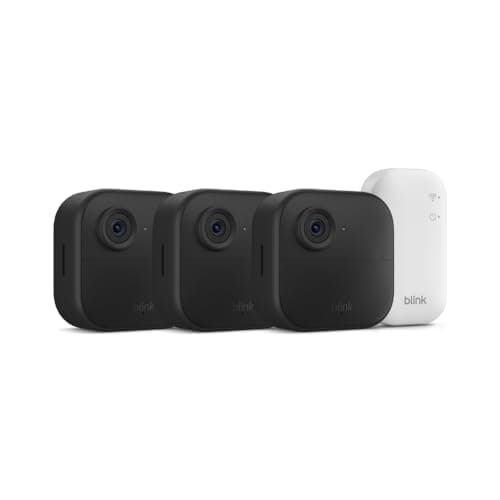
The Reolink Argus 4 Pro, Ring Stick Up Cam and Blink Outdoor 4 are all excellent cameras, but their solar is a bolt-on. Reolink's panel is often a separate line item or part of a bundle, and you supply the microSD card. Ring sells an optional solar panel that clips to the Stick Up Cam. Blink offers a solar panel mount as a separate accessory. None of that is a flaw - it is a perfectly normal way to sell cameras - but it means the sticker price you see is not the maintenance-free price. Budget for the panel (and the card, where one is needed) and compare the real totals, not the headline ones.
Where the footage goes: local, plan, or both
Solar solves power, not storage, and the two get confused constantly. A camera can charge itself forever from the sun and still refuse to save a clip unless you pay. That is exactly the Ring situation: its solar panel keeps the battery full, but saving recorded clips still needs a Ring Home subscription. Without the plan you get live view, alerts and two-way talk, but no recorded history to scroll back through - and that history is usually the whole point of a camera.
The eufy and Reolink keep footage local with no plan: the eufy to its 8GB built-in memory, the Reolink to a microSD card or the Reolink Home Hub. Blink sits in the middle - you can record locally with a Sync Module 2 (a small USB hub you buy once) or subscribe to a Blink plan for cloud clips. If avoiding a monthly fee is a priority, that alone reorders the list: the eufy and Reolink are free to own, Blink is free only if you add the Sync Module 2, and Ring is a camera-plus-a-plan. Our no-subscription cameras page and the local vs cloud storage guide dig into that trade in full.
Coverage and resolution: how much yard, how much detail
The last two levers are how wide a camera sees and how much detail it resolves. The eufy pans and tilts a full 360 degrees, so it follows motion and can watch a whole yard from a single mount - one camera doing the work of two fixed ones. The Reolink takes the opposite approach: a fixed 4K lens that sees 180 degrees at once, no moving parts, the sharpest and widest still image here. Both are strong ways to cover a lot of ground; the eufy is better for tracking a moving subject, the Reolink for a wide, always-on frontage.
On resolution, the eufy's 3K and the Reolink's 4K pull ahead of the 1080p Ring and Blink, and that gap shows up exactly where you need it - cropping into a face at the door or a plate on the drive. For a general "is something moving out there" camera, 1080p is fine and the Ring and Blink save you money. If reading detail matters, spend up. Our 2K vs 4K guide explains what higher resolution actually buys you, and what it does not.
How the four line up
The eufy SoloCam S340 is the pick for most people because it removes every chore at once: panel included, 8GB built-in, no plan, and pan-tilt coverage. The Reolink Argus 4 Pro is the splurge for the widest, sharpest wire-free view - 4K across 180 degrees, still no plan - as long as you accept a large camera and buy the panel and card. The Ring Stick Up Cam is the right call only if you already live in Ring and Alexa and will pay the plan; its solar is real, but the recording is not free. The Blink Outdoor 4 is the budget entry: cheapest, a two-year battery, and close to maintenance-free once you add the solar mount and either a Sync Module 2 or a plan.
None of the four support Matter or Apple HomeKit Secure Video today, so you will live in the brand's own app plus Alexa (and Google, for the eufy and Reolink). Cameras are the one category Matter still does not cover, as the Matter guide explains - worth knowing before you buy, but it changes nothing about the solar promise.
The honest caveat, the same on every page here: we did not lab-test these four cameras. We read each camera's own Amazon listing and manufacturer documentation on August 1, 2026 for its resolution, solar arrangement, storage, power model and ecosystem support, and compared them straight - crediting no feature a listing does not claim. Live prices come from those listings and render on the buy buttons. Where a judgment would need hands-on testing, we say so; the full method is on the methodology page.
First question: is the solar panel in the box?
This is the fastest way to sort the four. If you want a camera that is finished the day it arrives, the eufy SoloCam S340 is the only one whose panel is included - no second order, no add-on. For the Reolink, Ring and Blink, the panel is an accessory, so add its cost to the camera before you compare. A camera that looks cheaper on the shelf can end up costing the same or more once the panel (and, for the microSD cameras, a card) is in the basket. Always price the maintenance-free version, not the bare body.
Second question: local storage or a plan?
Solar keeps a camera powered; it does not decide where the footage lives. The eufy records to 8GB of built-in memory and the Reolink to a microSD card or the Reolink Home Hub, both with no subscription. Blink can record locally with a Sync Module 2 or to the cloud on a plan. Ring is the outlier: its solar keeps the battery full, but you still need a Ring Home subscription to save recorded clips. If a monthly fee is a dealbreaker, the eufy and Reolink are the clean picks; if you already pay for Ring, the Stick Up Cam fits your home.
Third question: how much yard, and how much detail?
Match the camera to the view. For one camera to watch a whole yard, the eufy pans and tilts to follow motion and the Reolink's fixed 180-degree lens takes in a wide frontage at once - either can replace two fixed cameras. For detail, the eufy's 3K and the Reolink's 4K resolve a face or a plate far better than the 1080p Ring and Blink, which are plenty for general motion coverage but soften when you zoom in. Decide how wide and how sharp you actually need, then buy the least camera that clears the bar - the money you save buys a second angle.