A wired camera system is the opposite trade from a battery cam. It asks more of you up front — a recorder, a hard drive, and an Ethernet cable pulled to every camera — and in return it gives you the one thing the subscription cameras charge for every month: your footage, recorded around the clock, kept in your own house, with no plan and no bill for as long as you own it.
These are PoE systems, and the acronym is the whole idea. Power over Ethernet means a single network cable carries both the electricity and the video for each camera, back to a box called an NVR — a network video recorder — that writes everything to a built-in hard drive. There is no battery to recharge, no Wi-Fi to drop, and crucially no cloud to pay for. The day you finish the install is the last day the system costs you anything. That is exactly what the "wired camera system without a subscription" searches are really asking for, and it is a genuinely different product from the wire-free cameras on the rest of this site.
One honest note on method up front, the same one on every page here: we don't run a camera lab. We resolved each kit to its live Amazon listing, read the specifications the manufacturer publishes there and on its own spec pages, confirmed each one records locally with no required plan, and did the multi-year cost arithmetic. Where a figure comes from someone else it is named in Sources. If a wire-free, no-fee camera suits your spot better, the no-subscription camera roundup is the companion to this page.
Why a wired NVR wins the long game
The money argument is the blunt one. A wired system is a single hardware purchase; a cloud camera is a hardware purchase plus a fee that never stops. The catch people miss is that most cloud plans charge per camera until you reach a whole-home tier — so the gap does not just exist, it widens with every camera you add. A system that records eight cameras locally for a flat zero dollars a month is competing against a plan that can run twenty dollars a month or more for the same coverage. The table below runs three years of that, and the lines cross faster than the sticker prices suggest.
There is a reliability argument too, and for a lot of buyers it matters more than the money. A wired NVR keeps recording when your internet goes down, because the footage is written to a drive three feet away, not to a server across the country. A power cut takes the whole system down, as it would any camera, but a flaky connection or an ISP outage does not blind it. That is the deeper version of the local versus cloud storage argument, and a wired NVR is the most complete answer to it — every frame lives on hardware you own and can unplug.
What you are signing up for
Being fair to the other side: a wired system is more work and more commitment than a battery cam, and it is right to say so plainly. You are drilling holes and running a network cable to each camera location, which is an afternoon's job for a handy owner and a small install bill if you hire it out. The cameras are fixed where you mount them — this is infrastructure, not a gadget you reposition on a whim. And because the recorder is the heart of the system, you want it somewhere safe and cool, because a thief who walks off with the NVR walks off with the footage. Many owners tuck it in a closet or cabinet for exactly that reason.
In exchange you get things the wire-free world struggles with: true 24/7 continuous recording rather than motion clips, consistent power so a camera never dies at the wrong moment, and a wired data path that does not compete with the rest of your Wi-Fi. If you have ever missed the one clip that mattered because a battery cam was asleep or a cloud plan had lapsed, that is the itch a wired NVR scratches.
How the four line up
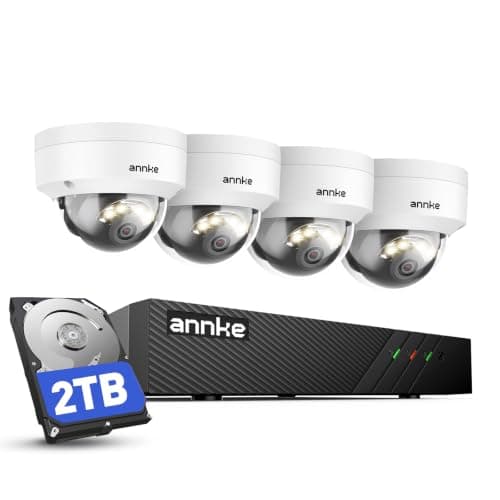
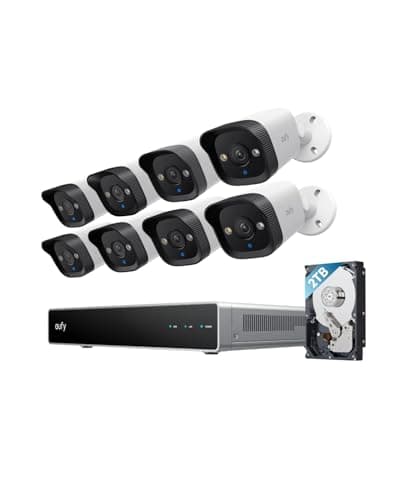
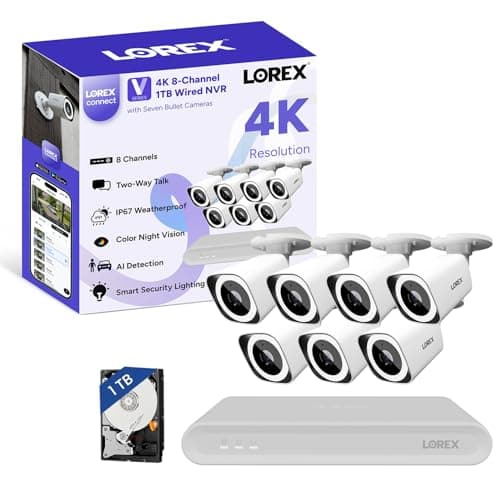
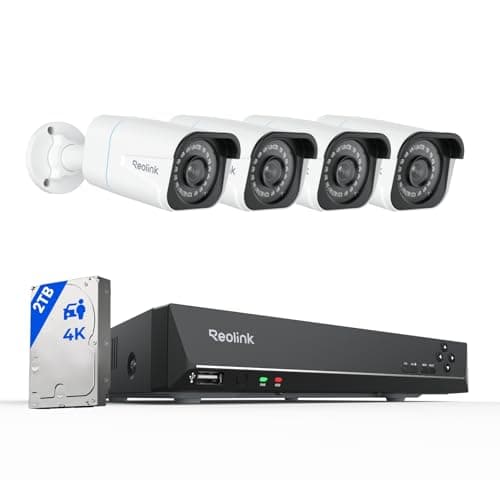
The Reolink RLK8-800B4 is the pick for most homes because it is the most balanced complete kit: four 4K cameras, the recorder and a 2TB drive in one box, expandable to twelve channels when you outgrow it. The ANNKE 8CH 4K PoEis the value answer and the tinkerer's choice — the most camera and features per dollar, and an open ONVIF stream that lets Home Assistant or Frigate take over if you want to. The eufy PoE NVR System E40 is the one-purchase whole-property option: eight 4K cameras and a polished app from a brand built around not charging you a monthly fee. And the Lorex V-Series 8-channel kit is the one for a recorder you have to share a room with: seven 4K PoE cameras, a box Lorex publishes as fanless and sets up from the app with no monitor attached, and a Smart Search that filters clips by motion type and colour.
None of these support Matter or Apple HomeKit — Matter camera support has barely started, as the Matter guideexplains — so you live in the brand's app plus, in most cases, Alexa or Google for a live view on a display. That changes nothing about the no-fee promise; it is just worth knowing before you expect a camera to appear in the Home app.
The two kits people cross-shop most often in this class are the Lorex V-Series and the Reolink RLK8-800B4 — seven cameras and 1TB against four cameras and 2TB. We put them head to head in Lorex V-Series vs Reolink RLK8-800B4.
How to actually choose a wired system
Start with the channel count and the number of cameras, because it sets the shape of everything else. Count the doors, gates and approaches you actually want covered — most homes land at four to six — and buy a recorder with at least that many channels plus one or two spare. An 8-channel NVR with four cameras, like the Reolink or ANNKE here, leaves you room to add later; an 8-camera kit like the eufy covers a whole perimeter today. Do not over-buy channels you have no wall for, but do leave headroom, because filling a spare channel later is a cheap upgrade and a whole new recorder is not.
Confirm it is PoE, not DVR
This is the one spec that trips buyers up. A PoE / NVR system uses network cable and digital IP cameras — that is what every kit on this page is. An older DVR system uses coaxial cable and analog cameras; it can look almost identical in a listing and is often cheaper, but the cabling, the resolution ceiling and the smarts are a step behind. If a system says PoE, NVR and IP cameras, you are in the right place. If it says DVR and BNC or coax, that is the older technology.
Size the drive to how long you want to look back
Three of these kits ship with a 2TB drive and the Lorex with 1TB, and the honest rule of thumb is that a 2TB drive holds somewhere around one to two weeks of continuous 4K footage across four cameras before it loops and overwrites the oldest — more if you record on motion only, fewer with more cameras or higher bitrate. That is plenty for catching a package theft or a break-in you review within days. If you want a month or more of history, or you are filling all eight channels, plan to swap in a larger surveillance-rated drive; all four recorders here accept one, up to 16TB on the Reolink and eufy and 10TB on the Lorex.
Then weigh resolution, coverage and integration
All four systems shoot 4K, which is the resolution you want for reading a face or a plate at the edge of a driveway, so that is a wash. Where they diverge is intent. The Lorex leans into living with the thing — a fanless recorder, app-only setup and a Smart Search that filters by motion type and colour — which is worth paying for if your problem is finding footage rather than merely capturing it. The ANNKE leans the other way, toward openness, with an ONVIF stream that hands control to Home Assistant. The eufy leans on app polish and camera count, and the Reolink on being the most balanced all-rounder. Match the kit to which of those you actually care about, and ignore the spec you don't.
If the terminology is still doing the work
PoE, NVR, channels, bitrate: the vocabulary around wired systems does more to put people off than the cable run does. If you want the plain-language version — what Power over Ethernet actually is, why these kits record 24/7 when battery cameras cannot, and what you need beyond the box — start with what is a PoE security camera.