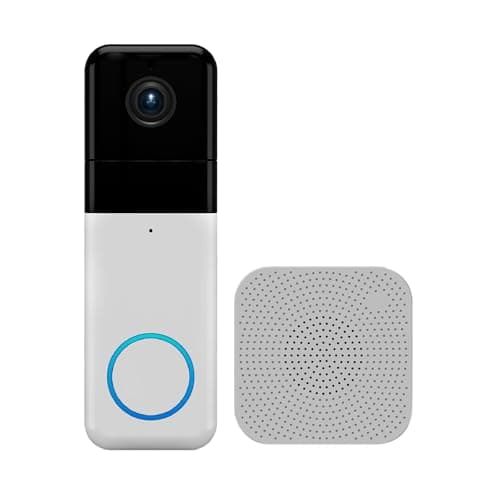
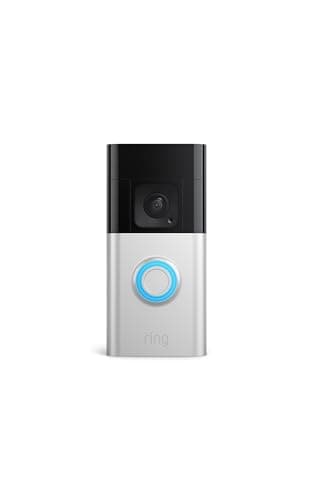
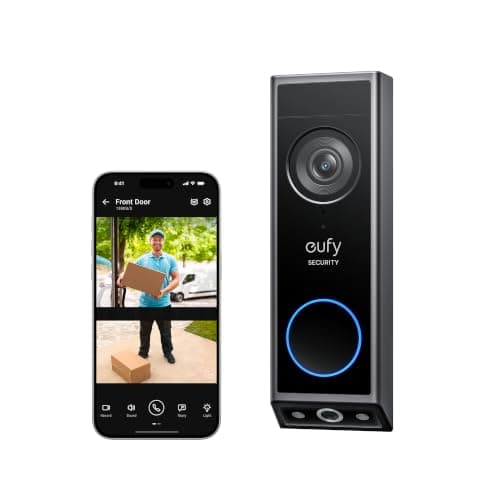
A doorbell for a rented apartment is a different shopping problem from a doorbell for a house you own. You usually cannot hardwire anything, you often cannot drill into a door frame or a shared hallway wall, and whatever you put up has to come down cleanly when you move — ideally without your landlord ever noticing it was there. On top of that, most renters would rather not sign up for yet another monthly bill. So we ranked these three the way a renter actually has to shop: battery power first, no-drill mounting second, nothing landlord-visible third, and low or no fee running underneath all of it.
The criteria that matter in a rental
Battery power, so there is no wiring.This is the non-negotiable one. A hardwired doorbell needs existing low-voltage wiring and a transformer, which most apartments either don't have at the unit door or won't let you touch. Every doorbell here runs on a rechargeable battery, so it installs with no electrician, no exposed wires, and no permanent change to the building. You pull the unit off to recharge it every so often and put it back — that is the whole maintenance story.
No-drill mounting, so you leave no holes.This is where renters get nervous, and fairly so. The good news is that no-drill mounting options exist and are widely available — think removable adhesive mounts, over-the-door brackets that hook over the top edge of the door, and peephole mounts that use an existing peephole instead of new holes. We are being deliberately general here because what comes in a given box changes over time, and we won't claim a specific accessory ships with a specific doorbell when we haven't confirmed it. The reliable takeaway is that a battery doorbell plus an aftermarket no-drill mount is a proven, damage-free way to hang one in a rental — check the exact mount that fits your door before you buy.
Nothing your landlord will object to. Because these are wireless and can go up with adhesive, over-the-door or peephole hardware, none of them require altering the building. That matters both for your deposit and for the fact that many leases quietly forbid permanent fixtures. Removable mounting keeps you on the right side of that. If your lease or building has rules about cameras in shared spaces, read them first — but the hardware itself asks nothing permanent of you.
Low or no monthly fee. A doorbell is cheap to buy and can be quietly expensive to own, because the saved clip — the reason you bought it — is often a paid feature. Two of our three picks keep footage locally for free; the third is excellent but bills you monthly to save clips. We do the multi-year math below so the running cost is not a surprise. The same reasoning drives our no-subscription doorbell page, where the fee-free picks get the full cost breakdown.
Why the eufy E340 wins for renters
The eufy Video Doorbell E340 is our top pick because it clears every renter criterion and adds the one feature apartment dwellers ask about most. It runs on battery, so no wiring. It records every clip to 8GB of built-in storage with no monthly fee, so no bill. And its second, downward-facing camera watches the doorstep for parcels — which, in a building with a shared hallway or a lobby where packages get left, is exactly the angle you want. The honest catch is that 8GB is finite: in a high-traffic hallway, older clips roll off unless you manage the space now and then. For most renters that is a fair trade for never paying a fee. We pit it directly against the Ring in eufy E340 vs Ring Battery Doorbell Plus if you want that decision in isolation.
Wyze for the tightest budget
The Wyze Video Doorbell Pro is the pick when price comes first — it is among the cheapest ways to get a genuinely capable wireless doorbell, and it even includes a chime in the box, which saves you buying one separately for an apartment with no existing chime. It records sharp 1440 HD in a square 1:1 shape that fits a doorway well, and it stores clips locally on a microSD card you supply, with no subscription required. Two honest cautions: the smartest AI alerts want the optional Cam Plus plan, and given Wyze's past security incidents, you should set a unique password and turn on two-factor authentication before it ever watches your door. For a first apartment on a strict budget, it is the value benchmark.
Ring if you already run Alexa
The Ring Battery Doorbell Plus is the smoothest of the three to live with — if you already run Alexa and Ring. Its removable battery pops off to recharge, so it fits a rental with no wiring, and the tall Head-to-Toe HD+ image shows a visitor face to feet with a parcel on the step. Everything lands in one tidy app alongside any Ring cameras. The condition, and it is a real one, is the fee: without a Ring Home plan you get live view and alerts but cannot save a single recorded clip, and Ring is cloud-only with no local option. For a renter already inside Alexa who is happy to treat the plan as part of the price, it is a fine choice; for anyone else here, the no-fee picks are the smarter money.
One caveat for every pick
None of these support Matter or Apple HomeKit today — so you will live in the brand's own app plus Alexa or Google, never Apple Home. And one apartment-specific gotcha worth naming: a battery doorbell still needs a solid Wi-Fi signal at the door, and apartment doors are often the weakest spot in the flat for it. If your signal struggles out there, read the no-Wi-Fi doorbell guidebefore you buy — the options are narrower than the marketing suggests. As always, we compiled these from the manufacturers' published specs and listings; we don't run a doorbell lab, and where a figure came from someone else's testing we say so.
Start with how it mounts, not how it looks
In a rental, the mount decides everything. Measure your door and its surround first, then pick the mounting method that leaves no damage: a removable adhesive mount on a smooth frame, an over-the-door bracket that hooks over the top edge, or a peephole mount if you have a peephole and no good surface beside the door. All three doorbells here are light, battery units suited to that kind of hardware. Confirm the specific mount that fits your door before you commit — that is the step that keeps your deposit intact.
Then decide who keeps your footage
This sets your cost for years, so decide it deliberately. If you never want a bill, choose a doorbell that records locally: the eufy E340 saves clips to built-in 8GB, and the Wyze Pro records to a microSD card you add. If you are already inside Ring and Alexa and don't mind a monthly fee, the Ring is the tidier day-to-day experience — just add the plan to your budget from day one rather than finding it at checkout. Our connectivity guide and the wider best video doorbells roundup go deeper if you are weighing all the options.
Finally, check Wi-Fi and your lease
Two apartment-specific checks before you buy. First, Wi-Fi: stand at the door with your phone and see how the signal holds — a doorbell that keeps dropping is worse than none. Second, your lease and any building rules on cameras in shared spaces. The hardware asks nothing permanent of you, but a shared hallway can have its own policy. Clear both, and a battery doorbell is one of the easiest upgrades a renter can make.
What to add once the door is covered
A doorbell answers "who was that". The two layers renters add next are an entry alert or alarm, and a lock you can share without copying keys. Both have rental-specific answers: best home security systems for apartments covers the adhesive-mount kits and the silent sensor-only setups, and best smart locks for renters covers the retrofit locks that leave the landlord's deadbolt exactly where it is.