Almost every home security system is sold to a homeowner. The marketing photographs a driveway, the install guide assumes you can put screws in a door frame, the sensor kit includes enough hardware for four exterior doors, and the monitoring contract runs for three years. None of that fits an apartment, and the result is that renters either overbuy a system they cannot install or skip the whole category. There is a better answer, and it starts with being honest about the five constraints an apartment actually imposes.
Constraint one: you cannot drill, and you have to leave no trace
This is the hard limit, and it rules out more products than anything else. Everything on this page mounts with adhesive — contact sensors on the door and window frames, a keypad beside the door, a base station on a shelf. That is not a compromise, either: adhesive-mounted contact sensors are the standard install method for every DIY system now, and they come off with a hair dryer and a little patience. What it does rule out is hardwired panels, wired sirens, doorbell transformers and anything exterior. If you were weighing a wired system, wired vs wireless home security systems explains what you give up by going wireless, and in a rental the answer is: not much that you could have used anyway.
Constraint two: the lease has an end date and most contracts do not
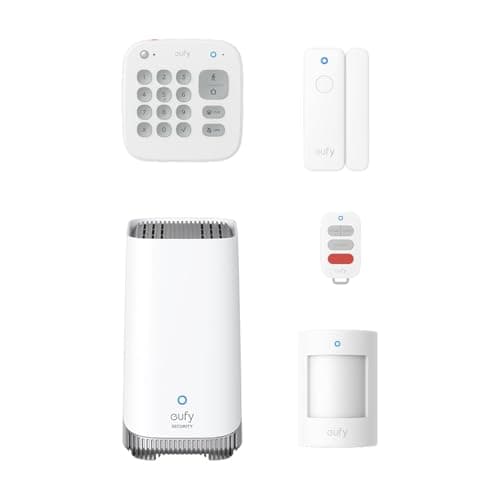
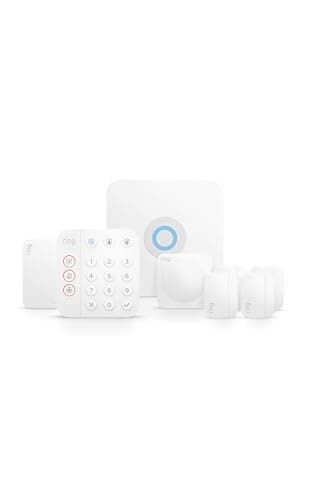
A traditional monitored system is sold on a multi-year agreement, frequently with an early termination fee, because the hardware is subsidized by the contract. If you move annually that is a terrible shape. The two systems on this page are the opposite: Ring offers no-contract professional monitoring you can turn on and off by the month, and eufy offers no monitoring at all, so there is nothing to cancel. Decide which of those you want before you compare hardware, because it is the decision that actually determines your three-year cost. Our do you need a monitoring plan guide works through who genuinely benefits from professional monitoring, and DIY vs monitored home security covers the broader trade.
Constraint three: a siren in an apartment is a neighbor problem
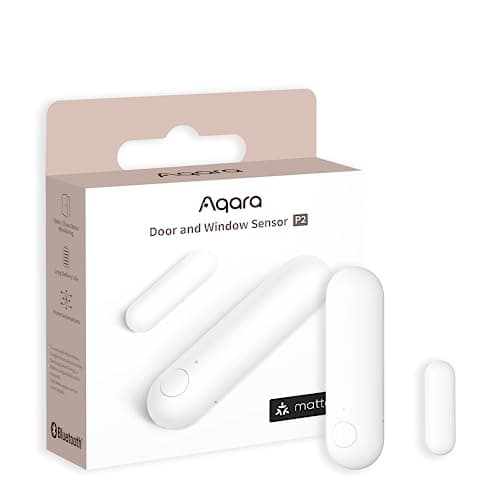
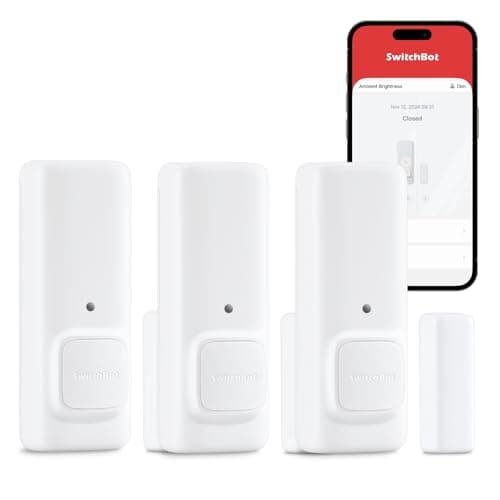
A 100dB siren in a detached house wakes your household and warns the street. The same siren in a third-floor apartment is heard by six households who cannot do anything about it and one of whom will complain to the building manager. That is a real reason a lot of renters are better served by a silent setup: entry alerts to your phone, a smart light that comes on, and a recorded clip — with no audible alarm at all. Both the Aqara and SwitchBot picks on this page exist for that scenario, and both kits above can be armed in a mode that notifies without sounding. If you do want the siren, think about where the hub physically sits before you stick it to a wall shared with a bedroom next door.
Constraint four: your threat model is a door, not a perimeter
An apartment usually has one entry door, sometimes a balcony slider, and windows that are either inaccessible or shared with a walkway. That is a dramatically smaller perimeter than a house, and it means sensor count matters far less than sensor placement. One good contact sensor on the entry door plus one motion sensor covering the space it opens into is a genuinely effective setup for a one-bedroom. Ground-floor and walk-up apartments should add the slider and any reachable window. Our guide to how home security sensors work explains what each sensor type actually detects, and best door and window sensors ranks the standalone options if you want to build up piece by piece rather than buy a kit.
Constraint five: you do not own the exterior
You cannot mount a floodlight camera, you usually cannot replace the doorbell, and pointing a camera down a shared corridor raises questions that are between you and your building rather than you and the law. The practical workarounds are indoor cameras aimed at your own entry door, and no-drill doorbells that mount on the frame or use an existing peephole. We rank the rental-friendly doorbells in best video doorbells for apartments, the indoor camera field in best indoor security cameras, and the wider renter-friendly smart-home setup in best smart home devices for renters.
Why we did not just rank the big-name systems
If you search for an apartment security system you will mostly find the same four or five monitored brands with an "apartment" landing page attached. We looked at them, and for a renter the honest conclusion is that the system differences matter less than the contract differences. Where a brand comparison genuinely helps is when you have already decided you want monitoring and are choosing between providers, which is what Ring vs SimpliSafe, abode vs SimpliSafe and Ring Alarm vs Cove are for. If you want cameras inside the same system, best home security systems with cameras covers that combination, with the same caveat about what you can mount in a rental.
Read your lease before you read another spec sheet
Two clauses matter. The first is any language about alterations and fixtures, which is what makes adhesive mounting the default rather than a preference — and it is also why you should photograph the door frame before you stick anything to it. The second is anything about alarm systems, monitoring, or notifying the building, which some larger complexes do regulate, occasionally because the building has its own system or because false alarms generate fines that land on the tenant. Neither clause usually stops you doing any of this. Both are much easier to check now than to argue about later.
Buy for the apartment after this one too
The thing that separates a good rental purchase from a bad one is whether it survives the move. Judge every piece on three questions: does it come off the wall cleanly, does it work in a different floor plan, and does it work on a different internet connection. Adhesive sensors and a plug-in base station pass all three. A system whose value depends on a contract you signed for this address does not. This is also the argument for starting small — one door sensor and one motion sensor — and adding pieces once you know how you actually live in the space.
Decide between an alarm and an alert
These are different products solving different problems, and the mistake is buying one while wanting the other. An alarm makes noise, has a keypad and an entry delay, and can escalate to a monitoring center — buy that if you want deterrence and response. An alert tells your phone the door opened and nothing more — buy that if you want to know when a roommate got home, whether a package was collected, or that your door was opened while you were out, without involving your neighbors. The two kits on this page are alarms; the two sensors are alerts. In an apartment, more renters are genuinely served by the second than the industry likes to admit.
Then add the layers that actually get used
Once the door is covered, the next two additions are a view of the entry and a smarter lock, in that order. A no-drill doorbell or an indoor camera pointed at the door answers "who was that", which is the question renters ask far more often than "was I broken into". A retrofit smart lock answers the roommate and dog-walker problem without copying keys — and the retrofit designs are the ones that keep your landlord's deadbolt intact, which we cover in best smart locks for renters. Smoke and CO is usually the building's responsibility in a rental, but a listener-style device that tells your phone when the building's alarm sounds is a genuinely good rental buy; see best smart smoke and CO alarms.