If your home already runs on Google Assistant, a Nest Hub and Android phones, a video doorbell should appear on the screens you already own, not fight your setup. Most doorbell roundups skip the question and rank on features Google users cannot reach. We hold every doorbell to one honest standard: does it actually work with Google Home, and if so, how deeply? On that rule, three of the doorbells we cover belong on this page - one that is genuinely Google-native, and two that are Google-friendly with no subscription. It is defined as much by the popular doorbell we deliberately left off as by the three we kept. If you want the whole field across every use case, our best video doorbells overall guide ranks them all.
What "works with Google" actually means for a doorbell
Two very different things get sold under the same phrase, and the gap between them decides which doorbell is right for you. The strongest version is Google-native: press the button and the live feed casts automatically to your Nest Hub or a Google smart display, the doorbell lives inside the Google Home app, and Assistant handles it as a first-class device. That is a genuine, built-in integration inside Google's own ecosystem. The weaker version is Google-friendly: you can add the doorbell to Google Home and ask a display to show the feed, but it does not automatically cast the moment someone rings.
Both are real and both are useful - but they are not the same promise, so this page keeps them clearly separate. Only one doorbell here is truly Google-native, and it is the one whose longer video history sits behind a plan. The other two are Google-friendly and keep your footage local with no monthly fee. That trade - the deepest Google integration versus no subscription - is the whole story of this list, and it is why we rank rather than pretend they are interchangeable. If you are still weighing the two big assistants against each other, our Alexa vs Google Home guide is the wider explainer behind this shortlist.
Why the Ring doorbell is not on this page
This is the most important thing on the page, so we are being explicit about it. The Ring Battery Doorbell Plus is a doorbell we rate highly - it is our top pick on a different page - and it is not here, on purpose, not by oversight. The reason is our own honesty rule: the Ring is an Alexadevice. It works with Amazon Alexa, announces and casts to Echo and Echo Show, and its listing does not name Google Home. On a page whose entire promise is "doorbells that work with Google," a doorbell built for the other assistant cannot appear, however good it is elsewhere.
This is the exact line that separates this page from its mirror image, our best video doorbells for Alexapage. There, the Ring is the top pick, because it is the true Alexa-native option - and the Nest Doorbell is the one left off, because it is Google-native and does not name Alexa. It is the same catalog of doorbells, filtered by a different question, and each page's top pick being the other page's exclusion is the clearest proof that both are filtered honestly rather than padded. If you run a mixed Google-and-Alexa home, that dividing line is worth knowing before you buy, and the two no-fee picks below - the eufy and the Wyze - are the doorbells that sit comfortably on both pages because they work with both assistants.
The three doorbells that work with Google, and how they differ
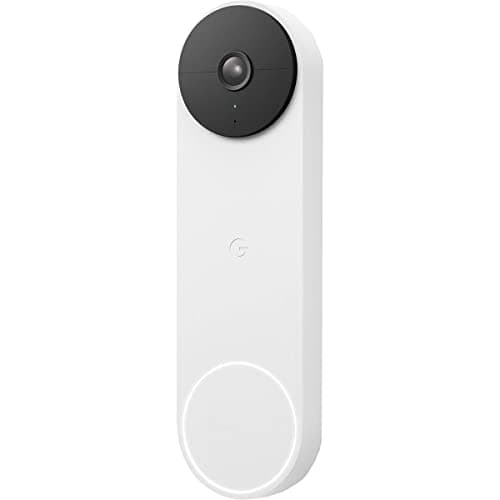
The Google Nest Doorbell (Battery) is the top pick, because it is the only Google-native one. Press the button and it casts the live feed to your Nest Hub or Google display automatically, and it lives natively inside the Google Home app - no other doorbell here does that. Its free on-device AI can tell a person from a package or a passing car without any plan, and it runs on battery or hardwired. The honest catch is the recording tier: you get roughly three hours of free event history, and keeping a longer record means a Nest Aware plan (confirm current pricing). For a Google household that wants the tightest integration and does not mind a plan for longer history, it is the standout, which is why our full Nest Doorbell (Battery) review goes deeper on it.
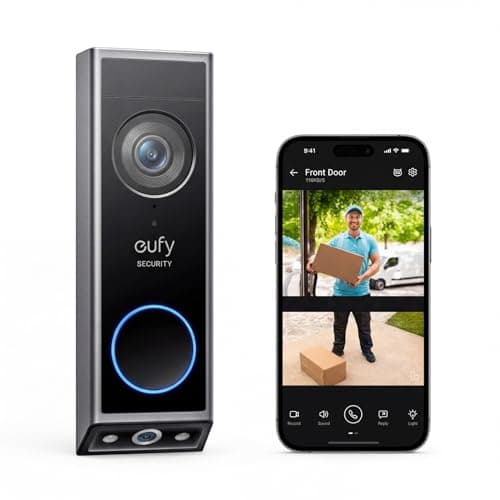
The eufy Video Doorbell E340 is the honest value pick. It works with Google, but its real appeal is that it records to built-in 8GB local storage with no subscription at all - you keep your clips and never see a recurring charge. It also adds a second camera aimed straight down at the doorstep, so a package left on the ground stays in frame when the main lens cannot see it, and it runs wired or on battery. The difference from the Nest is honesty about depth: it is Google-friendly, not Google-native, so it does not cast to a Nest Hub the same automatic way. If keeping footage local and fee-free matters more than seamless casting, this is the one; our eufy Doorbell E340 review has the full picture, and our Ring vs Nest comparison shows where the Google-native option pulls ahead.
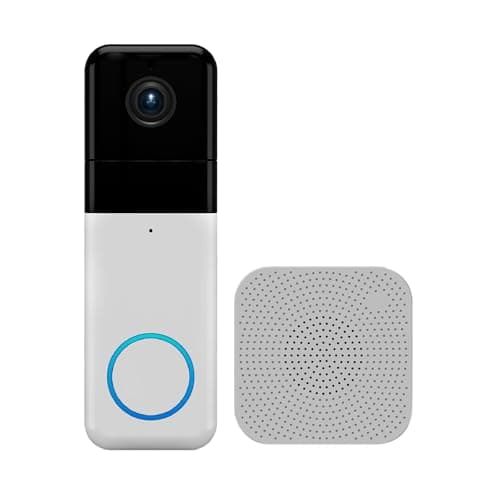
The Wyze Video Doorbell Pro is the budget answer. It is the cheapest way onto this list: a wireless doorbell that includes its own chime in the box, shoots 1440 HD in a tall 1:1 head-to-toe aspect that shows a visitor head to toe with a parcel at their feet, and records free to a microSD card with no subscription. It works with Google and Alexa for viewing, so it drops into a Google home without adding a bill. Like the eufy, its Google support is for viewing rather than the full automatic cast, and it keeps things simple with a single camera. For a first doorbell or a spare door where cost matters most, it is the value entry point - our Wyze Video Doorbell Pro review walks through it.
Cloud or local? That is the real fork on this page
For a Google home, the choice is not really about the assistant - all three work with Google - it is about where your footage lives and whether you pay for it. The Nest gives free on-device AI and about three hours of free event history, but a longer recorded record needs a Nest Aware plan, so budget for that if you want more than a few hours of history (confirm current pricing). The eufy and the Wyze are local-storage: the eufy saves to built-in 8GB and the Wyze to a microSD card, both with no subscription, so your clips are yours and there is no monthly bill. That single distinction, not the Google badge, is what usually decides this purchase. We map the plans and what each really costs in our video doorbell subscription costs breakdown, and the fee-free field is ranked in the best no-subscription video doorbells roundup.
Neither approach is wrong. Nest Aware means longer history is safe in the cloud even if a thief pries the doorbell off the wall, and the Nest's Google integration is the most polished here. Local storage means no recurring cost and no dependence on a company's servers, at the price of footage that lives on the device. Decide which of those you value before you decide on a model, because it is the difference you will feel every month, not just on day one.
A word on Matter, HomeKit and the honest caveat
None of these three listings claims Matter as of our review date, so we do not credit any of them with it - each is a Google doorbell (the eufy and Wyze also Alexa) rather than a future-proof, cross-ecosystem one. On Apple HomeKit, the Nest's listing does not name it, and neither do the eufy and Wyze listings, so none of these three is the pick for an Apple household. That does not affect Google today: all three add to the Google Home app and work with Google Assistant right now. If a broad, assistant-agnostic setup is your goal, our best smart home ecosystem guide is the place to start, and the how video doorbells work explainer covers the mechanics behind all of them.
The same caveat sits on every page here: we do not run a doorbell lab. We built this list from each product's own Amazon listing and manufacturer documentation, recorded only the features and Google support each one actually names, and marked anything a listing left unsaid as "Not listed" rather than assuming it. That discipline is exactly why the Ring doorbell is off this page - it does not name Google, so we do not claim it works with it. This is a researched roundup, not a hands-on test, and where a listing goes quiet, so do we. The full method is on our methodology page.
Start with how deep your Google integration needs to be
Before storage, before price, answer one question: do you want your doorbell to cast the caller to your Nest Hub automatically when someone rings, or is it enough to add it to Google Home and pull up the feed yourself? If seamless casting is the whole point - you want to be in the kitchen and have the doorstep appear on the Nest Hub without lifting a finger - the Google Nest Doorbell (Battery) is the only pick here that does it, because it is genuinely Google-native. If you would happily open the feed yourself and would rather not pay a monthly fee, the eufy E340 and Wyze Pro are Google-friendly and keep your footage local. This single question removes most of the field before you think about anything else.
Then decide whether you will pay for storage
This is the fork that costs or saves you money every month. The Nest gives free on-device AI and about three hours of free event history, but keeping a longer recorded record needs a Nest Aware plan (confirm current pricing), so if you want more than a few hours of history, budget for it. The eufy and Wyze record locally - the eufy to built-in 8GB, the Wyze to a microSD card - with no subscription, so your clips are yours and there is no bill. If a fee is a dealbreaker, that alone points you at the eufy or the Wyze; if you value the tightest Google integration and longer cloud history and do not mind a plan, the Nest earns it. Our storage explainer lays out how on-device, microSD and cloud recording actually differ.
Then match the doorbell to your door, power and budget
Now the practical shape. On power, the Nest runs on battery or hardwired and the Wyze is battery/wireless, so both mount with little or no wiring, while the eufy can run on battery or be hardwired to your existing doorbell wires if you never want to recharge it - our wired vs battery guide covers that trade in full. On coverage, the eufy's second downward camera is the one to pick if parcels on the doorstep are your main worry, while the Nest and Wyze use a single tall frame that still catches a package at a visitor's feet. On budget, the Wyze is the cheapest entry and includes its own chime, the eufy sits in the middle as the no-fee dual-camera pick, and the Nest is the one you choose for Google-native polish and on-device AI rather than to save money. Whichever you land on, check our installation guide first so the mount and chime are sorted before the box arrives - and if your Alexa-side family is weighing in, send them our Alexa doorbell page, the mirror of this one.