Skip to content
Latch & Hub

Cameras · Security Cameras

Ring Floodlight Cam Wired Plus Review: Great Light, Dated Camera

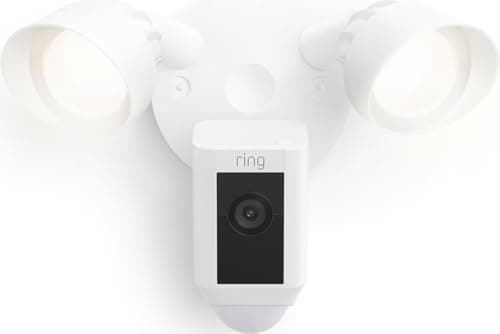
The floodlight camera that makes sense if you already live in the Ring app, and makes much less sense if you do not. Two 2,000-lumen heads, a 105 dB siren you can trigger from your phone, and 1080p video whose recordings only exist while you are paying for them.

By Stephen V.Updated How we choose
#ad

We earn a commission when you buy through our Amazon links, at no extra cost to you. It never changes our rankings — where the subscription-free or cheaper option is the better buy, we say so. How this works.

Ring Floodlight Cam Wired Plus

Our top pick

Ring Floodlight Cam Wired Plus

A well-built hardwired floodlight camera that is really an ecosystem purchase. The light, the siren and the published cold-weather rating are all genuinely good; the 1080p sensor and the subscription-gated recordings are the price of admission. Buy it because you own Ring, not because it beats the field on specs.

Best for: Houses already running Ring Alarm, a Ring doorbell or Alexa

$179.99View on Amazon

#ad · we may earn a commission from this link to Ring Floodlight Cam Wired Plus

Verdict

The bottom line

The Ring Floodlight Cam Wired Plus is worth buying for one specific household: the one that already has a Ring doorbell, a Ring Alarm or an Echo in the kitchen. In that house it arms with the system, lands in the app you already open and answers Alexa without a workaround, and the two 3000 K heads at 2,000 lumens plus a remotely triggered 105 dB siren make it a serious deterrent at the side of a house. Outside that household it is harder to recommend in 2026: the sensor is 1080p when every rival at the price is 2K or better, and saving or reviewing what it recorded needs a Ring plan from $4.99/mo. If you have no Ring gear and no appetite for a subscription, the same money buys more camera elsewhere.

Floodlight cameras are the most honest product in home security, because the thing that actually changes behavior on your driveway is not the sensor — it is 2,000 lumens coming on at the exact moment someone did not expect it. Ring understands this. The Floodlight Cam Wired Plus is built as a light first and a camera second, and that ordering is why people who buy it tend to be happy with it even though its video specification is the weakest at the price. Whether it is right for you comes down to two questions: what else do you own, and are you willing to pay monthly to keep what it records?

The light is the product

Ring publishes two floodlights at 3000 K and 2,000 lumens combined. Both numbers matter. The 2,000 lumens is enough to wash a driveway, a side return or a back patio in usable light rather than the dim pool you get from a camera with a token LED strip, which means the camera is recording a lit scene in color instead of an infrared monochrome one. The 3000 K color temperature is the less obvious win: it is a warm white, so the front of your house does not look like a filling station forecourt when the light triggers. Cheaper floodlight cameras often run cooler and brighter on paper, and the result is harsher.

Two separate heads also means you can aim the light somewhere other than where the camera looks — along a fence line while the camera watches the gate, for instance. That sounds minor until you have installed one; it is the difference between a camera that sees a lit subject and a camera that sees a silhouette against a bright wall.

The siren deserves its own line. Ring rates it at 105 dB, measured at four inches, and crucially it is remote-activated: you can set it off yourself from the app while watching the live view. A siren that only fires on an automation is a deterrent you have to configure and trust. One you can trigger deliberately is a tool. If you have ever watched someone wander up your driveway at 2am on a phone screen and wished you could do something other than shout through a speaker, that is the feature.

1080p in 2026 is the real compromise

There is no way to be kind about this: the sensor is the oldest part of the product. 1080p across a 140° field of view spreads roughly two million pixels over the width of your frontage, and it is enough to establish that a person walked up to the door and usually not enough to identify them if they are more than a few yards out. Every floodlight camera we rate at a similar price is 2K or better — the eufy Floodlight E340 runs dual 2K/3K lenses and pans, and the Wyze Floodlight v2 is 2K at under half the price.

How much that matters depends entirely on the job. If the camera is a deterrent and a record that something happened — the overwhelmingly common use — 1080p does the job and the light does the heavy lifting. If you are mounting it over a long drive and the point is to read a license plate or recognize a face at thirty feet, buy more resolution. Our 2K vs 4K explainer covers where the extra pixels are genuinely worth paying for and where they are marketing.

The subscription question, answered plainly

Without a plan, this camera still works: live view, motion notifications, two-way talk, the floodlights and the siren all function. What you do not get is history. Saving and reviewing clips is a subscription feature, and Ring's published tiers are Ring Solo at $4.99/mo (or $49.99/yr) for a single device, Ring Multi at $9.99/mo ($99.99/yr) for every device at one address, and Ring Pro at $19.99/mo ($199.99/yr), which adds 24/7 professional monitoring for a Ring Alarm.

That is cheap per month and expensive per decade, which is the honest way to look at it. One camera on Ring Solo is $180 of fees over three years on top of the hardware — slightly more than the camera cost. If you already pay for Ring Multi because of a doorbell and an alarm, this camera adds nothing to the bill and the calculation flips completely: it becomes the cheapest way to add a lit, sirened camera to a system you are already paying for. Our camera subscription cost breakdown has the full arithmetic across brands, and no-subscription security cameras is the page to read if that recurring line is a dealbreaker.

Installation is a wiring job, not a bracket job

Ring publishes this as hardwired at 100-240 V, mounted on a 4-inch round weatherproof electrical box, with the AC wiring not included. In practice that means one of three situations: you already have an outdoor fixture box where you want the camera and this is a straightforward swap; you have power nearby and need an electrician to land a box; or you have nothing there and this is the wrong product. There is no battery version of this model and no plug-in option, so renters should stop here and look at a battery or plug-in camera instead — cameras for renters covers what works without touching the wiring, and how to power an outdoor camera walks through the options.

The upside of a wiring job is that you never think about it again. No batteries to bring down a ladder every few months, no solar panel to angle, no winter performance cliff when a lithium cell gets cold. For a permanent install at a house you own, hardwired is the right answer and it is why this product shape exists.

Where it fits against the alternatives

Against the eufy Floodlight E340 it loses on camera and wins on ecosystem: eufy gives you dual lenses, pan and tilt, 2K/3K video and local storage with no fee, while Ring gives you alarm integration and a simpler app. We put those two side by side in eufy Floodlight E340 vs Ring Floodlight Cam Wired Plus. Against the much cheaper Wyze Floodlight v2 it wins on build, integration and the published cold-weather rating while losing on resolution and price — Wyze Floodlight v2 vs Ring is that comparison in full. And if you want the most camera per dollar regardless of brand loyalty, the best floodlight cameras roundup ranks the whole field.

The pattern across all three comparisons is the same: nobody should buy this camera on its specification sheet. People should buy it because their house already runs on Ring, and in that context it is the right camera and the calculation that makes it look expensive — the subscription — has usually already been paid.

Who should buy it

Buy it if you own a Ring Alarm and want a camera that arms with the house; if you already pay for a Ring plan covering multiple devices; or if you want the best-integrated Alexa floodlight camera and 1080p is enough for the distance you are watching. Skip it if you want 2K or better, if you want footage kept locally with no fee, if you rent, or if this would be your only Ring device — in that last case you are paying an ecosystem premium for an ecosystem of one. We have not tested this unit hands-on; the specifications above are Ring's own published figures, read on the date in the sources below.

The short answer

Quick picks

Tap any row for the full write-up.

  • Ring Floodlight Cam Wired Plus
    01 Ring Floodlight Cam Wired PlusTop pick

    A well-built hardwired floodlight camera that is really an ecosystem purchase. The light, the siren and the published cold-weather rating are all genuinely good; the 1080p sensor and the subscription-gated recordings are the price of admission. Buy it because you own Ring, not because it beats the field on specs.

    Best for: Houses already running Ring Alarm, a Ring doorbell or Alexa · No Matter — Ring app and Alexa

    $179.99View on Amazon

    #ad · we may earn a commission from this link to Ring Floodlight Cam Wired Plus

#ad · Live prices from the Amazon Product API, as of October 20, 2026. Where we have no verified live price we show none — we would rather leave a gap than print a number that has rotted.

3-year cost of one floodlight camera: Ring with a plan vs the no-fee alternatives
ProductHardwareMonthly3-yr fees3-yr total
Wyze Floodlight v22K, records to microSD with no plan required$80$0$0$80
Ring Floodlight Cam Wired Plus — no planLive view, alerts, light and siren only — no saved clips$180$0$0$180
eufy Floodlight E340Dual 2K/3K with pan and tilt, local storage, no subscription sold$219$0$0$219
Ring Floodlight Cam Wired Plus — Ring SoloAdds saved video history for this one device$180$5/mo$180$360

Hardware figures are approximate MSRP context for the comparison; the live, date-stamped price is on each product's buy button. Fees are the published plan rates at the time of writing — always confirm current pricing with the brand.

In detail

The full write-up

01

Ring Floodlight Cam Wired Plus

Top pick
Ring Floodlight Cam Wired Plus
$179.99View on Amazon

Price as of October 20, 2026. Amazon's price at checkout is the one that counts.

#ad · we may earn a commission from this link to Ring Floodlight Cam Wired Plus

A well-built hardwired floodlight camera that is really an ecosystem purchase. The light, the siren and the published cold-weather rating are all genuinely good; the 1080p sensor and the subscription-gated recordings are the price of admission. Buy it because you own Ring, not because it beats the field on specs.

  • 1080p HD with night vision
  • 140° horizontal x 80° vertical field of view
  • Two 3000 K floodlights, 2,000 lumens
  • 105 dB remote-activated siren
  • Hardwired 100-240 V on a 4-inch round box
  • Rated -5 °F to 118 °F
Matter: No Matter — Ring app and AlexaFee: Live view free; saved video needs a Ring plan from $4.99/moResearched, not hands-on tested

Good

  • It is the only floodlight camera that becomes part of a Ring Alarm rather than sitting beside it: armed with the house, in the same app as the doorbell, and answering Alexa with no bridge or workaround
  • The light is the product and Ring did not skimp on it — two heads at 3000 K and 2,000 lumens is a genuinely useful amount of light for a driveway or a side return, and warm enough not to make the house look like a car park
  • A 105 dB siren you can trigger deliberately from the app is a different tool from a siren that only fires on a motion rule; it is the feature you want at 2am when you can see someone on the camera
  • Ring publishes the environmental spec most rivals skip: rated from -5 °F to 118 °F, which is the number that matters if you are mounting a camera on a north wall through a real winter
  • Dual-band Wi-Fi (2.4 or 5 GHz) means it does not have to compete for the crowded 2.4 GHz band that most budget cameras are stuck on

Less good

  • 1080p is the headline weakness. It is enough to see that someone is there and often not enough to say who — and at this price every serious rival is 2K or better, including the eufy and Wyze floodlights we compare it against
  • Recordings are a paid feature. Live view and notifications work without a plan, but the clip you actually want to show someone exists only while a Ring subscription is active, starting at $4.99/mo for one device
  • It is hardwired onto a 4-inch round weatherproof box and the AC wiring is not included, so this is a junction-box job rather than a hook-it-on-a-bracket job — no good for renters and not a ten-minute install
  • A 140° horizontal field of view is narrower than most of its rivals and the camera cannot pan, so aiming it correctly on install day is most of the result you will live with

Skip it if: you own no Ring gear or you refuse a monthly fee — a no-subscription floodlight camera with a 2K sensor costs the same money or less, and this camera's advantages all come from the ecosystem you would not be joining.

What actually decides a floodlight camera purchase

One: is there a box there already? A floodlight camera is a fixture. If an outdoor light already exists where you want coverage, a hardwired camera is the best product in the category and installation is an hour. If there is no power, the honest comparison is not Ring against eufy — it is a hardwired camera against a battery one, and the battery one wins by default.

Two: lumens, then resolution. Light changes behavior and resolution only changes what you can prove afterward. For a deterrent, prioritize the brighter, warmer light; for evidence at distance, prioritize the sensor. Ring is strong on the first and weak on the second, which makes it a good deterrent and a mediocre witness.

Three: where the footage lives. Local storage on a card or a hub costs nothing to keep and is harder to review remotely; cloud storage is effortless and rented. Both are legitimate — just decide before you buy, because it is the brand that enforces the answer, not you. The local vs cloud comparison lays out both failure modes.

Four: the app you will actually open. Four camera brands means four apps and four notification styles, and the family member who is not interested in any of this will only learn one. If that app is already Ring, that is a real, unglamorous reason to buy this camera over a better-specified rival.
How we chose

We don't run a test lab

We don't wire every one of these into a test rig, and we won't write "in our testing" as if we do. What we did instead: pulled each product's published specifications, confirmed its Matter/Thread/HomeKit support from the manufacturer's own documentation, added up the real 3-year cost with any monthly fee included, and read the aggregated verified-buyer sentiment. Every pick is chosen against that published method. Where a number came from someone else, we name and link them in Sources.

Questions

Frequently asked

Does the Ring Floodlight Cam Wired Plus need a subscription?
Not to function, but yes to keep anything. Live view, motion alerts, two-way talk, the lights and the siren all work with no plan. Saving and reviewing recorded clips is a subscription feature, starting at $4.99/mo (or $49.99/yr) on Ring Solo for a single device, with Ring Multi at $9.99/mo covering every Ring device at one address. If you want footage without a recurring fee, buy a camera that records locally instead.
Is 1080p good enough for a driveway?
For noticing, yes. For identifying, often not. Across a 140° field of view, 1080p resolves a person clearly at close range and turns faces into approximations further out. If the camera covers a porch or a side gate, it is fine. If it covers a long drive and you want to read a plate, buy a higher-resolution camera — our driveway camera picks are chosen for exactly that distance problem.
Can I install it myself?
If you are comfortable working on an existing outdoor fixture and turning off the right breaker, yes — it mounts on a 4-inch round weatherproof electrical box at 100-240 V. Ring does not include the AC wiring, so if there is no box where you want the camera, this becomes an electrician's job. There is no battery or plug-in variant of this model.
Does it work with Google Home or Apple Home?
No. Ring cameras live in the Ring app and work with Alexa; Ring does not support Apple HomeKit, and this camera is not a Matter device, so there is no route in through a hub either. If your house runs on Google or Apple, our Google Home camera picks and the camera ecosystem compatibility guide will save you a return.
How does it work with a Ring Alarm?
This is its best trick. A Ring Alarm and Ring cameras share one app and one armed state, so the camera arms and disarms with the house and its events sit in the same timeline as the door sensors. No other floodlight camera we rate does that, because no other brand here sells the alarm as well — see our Ring Alarm review for what the system itself is like to live with, or Ring Alarm vs eufy Alarm if you have not committed to a brand yet.
How bright is 2,000 lumens, really?
Roughly the output of a pair of decent outdoor floodlights, and enough to light a two-car driveway well enough for the camera to record in color rather than infrared. Brighter is not automatically better outdoors: beyond this level you start creating hard shadows and blown-out foregrounds that make footage worse, and you annoy your neighbors. The 3000 K warm tone here is a sensible choice for the front of a house.
Will it survive a cold winter?
Ring publishes a rated operating range of -5 °F to 118 °F, which is better documentation than most of its rivals offer. Being hardwired helps too: cold weather hurts battery cameras most of all, because lithium cells lose capacity as the temperature drops. Our guide on cameras in cold weather covers what actually fails and when.

Keep reading

Receipts

Sources

We do not run a test lab, and we do not pretend to. Compatibility and subscription-cost claims come from the manufacturer's own documentation and the live retailer listing, read on the dates shown. Read our full method.