Skip to content
Latch & Hub

Cameras · Security Cameras

The Best Floodlight Cameras for 2026

A floodlight camera replaces the security light you already own with one that also records. That makes it the only outdoor camera with a permanent power supply — and the only one whose install can stop dead at the wiring, before you have compared a single spec.

By Stephen V.Updated How we choose
#ad

We earn a commission when you buy through our Amazon links, at no extra cost to you. It never changes our rankings — where the subscription-free or cheaper option is the better buy, we say so. How this works.

A floodlight camera is the one outdoor camera that does not ask you to think about batteries, solar panels or charging cables, because it is wired into the fixture it replaced. That is its whole appeal: permanent power, a bright light that was already part of the plan, and a camera that records the moment the light comes on. It is also why it is the outdoor camera most likely to defeat you before you have compared a single spec — every model on this page is hardwired, and the wiring is the first question, not the last. If you are still deciding between camera types at all, how to choose a security camera is the wider version of this decision.

We ranked these five on four things, in this order: whether the wiring you already have will take one, where the footage ends up and what that costs every month, how much control you have over the light, and how much of your property one fixture can actually cover. Resolution matters, but it comes fourth — a 4K camera aimed at the wrong forty degrees is worse than a 2K camera that turns.

The standing caveat, which is on every page here: we do not run a test lab. Every specification below was read off the manufacturer's own documentation or the live retail listing on the date in this page's sources, and where a maker does not publish something we say so rather than filling the gap. Our methodology explains the whole process, and you will see it in the picks — eufy publishes no decibel figure for its alarm and Blink publishes no weather rating, so neither gets one here.

Question one: do you have a junction box, and is it on a switch?

Every camera on this page is hardwired. There is no battery option, no solar option and no plug-in variant in this selection — they replace an existing exterior light fixture and draw mains power from the box behind it. If you already have a floodlight over the garage or a porch light on the wall you want covered, you are most of the way there. If you do not, the real cost of this purchase includes an electrician running a circuit and fitting a box, which is very often more than the camera.

The detail that catches people out is the switch. A security light is usually wired to a wall switch inside the house, and a floodlight camera on that circuit is dead any time somebody flips the switch off — no recording, no notifications, no live view, no siren. The fix is either to leave the switch permanently on and control the light in the app (which every pick here supports, with dusk-to-dawn schedules), or to have the fixture wired to a constant feed. Decide which before you install, not after the first time someone in the house helpfully turns the light off at the wall.

Two more wiring specifics worth checking against your box. All of these need a neutral wire. And the voltage ranges differ: the eufy, Ring and Reolink all accept AC 100-240 V, while Wyze specifies 110-120 V and Blink 100-240 V at 45 W. Ring is also the only maker here that publishes a mount spec — a 4-inch round weatherproof electrical box — and an operating temperature range, -5 F to 118 F. If your existing box is unusual, that is the pick with the most published information to check it against.

Question two: where does the footage go, and what does that cost forever?

This is the question that decides the total cost of a floodlight camera, and it is not close. The purchase price spread across these five picks is real but finite; the difference between a camera that records to a card in its own body and one that requires a plan to review what it saw compounds every month for as long as you own it. Our camera subscription cost breakdown does that arithmetic properly.

Four of the five here can record without a subscription. The eufy takes a microSD card up to 128 GB or pairs to a HomeBase S380 with a drive behind it. Reolink takes a card up to 512 GB and will also push to an NVR, an FTP server or a NAS, and states plainly that there are no monthly fees. Wyze records 24/7 to a card up to 256 GB, and keeps Cam Plus for AI alerts and cloud backup rather than for basic recording. Blink is the halfway case: cloud clips need a Blink plan, or you add a Sync Module, sold separately, for local storage.

Ring is the outlier and it should be judged honestly rather than harshly. Without a subscription you still get live view and motion notifications; what you lose is the ability to save and review video after the fact, which for most buyers is the entire point of installing a camera. That is a legitimate product design with a genuine benefit — recordings held off-site survive someone stealing the camera, which a microSD card does not — but it is a recurring bill, and you should price three years of it into the comparison rather than the sticker. Local vs cloud camera storage goes through the trade in both directions, and our no-subscription roundup covers the battery and plug-in cameras that take the same approach.

Question three: how much light, and can you turn it down?

Lumens are the number every listing shouts and the one most likely to mislead. These five run from 2,000 lumens on the eufy and the Ring, through 2,600 on the Blink and 2,800 on the Wyze, to 3,000 on the Reolink. That range is narrower than it sounds in practice, and more light is not straightforwardly better: a floodlight firing at full output a few feet from its own lens blows out the near field and leaves everything past it darker by comparison, which is exactly the frame where you wanted a face.

What matters more is control. The eufy's light is dimmable and rated at 4,000 K. The Reolink is adjustable not just in brightness but across 3000 K to 6500 K, so the same fixture can be a warm porch light or a cold security light depending on the wall it is on. Wyze publishes dusk-to-dawn automation and an ambient light mode, which is the setting that lets a camera be ordinary lighting most of the evening and a deterrent only when something moves. Blink's LEDs are a fixed 5000 K — bright and clinical, with no warm option.

Do not skip the neighbors. A 3,000-lumen fixture aimed slightly wrong lights someone else's bedroom every time a cat crosses your drive, and in most places you are expected to keep your light on your own property. Where to place security cameras covers aiming and mounting height, and the legal side of pointing a camera outdoors covers what you are and are not allowed to record.

Question four: one fixed cone, or a camera that turns?

A fixed floodlight camera sees the wedge you aimed it at on install day. That is fine when the job is a single door or a single gate, and it is why the horizontal field of view is the spec to compare: Reolink covers 180 degrees, Wyze 160 diagonal, Blink 143 diagonal, Ring 140 horizontal by 80 vertical. Wide numbers are attractive, but every one of them is a fixed cone, and a wide lens spreads its pixels thinner across the scene.

The eufy is the structural exception: a motorized head that pans a full 360 degrees and tilts, with up to four preset positions and motion-triggered tracking that follows what it sees. For a drive where someone can approach from either side, or a back garden with more than one way in, that is a different category of coverage from anything a fixed bracket does — and it is the main reason it is our top pick. The trade is a moving part living outside for years, and a heavier fixture to mount.

If one fixture cannot cover your property, the honest answer is that it cannot, and the money is better spent on two modest cameras than one exceptional one. How many security cameras do I need works through the count, and our outdoor camera roundup covers the battery and solar options for the walls with no wiring at all.

Night vision: the thing the floodlight changes

A floodlight camera has an advantage no battery camera can match — it can simply switch on a very bright light, so its night footage is color rather than infrared monochrome. All five here publish color night vision when the light is on. Reolink is the only one that also publishes its infrared fallback in detail: nine 850 nm LEDs reaching up to 30 m (100 ft), for the case where you want to watch without announcing it.

That distinction is worth understanding before you buy, because the two modes serve different purposes. Color at full brightness identifies people and vehicles; infrared at zero brightness observes without lighting the garden up at 3am. A camera that only does the first is a deterrent that wakes the house. How security camera night vision actually works explains the mechanism, and 2K vs 4K covers whether the extra resolution on the Reolink earns its price at night as well as in daylight.

The short answer

Quick picks

Tap any row for the full write-up.

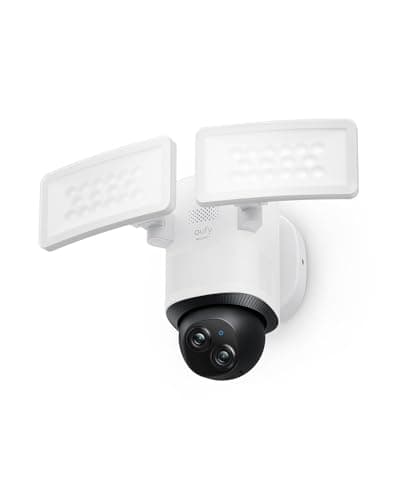
  • eufy Floodlight Camera E340
    01 eufy Floodlight Camera E340Top pick

    The one to buy if you want the whole thing to work without a monthly bill. Two cameras on a motorized head give it 360-degree coverage and the ability to turn and follow a person across the drive, which no fixed floodlight camera on this page can do, and eufy stores the footage on a microSD card in the camera rather than on a server you rent access to.

    Best for: Almost everyone — full coverage with no subscription · No Matter — Alexa and Google Assistant; eufy states it does not support HomeKit

    $219.00View on Amazon

    #ad · we may earn a commission from this link to eufy Floodlight Camera E340

  • Ring Floodlight Cam Wired Plus
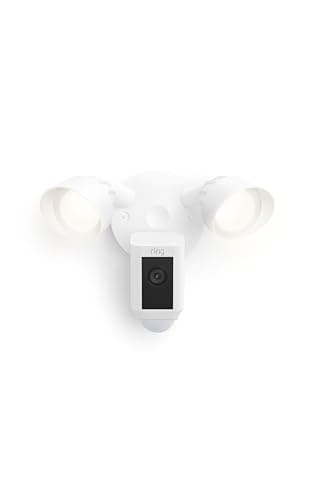
    02 Ring Floodlight Cam Wired Plus

    The one that belongs in a house already running Ring. It is the only pick here that arms and disarms alongside a Ring Alarm, appears in the same app as your doorbell, and answers Alexa without a workaround. The catch is not the hardware — it is that reviewing what it recorded is a paid feature.

    Best for: Homes already running Ring Alarm, a Ring doorbell, or Alexa · No Matter — Ring app and Alexa

    $119.99View on Amazon

    $179.9933% off

    #ad · we may earn a commission from this link to Ring Floodlight Cam Wired Plus

  • Reolink Elite Floodlight WiFi
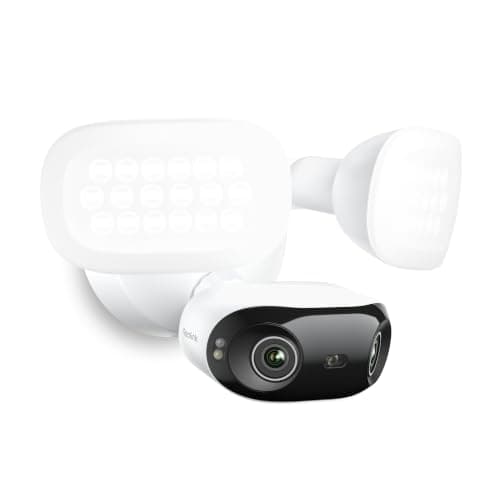
    03 Reolink Elite Floodlight WiFi

    The detail pick, and the one for a long approach. Two lenses stitched into a single 180-degree panoramic image at 8 MP means it covers a whole frontage from one fixture, and it does it on local storage with no monthly fee. It is also the least finished on smart-home integration.

    Best for: Wide frontages and long drives where you need to identify, not just notice · No Matter — Google Assistant; Reolink lists Alexa as coming soon

    $249.99View on Amazon

    $279.9911% off

    #ad · we may earn a commission from this link to Reolink Elite Floodlight WiFi

  • Wyze Floodlight Camera v2
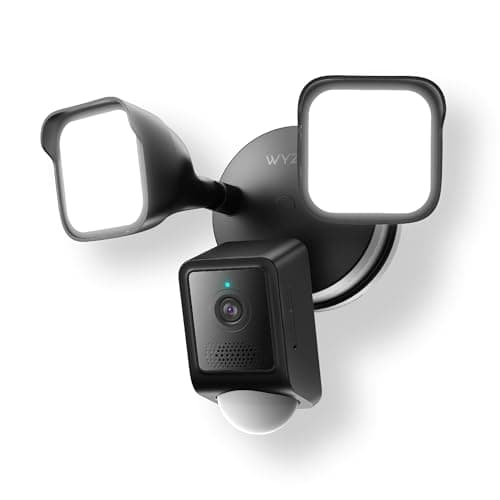
    04 Wyze Floodlight Camera v2

    The value pick, and the sensible default if this is your first floodlight camera. It records 2K to a microSD card without any subscription, throws 2,800 lumens, and includes the one feature people forget to check: a 270-degree PIR sensor that sees motion far wider than the lens does.

    Best for: A first floodlight camera, or a second one you do not want to think hard about · No Matter — Alexa and Google Assistant

    $74.98View on Amazon

    $99.9825% off

    #ad · we may earn a commission from this link to Wyze Floodlight Camera v2

  • Blink Wired Floodlight Camera
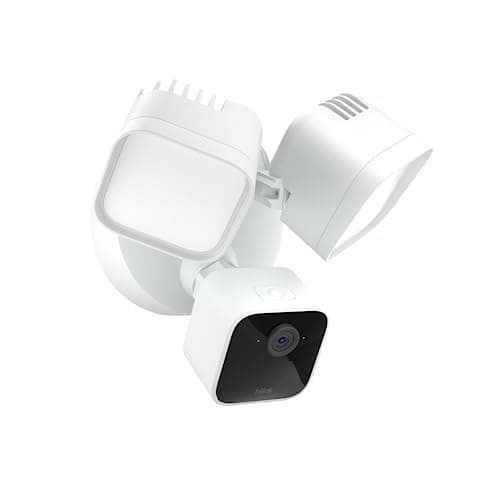
    05 Blink Wired Floodlight Camera

    The cheapest legitimate way to put a camera inside a security light, by a wide margin. It is 1080p, it is Alexa-first, and Blink publishes less about it than anyone else here — but if the job is 'light the side return and see who set it off', it does that for a fraction of what the others cost.

    Best for: A side return, a shed wall, or a second angle on a tight budget · No Matter — Blink app and Alexa

    $99.99View on Amazon

    #ad · we may earn a commission from this link to Blink Wired Floodlight Camera

#ad · Live prices from the Amazon Product API, as of Sep 1, 2026. Where we have no verified live price we show none — we would rather leave a gap than print a number that has rotted.

Floodlight cameras compared — resolution, light output, storage, subscription and ecosystems
DeviceResolution & viewLight outputLocal storageSubscription needed?Ecosystems
eufy Floodlight Camera E3403K wide + 2K tele, 360° pan/tilt2,000 lm, 4000 K, dimmablemicroSD to 128 GB, or HomeBase S380NoAlexa · Google · no HomeKit
Ring Floodlight Cam Wired Plus1080p, 140° H x 80° V2,000 lm, 3000 KNoneYes — to save and review videoRing app · Alexa
Reolink Elite Floodlight WiFi8 MP (5120 x 1552), 180° H3,000 lm, 3000-6500 KmicroSD to 512 GB · NVR · FTP/NASNoGoogle · Alexa listed as coming soon
Wyze Floodlight Camera v22K (2304 x 1296), 160° diagonal2,800 lm, dusk-to-dawnmicroSD to 256 GB (exFAT)No for recording; Cam Plus for AI alertsAlexa · Google
Blink Wired Floodlight Camera1080p, 143° diagonal2,600 lm, 5000 K fixedSync Module, sold separatelyFor cloud clips, yesBlink app · Alexa

In detail

The picks, in full

01

eufy Floodlight Camera E340

Top pick
eufy Floodlight Camera E340
$219.00View on Amazon

Price as of Sep 1, 2026. Amazon's price at checkout is the one that counts.

#ad · we may earn a commission from this link to eufy Floodlight Camera E340

The one to buy if you want the whole thing to work without a monthly bill. Two cameras on a motorized head give it 360-degree coverage and the ability to turn and follow a person across the drive, which no fixed floodlight camera on this page can do, and eufy stores the footage on a microSD card in the camera rather than on a server you rent access to.

  • Dual cameras: 3K wide + 2K telephoto, up to 8x hybrid zoom
  • 360-degree pan and tilt, up to 4 preset positions
  • 2,000-lumen light, 4,000 K, dimmable
  • microSD up to 128 GB, or HomeBase S380
  • Dual-band Wi-Fi 6 (2.4 / 5 GHz), WPA3
  • Hardwired AC 100-240 V; IP65
Matter: No Matter — Alexa and Google Assistant; eufy states it does not support HomeKitFee: None — records to microSD or a HomeBase, no plan requiredResearched, not hands-on tested

Good

  • It is the only pick here on a pan-and-tilt motor. A fixed camera sees the cone it was aimed at and nothing else; this one rotates a full 360 degrees, and eufy publishes motion-triggered tracking that follows people, vehicles and pets rather than just noticing them leave the frame
  • Storage is genuinely yours: eufy supports a microSD card up to 128 GB in the camera or a HomeBase S380 with up to a 16 TB drive, and states plainly that you can record and get notifications with no monthly subscription fee
  • The dual-lens arrangement is not a gimmick — a 3K wide lens covers the scene while a 2K telephoto reaches for detail, and eufy publishes up to 8x hybrid zoom between them, which is the difference between knowing someone was there and knowing which car they got into

Less good

  • It is the hardest install on this page. eufy requires hardwiring to AC 100-240 V into a UL-listed junction box, and a motorized head is heavier and bulkier than a fixed unit — this is not a fixture you casually move to a better spot later
  • eufy does not list HomeKit support for it, so an Apple household gets Alexa and Google Assistant or nothing. There is no Matter certification to fall back on either
  • eufy does not publish a decibel figure for the E340's alarm on its product pages, where Ring, Reolink, Wyze and Blink all publish 105 dB for theirs. There is an alarm; how loud it is, the maker does not say
  • A pan-and-tilt head is a moving part sitting outdoors in the weather for years. Nothing here suggests it fails early, but it is one more thing to go wrong than a fixed bracket has

Skip it if: you want the camera in Apple Home — eufy does not list HomeKit for this model, and no amount of setting up will add it.

02

Ring Floodlight Cam Wired Plus

Ring Floodlight Cam Wired Plus
$119.99View on Amazon

$179.9933% off

Price as of Sep 1, 2026. Amazon's price at checkout is the one that counts.

#ad · we may earn a commission from this link to Ring Floodlight Cam Wired Plus

The one that belongs in a house already running Ring. It is the only pick here that arms and disarms alongside a Ring Alarm, appears in the same app as your doorbell, and answers Alexa without a workaround. The catch is not the hardware — it is that reviewing what it recorded is a paid feature.

  • 1080p HD, color night vision
  • 140 degrees horizontal, 80 degrees vertical
  • Two 3000 K floodlights, 2,000 lumens
  • 105 dB remote-activated siren
  • Dual-band Wi-Fi (2.4 or 5 GHz)
  • Hardwired 100-240 V; rated -5 F to 118 F
Matter: No Matter — Ring app and AlexaFee: A Ring subscription is required to save and review recorded videoResearched, not hands-on tested

Good

  • It is the only pick that plugs into a full alarm system. If you own a Ring Alarm, this floodlight becomes part of it — armed with the house, triggering with the rest of the sensors — rather than a separate camera in a separate app
  • Ring publishes the environmental spec the others mostly skip: a rated operating range from -5 F to 118 F. If you are mounting a camera on a north wall in a real winter, that is the number that matters and most makers here do not print it
  • The siren is remote-activated at 105 dB, so it is a deterrent you can trigger deliberately from the app rather than only something that fires on a motion rule

Less good

  • 1080p is the lowest resolution on this page, and it is the resolution that decides whether a face at the end of the drive is a face or a smudge. Every other pick here is 2K or better
  • Without a Ring subscription you get live view and notifications, but saving and reviewing what happened is a paid feature. Over the years you will own this camera, that recurring cost dwarfs the difference in purchase price between it and the no-subscription picks
  • Its 140-degree horizontal field of view is the narrowest here after the eufy's individual lenses, and unlike the eufy it cannot turn — so aiming it correctly on install day is the whole ball game

Skip it if: you do not already own Ring gear and do not want a monthly bill — the same money buys a higher-resolution camera that records to a card for free.

04

Wyze Floodlight Camera v2

Wyze Floodlight Camera v2
$74.98View on Amazon

$99.9825% off

Price as of Sep 1, 2026. Amazon's price at checkout is the one that counts.

#ad · we may earn a commission from this link to Wyze Floodlight Camera v2

The value pick, and the sensible default if this is your first floodlight camera. It records 2K to a microSD card without any subscription, throws 2,800 lumens, and includes the one feature people forget to check: a 270-degree PIR sensor that sees motion far wider than the lens does.

  • 2K (2304 x 1296), 160 degrees diagonal
  • 2,800 total lumens
  • 105 dB siren, color night vision
  • 270-degree PIR motion detection, 30 ft range
  • microSD up to 256 GB (exFAT) for local 24/7 recording
  • Hardwired 110-120 V AC; IP65; 2.4 GHz Wi-Fi only
Matter: No Matter — Alexa and Google AssistantFee: None for local microSD recording; Cam Plus adds AI alerts and cloud backupResearched, not hands-on tested

Good

  • The 270-degree PIR sensor is the quiet advantage. The camera sees 160 degrees, but motion is detected across a much wider arc — so someone stepping onto the drive from the side triggers the light before they are in frame, which is what a security light is actually for
  • It records 24/7 to a microSD card up to 256 GB with no subscription at all. Cam Plus is there if you want AI alerts and cloud backup, but the camera is a complete product without it, which is not true of the Ring
  • 2,800 lumens with dusk-to-dawn automation and an ambient light mode means it can be an ordinary porch light most of the night and a security light when something moves — the setting that stops a floodlight camera annoying your neighbors

Less good

  • It is 2.4 GHz Wi-Fi only. Every other pick here except the Blink offers 5 GHz, and a 2K camera at the far end of a house on the same crowded band as everything else is exactly where dropped streams come from
  • Wyze specifies hardwired 110-120 V AC into a junction box with a neutral, which is the narrowest electrical spec here — the eufy, Ring and Reolink all accept 100-240 V
  • There is no HomeKit and no Matter, and the AI detection that separates a person from a passing car is the part Cam Plus charges for. Local recording is free; useful alerts, largely, are not

Skip it if: the mounting point is a long way from your router — a 2.4 GHz-only camera is the wrong tool for a detached garage at the end of the garden.

Check the box before you check the specs

Go and look at the fixture you intend to replace. Is there a junction box behind it, does it have a neutral wire, and is the circuit switched at the wall? Those three answers rule more purchases in or out than any feature comparison will. If there is no box, get a quote for fitting one before you choose a camera — that number frequently changes which camera makes sense, and occasionally makes a battery camera from the outdoor roundup the better answer entirely. The wider trade-off is in wired vs wireless security cameras.

Price three years, not one purchase

Take the camera you are drawn to, add three years of whatever plan it needs to do the job you bought it for, and compare that number instead. A subscription camera and a microSD camera that look close on the shelf are usually not close at all over the life of the fixture. The counter-argument is real and worth weighing: cloud footage survives the camera being stolen or smashed, and a card in the camera does not. Decide which failure you actually care about, then buy accordingly.

Aim for identification, not coverage

The instinct is to buy the widest field of view and cover everything. The better instinct is to work out the one or two spots where you genuinely need to identify a person — the front door, the gate, the driveway — and put the resolution there. A 180-degree panorama across the whole frontage is superb for context and mediocre for faces at distance; a narrower, better-lit view of the approach to your door is what gets used when something actually happens. If you need both, that is two cameras, and it is a legitimate answer.

Match the radio to the mounting point

The camera is going on an outside wall, often the far side of the house from the router, behind masonry. Two of these picks — the Wyze and the Blink — are 2.4 GHz only, which penetrates walls better but sits on the most congested band in the house. The eufy, Ring and Reolink offer 5 GHz as well, which is faster and cleaner but shorter-ranged. Walk to the mounting point with your phone and check what signal is actually there before you commit, especially for the 8 MP Reolink, which has the most data to move. If your network is already struggling, smart home Wi-Fi congestion is the thing to fix first.

Decide the ecosystem question honestly

None of these five is a Matter device, so unlike locks and plugs there is no neutral standard to fall back on — you are buying into an app. Ring and Blink are Alexa-first and both are Amazon's. eufy gives you Alexa and Google but explicitly not HomeKit. Wyze gives you Alexa and Google. Reolink today gives you Google, with Alexa listed as coming. If the rest of your house is already committed, that narrows this page to one or two picks very quickly, and our camera compatibility guide maps the whole category. Once it is installed, security automations covers what to do with a light that knows when someone is there.

How we chose

We don't run a test lab

We don't wire every one of these into a test rig, and we won't write "in our testing" as if we do. What we did instead: pulled each product's published specifications, confirmed its Matter/Thread/HomeKit support from the manufacturer's own documentation, added up the real 3-year cost with any monthly fee included, and read the aggregated verified-buyer sentiment. Every pick is chosen against that published method. Where a number came from someone else, we name and link them in Sources.

Questions

Frequently asked

Do floodlight cameras need to be hardwired?
Every pick on this page does. All five replace an existing exterior fixture and draw mains power from the junction box behind it — eufy, Ring and Reolink specify AC 100-240 V, Wyze specifies 110-120 V, and Blink specifies 100-240 V at 45 W with a neutral wire required. There are battery-powered floodlight cameras on the market, but they trade run time for brightness and are a different product; if there is no wiring where you want a camera, a battery or solar outdoor camera is usually the better answer than a compromised floodlight.
What happens if someone turns off the light switch?
The camera goes off with it. A floodlight camera wired to a switched circuit has no power when that switch is off, which means no recording, no notifications, no live view and no siren — and nothing in the app will warn you that this is why. The two fixes are to leave the wall switch permanently on and control the light through the app's schedule and motion rules, which all five support, or to have an electrician put the fixture on a constant feed. Sort this out on install day; it is the single most common way a floodlight camera quietly stops protecting a house.
Which floodlight cameras work without a subscription?
The eufy E340 records to a microSD card up to 128 GB or to a HomeBase S380, with no plan required. Reolink supports a card up to 512 GB plus NVR, FTP and NAS, and states there are no monthly fees. Wyze records 24/7 to a card up to 256 GB, keeping Cam Plus for AI alerts and cloud backup rather than basic recording. Blink is partial — cloud clips need a plan, or you add a Sync Module, sold separately, for local storage. Ring is the one that requires a subscription to save and review recorded video. Our no-subscription camera roundup covers the rest of the category.
Are more lumens always better on a floodlight camera?
No, and this is the spec most likely to lead you astray. These five span 2,000 to 3,000 lumens, which is a narrower real-world difference than the numbers suggest, and a very bright light close to its own lens washes out the near field and makes everything beyond it look darker. Adjustability matters more than peak output: the eufy is dimmable at 4,000 K, the Reolink adjusts across 3000-6500 K, Wyze offers dusk-to-dawn and an ambient mode, and Blink is fixed at 5000 K. A light you can turn down is more useful than one more thousand lumens you never use.
Do floodlight cameras record in color at night?
Yes, when the floodlight is on — that is the category's main advantage over battery cameras, and all five here publish color night vision. The nuance is what happens with the light off. Reolink is the only pick that publishes its infrared specification in detail — nine 850 nm LEDs reaching up to 30 m — for watching without lighting the garden. If you want the camera to observe discreetly as well as deter loudly, check the infrared spec, not just the lumens. How night vision works goes through both modes.
Can a floodlight camera replace a full security system?
It can do a lot of the deterrent work — light, a 105 dB siren on four of the five here, and a recording — but it is one sensor covering one approach, and it knows nothing about a window being opened at the back of the house. The Ring is the only pick that joins a real alarm system, arming and disarming with a Ring Alarm rather than living in its own app. If you are weighing cameras against an actual system, do I need a security system or just cameras is the honest comparison.

Keep reading

Receipts

Sources

We do not run a test lab, and we do not pretend to. Compatibility and subscription-cost claims come from the manufacturer's own documentation and the live retailer listing, read on the dates shown. Read our full method.