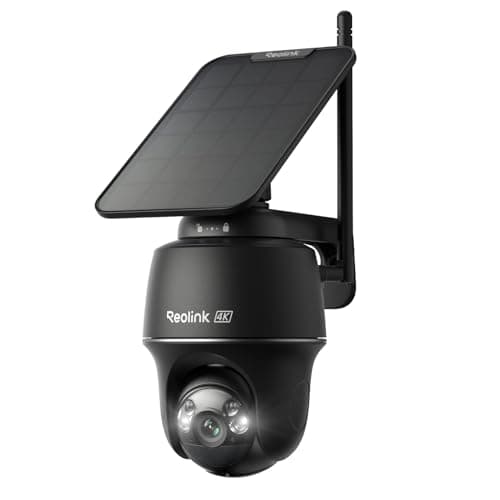
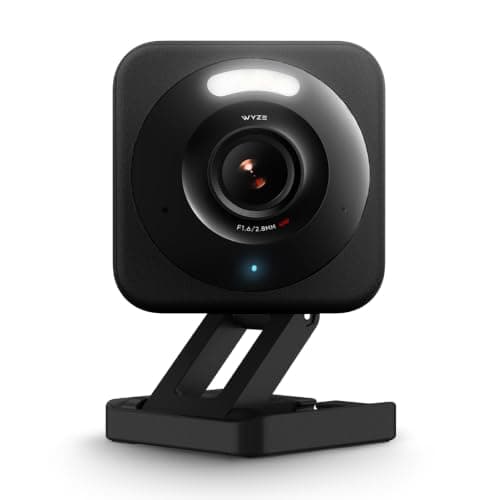
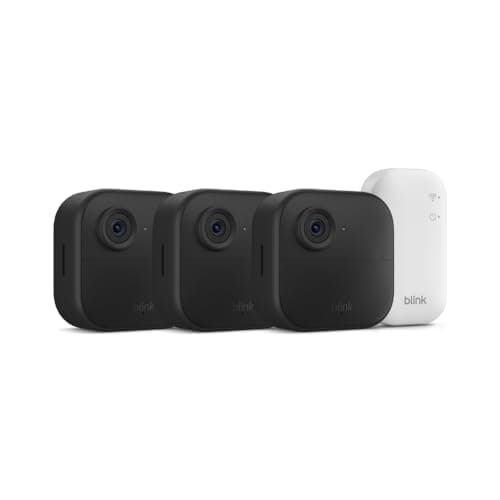
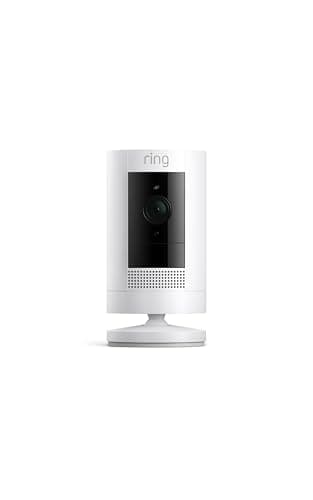
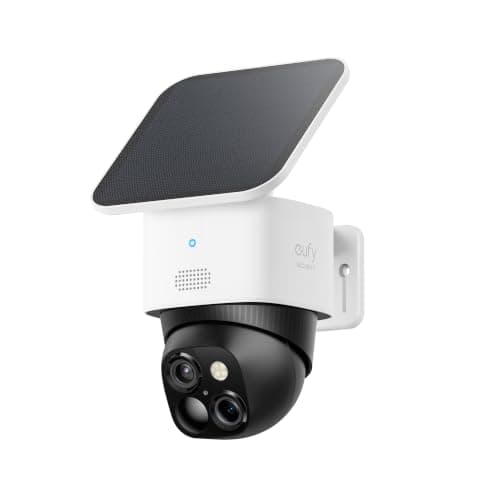
An outdoor camera has a harder job than an indoor one, and the listing rarely says so. It has to survive rain, sun and a freeze; it has to reach a corner of the yard that has no power near it; it has to see a person in a dark garden, not just a lit hallway; and it usually has to cover more ground than a single room. We ranked these five on exactly those outdoor problems — weatherproofing, power, night vision and coverage — using each camera's published specs, with the no-monthly-fee math kept honest.
Every camera here is genuinely rated for outdoor use, but they are not equally tough, and that is the first thing a spec sheet hides. Four of the five carry a real IP rating — dust-tight and rated against water jets or better — while the Ring Stick Up Cam is only IPX5 water-resistant and is happiest under an eave. The table further down lays the weather ratings, power and storage side by side so you can see the differences at a glance. For the wider field including indoor-first cameras, see the main camera roundup.
One honest caveat up front: we don't run a camera lab. We compiled published specifications, confirmed each camera's weatherproof rating from the manufacturer's own spec sheet, and checked local-storage and ecosystem support from the maker's documentation. Where a measured figure came from someone else's testing, we say so. That is the honest version of "how we chose," and it is the same method on every page here.
What makes a camera actually outdoor-ready
The number that matters is the IP rating — two digits after "IP" that describe protection against solids and liquids. The first digit is dust (6 means fully dust-tight); the second is water (5 means protected against water jets, 6 stronger jets, 7 temporary immersion). So an IP67 camera like the eufy SoloCam S340 is rated for the harshest exposure here, IP66 (Reolink) and IP65 (Wyze, Blink) handle rain and jets comfortably, and IPX5 (Ring) handles spray but not a fully exposed wall. The letter X, as in IPX5, simply means the maker didn't certify a dust figure — not that there is none.
Ratings are only true within the operating temperature range, and outdoors that matters. All five publish ranges that cover a normal temperate climate; the eufy and Reolink stretch furthest into heat and cold. A rating also assumes the camera is installed as intended — the Blink Outdoor 4, for instance, is only weather-resistant with its port cover fitted. Read the mount instructions, not just the box.
Power is the first real decision outdoors
Indoors you plug a camera in and forget it. Outdoors, power decides the whole shortlist, because the spot you most want to watch is often the one with no outlet. Three of these run on battery or solar — the eufy and Reolink charge from the sun, and the Blink kit claims a two-year battery on each camera — so they mount anywhere. The Wyze Cam v4 is wired, which is the trade for its continuous 24/7 recording and its low price: you need an outdoor-safe outlet or a routed cable. The Ring Stick Up Cam can go either way. If you're weighing whether a camera needs mains power or an internet connection at all, the do security cameras need Wi-Fi guide covers both questions.
The no-fee question still applies in the yard
Weatherproofing gets the attention, but the running cost is what adds up. Three of these cameras record locally with no subscription — the eufy to 8GB of built-in memory, the Wyze and Reolink to a microSD card (or, for Reolink, a Home Hub). The Blink can store clips locally on a USB drive with a Sync Module 2, or on a cheap cloud plan. The Ring is the outlier: it shows a live view for free, but you cannot review a single recorded clip without a Ring Home plan. Over three years that gap is real money, and it is the same argument the no-subscription roundup makes in full, with the cost math done. What each brand's plan actually costs is broken down in the subscription-cost guide.
How to actually choose an outdoor camera
Start with the wall, not the camera. Look at the exact spot you want to cover and answer two questions: how exposed is it, and is there power nearby? A fully open wall that catches driving rain wants an IP66 or IP67 body — the Reolink or the eufy. A porch or a spot under an eave can take any of these, including the IPX5 Ring. If there's no outlet within reach, you are choosing among the solar and battery models; if there is, the wired Wyze becomes the cheapest way to get continuous recording.
Match power to how busy the spot is
A battery or solar camera is wonderful on a quiet side gate and a chore on a busy front drive, where constant motion drains it faster than the sun refills it. High-traffic spots reward wired power (Wyze) or a solar panel with genuinely good sun (eufy, Reolink). The Blink kit's two-year battery claim assumes default, motion-only settings — record more and it drops. Put your busiest camera where power or the best sun is.
Night vision: color or infrared in a dark yard
Most break-in worry is after dark, so night vision matters more outdoors than in. Four of these shoot color at night — the eufy, Reolink (its ColorX sensor) and Wyze use a low-light sensor and, on the eufy and Wyze, a spotlight — which makes clothing and cars far easier to identify than the gray of classic infrared. The Blink uses infrared night vision, which sees clearly but in black and white. If reading detail at night is the point, lean toward a color-night-vision pick.
Coverage: one wide camera or two fixed ones
The last question is how much ground one camera has to hold. A narrow side passage is fine on any fixed-lens camera here. A wide frontage or a driveway is where the eufy's 360-degree pan-tilt and the Reolink's 355-degree pan-tilt with auto-tracking earn their price — either can watch an area that would otherwise need two cameras. The Reolink Argus PT Ultra review goes deeper on what 4K on a moving head is actually good for.
If the view you care about is the driveway
One outdoor spot changes the ranking enough to deserve its own page. A driveway puts its subject 30 to 100 feet away, moving, often with headlights pointed into the lens and no outlet within reach, which pushes resolution and power to the top of the list and makes the 1080p picks here the wrong buy. We rank the field against those constraints in best security cameras for driveways.