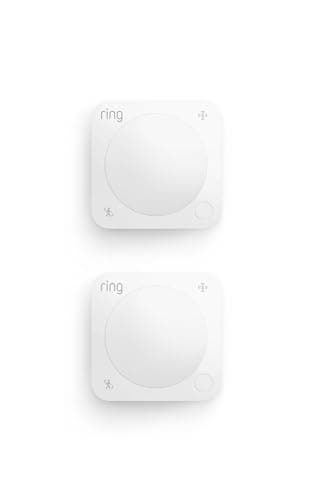
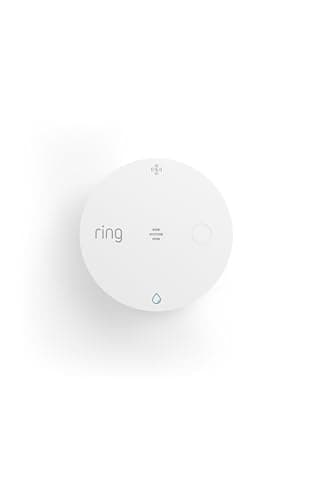
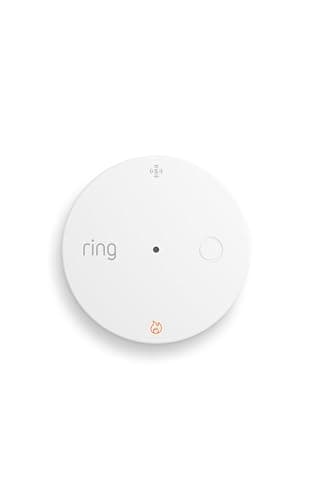
Ring quietly changed how its sensors work and the internet has not caught up. For years the answer to "what sensors work with Ring" was simple and slightly annoying: Z-Wave accessories that need a Ring Alarm base station, so the base station was the gateway charge for everything. That is no longer true. Ring's newest sensors connect over Amazon Sidewalk, the low-bandwidth network piggybacking on Echo devices and Ring doorbells, and Ring's product pages now say in plain language that no additional hubs are needed. The Flood & Freeze Sensor and the Smoke & CO Listener are standalone Sidewalk devices. The Motion Detector and the newest window and door sensors can speak either Sidewalk or Z-Wave. Only the older Z-Wave accessories still require the base station, and the listings say so.
That is the fork this whole page is organized around, because it changes what you should buy. If you already own a Ring Alarm, the Z-Wave accessories are still the best value and the only ones that become part of the armed system. If you do not own one, you can now build a notification layer across a house - leaks, freezing pipes, smoke, motion in the garage - without buying a base station at all. Those are two different shopping lists, and the usual "best Ring sensors" article does not distinguish between them.
The standing caveat, as on every page here: we do not run a test lab. Every figure below is the manufacturer's own published specification, read off Ring's and Kidde's product and support pages on the date in the sources, with availability and live prices pulled from the retail listings rather than typed in by us. Where a maker does not publish something - a dB rating, a sensor type, an alarm horn pattern - we say so rather than filling the gap.
The criteria: what actually separates these
One: does it need the base station?This is the first and most expensive question. A Z-Wave accessory is worthless without a Ring Alarm or Ring Alarm Pro, and the listing titles say "Base Station Required" for exactly that reason. A Sidewalk sensor needs nothing but coverage. Get this wrong and you have bought a sensor that cannot connect to anything you own.
Two: notification, or alarm? A sensor bound to a base station over Z-Wave is part of a security system: it respects Home and Away modes, it can trigger the siren, and with a plan it can summon professional dispatch. A Sidewalk sensor sends you a notification. Both are useful; only one is an alarm. For a leak sensor the distinction barely matters. For a motion detector guarding a back door it matters enormously, which is why the dual-radio Motion Detector is the most interesting device in the line.
Three: published battery life, and how often that becomes your problem.The spread on this page is extraordinary - up to 10 years for the Smoke & CO Listener, up to 6 for the Flood & Freeze, up to 3 for the contact sensors, up to 2 for the Motion Detector, and about one year for the Kidde alarm. Multiply by the number of devices and by how high up each one is mounted. Six contact sensors on 3-year cells is a battery job roughly every six months somewhere in the house.
Four: what the device actually measures.This is where most buyers get caught. A listener is not a detector. Ring says so on its own page - "This device does not detect fire, smoke or carbon monoxide" - and it is the most important sentence in this entire category. The listener is an excellent product for a house with good working alarms and a terrible one for a house with old ones.
Five: whether coverage actually exists where you live.Sidewalk is the whole basis of the no-hub promise, and Ring's US page claims it covers approximately 95% of the US population while its Canadian page claims about 70% of that country - with footnotes saying coverage varies by location and is subject to change or interruption. Check your address on Ring's coverage tool before you buy a Sidewalk-only sensor. If coverage is marginal, the Z-Wave route and a base station remain the predictable option.
Where a Ring Alarm still earns the base station
None of this makes the base station obsolete. A Ring Alarm does three things Sidewalk sensors cannot: it holds an armed state across the whole house, it has a siren, and with the Ring Pro plan it adds 24/7 professional monitoring and cellular backup so the system keeps reporting when the internet drops. Ring's published plan pricing is Ring Solo at $4.99/mo or $49.99/yr for one device, Ring Multi at $9.99/mo or $99.99/yr for everything at one address, and Ring Pro at $19.99/mo or $199.99/yr with the monitoring. Remote arming and disarming is itself a plan feature.
So the honest shape of the decision is this. If the goal is a security system - something that screams, something that can get the police called, something you arm when you leave - buy the kit and expand it with Z-Wave accessories. Our Ring Alarm review covers what the 8-piece kit is actually like to live with, and Ring Alarm vs Ring Alarm Pro covers whether the router-equipped version is worth the premium. If the goal is awareness - knowing the basement is wet, the garage door moved, the smoke alarm went off while you were out - the Sidewalk sensors do that for less money and fewer boxes.
How many sensors, and where
The pattern that works is boring and effective: contact sensors on every ground-floor opening plus any accessible upper window, one motion detector in the hallway or stairwell that anyone moving through the house must cross, and environmental sensors wherever a failure would be expensive - under the washing machine, beside the water heater, in the unheated utility space, next to each existing smoke alarm.
The common mistake is buying motion detectors instead of contact sensors. Contact sensors are cheaper per opening, they fire at the moment of entry rather than after someone is already inside, and they do not false-alarm on pets. Motion belongs in the one or two places that cover the paths between rooms. Our guide to how home security sensors work explains the mechanisms, and best door and window sensors and best motion sensors rank the cross-brand field if you are not committed to Ring.
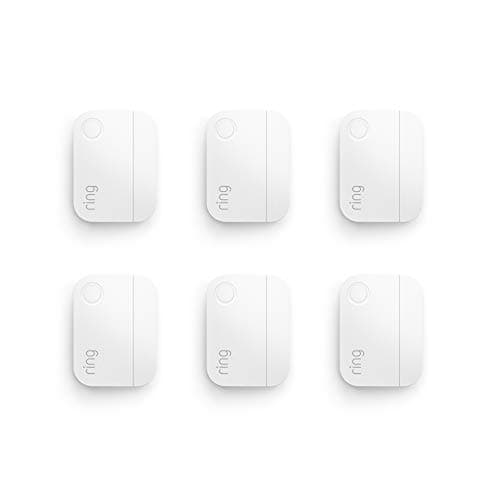
One more honest note on Ring's own line: the Contact Sensor 6-Pack we rank first is the Z-Wave, base-station accessory. Ring also sells a newer Window & Door Sensor that, like the Motion Detector, speaks either Amazon Sidewalk or Z-Wave and publishes up to 3 years of battery life - so if you do not own a base station, that newer sensor is the door-and-window answer rather than the six-pack. We feature the six-pack because it is the best value per opening for the system most Ring owners already have.
The environmental sensors are the ones that pay for themselves
If you take one thing from this page, make it this: a burglary is the event people shop for and water is the event that actually happens. A leak behind a washing machine, a slow seep from a water heater, a pipe that freezes in an unheated utility room - these are the losses that cost real money, and one of the cheapest devices on this page addresses them.
The ceiling on what Ring's sensor can do is worth being clear about, though. It alerts; it does not act. A sensor that pings your phone is useful when you are at work and useless when you are on a plane. If the house is regularly empty for long stretches, the product category you want is an automatic shutoff valve, which closes the main when it sees flow it does not like - a much bigger purchase with a much bigger payoff. Our best water leak detectors roundup covers both classes side by side, including the shutoff option.
Smoke and CO: listener or detector
This is the choice on this page with the clearest right answer, and it depends entirely on the age of your existing alarms. If they are modern, working and under ten years old, the Smoke & CO Listener is the cheap, elegant upgrade: it sits beside each one, hears the horn, and puts the event on your phone, with a published 10-year battery and no hub. Ring requires the existing detector to be 10 years old or less, which is also the industry's replacement interval, so the requirement is reasonable rather than arbitrary.
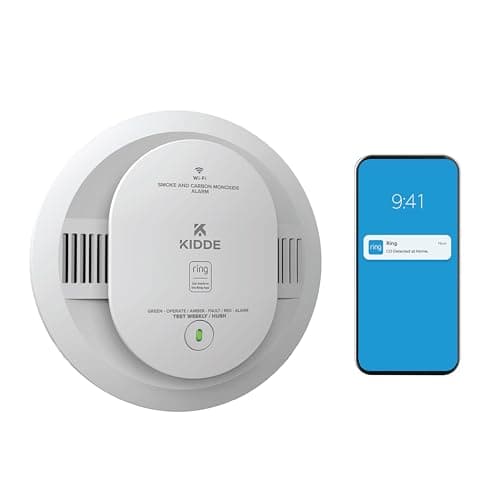
If your alarms are old, chirping or unknown-age, do not bolt a listener to them. Replace the alarm, and the Kidde Smart Smoke & CO alarm with Ring is the straight swap that lands in the same app - it detects both threats itself, names them in a voice alert, and interconnects wirelessly with its siblings so one sounding sets off the rest. Its weakness is documented and real: Kidde publishes an annual battery change, with lithium cells explicitly not allowed, where much of the market has moved to sealed 10-year units. Our best smart smoke detectors roundup compares it against the sealed alternatives across brands.
What a subscription does and does not buy
Every sensor on this page works without a Ring plan: it connects, it detects, and it notifies. What a plan adds is specific - remote arming and disarming, longer event history on video devices, and on the Pro tier 24/7 professional monitoring with cellular backup for an alarm system. The Smoke & CO Listener and the Kidde alarm can both be added to Ring's optional professional smoke and CO monitoring with a compatible subscription, which is the difference between your phone buzzing while you are in a meeting and a person being dispatched.
Whether that is worth it is a household question, not a product question, and we have written the arithmetic out properly rather than guessing at it: do you need a monitoring plan and DIY vs monitored home security are the two pages that decide it. If the recurring line is a hard no, our no-subscription home security systems roundup is the alternative shopping list.
The bottom line
Own a Ring Alarm already? The Contact Sensor 6-Pack is the best money you can spend on it, then a Motion Detector in the hallway over Z-Wave, then a Flood & Freeze Sensor wherever a leak would hurt. Do not own one, and not sure you want one? Start with the Flood & Freeze Sensor and the Smoke & CO Listener on Amazon Sidewalk - no hub, no plan, two of the longest published battery lives in the category - and add the Motion Detector if you want to know when something moves in the garage. Replacing a dying smoke alarm either way? The Kidde unit is the one that actually detects, and it needs no Ring hardware at all. Check Sidewalk coverage at your address before you commit to the no-hub route, and compare the retail listing against Ring's own store before you order, because these sensors are discounted in both places at different times - the buy buttons here show what each one costs right now.