Skip to content
Latch & Hub

Systems · Security Systems

The Best Motion Sensors for Home Security in 2026

A door sensor tells you a door opened. A motion sensor tells you somebody is in the room — which is why it is the sensor that catches the intruder who came through a window, and the sensor that wakes you at 3am because the cat walked past. Getting one right is almost entirely about the detection pattern and the hub it needs.

By Stephen V.Updated How we choose
#ad

We earn a commission when you buy through our Amazon links, at no extra cost to you. It never changes our rankings — where the subscription-free or cheaper option is the better buy, we say so. How this works.

Verdict

The bottom line

For most homes, buy the Aqara Motion and Light Sensor P2. It is the only sensor here that speaks Matter over Thread natively, which means one device works in Apple Home, Alexa, Google Home, SmartThings and Home Assistant rather than committing you to a brand, and its built-in light sensor lets you say "only if it is dark" — the single most useful condition in any motion automation. If your house is already a Ring house, the Ring Motion Detector is the one to buy because it arms with the rest of your alarm and publishes a pet-friendly mode. If what you actually need is to know a room is occupied rather than that something moved through it, the SwitchBot mmWave Radar Presence Sensor is a different technology that solves that properly. The THIRDREALITY Zigbee Motion Sensor 4-Pack is the cheapest way to cover a whole floor if you already own a Zigbee hub, and the YoLink Outdoor Motion Sensor is the one that works at the end of a driveway, in the rain, far past where Wi-Fi reaches.

The short answer

Quick picks

Tap any row for the full write-up.

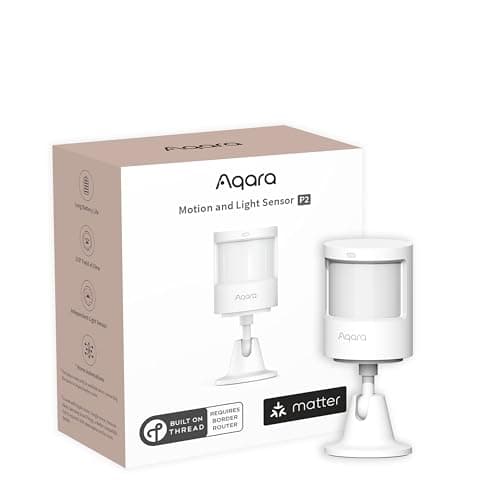
  • Aqara Motion and Light Sensor P2
    01 Aqara Motion and Light Sensor P2Top pick

    The sensor to buy if you do not want to be locked into anyone's app. Native Matter over Thread means it joins Apple Home, Alexa, Google Home, SmartThings or Home Assistant as a first-class device, and the independent light sensor means your automations can finally say 'turn the light on only if it is actually dark' instead of firing at noon.

    Best for: Any ecosystem — and automations that need to know how dark it is · Matter over Thread (needs a Thread border router)

    • Native Matter over Thread; Bluetooth 5.0
    • 170 degrees horizontal, 45 degrees vertical
    • Detection up to 7 m / 23 ft
    • Independent light (lux) sensor
    • 2x CR2450 included, up to 2 years
    • Operating range 14 to 131 F
    $26.99View on Amazon

    $33.9921% off

    #ad · we may earn a commission from this link to Aqara Motion and Light Sensor P2

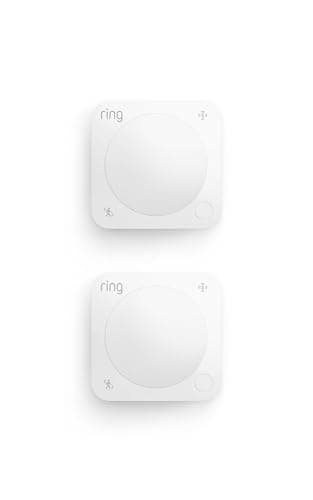
  • Ring Motion Detector 2-Pack (newest model)
    02 Ring Motion Detector 2-Pack (newest model)

    The right sensor for a Ring household and nobody else. It arms and disarms with the rest of your Ring system, shows up in the same app as your cameras and doorbell, and — unusually for this price — Ring publishes a pet-friendly mode rather than leaving you to guess. This is the 2-pack, which is how most people buy it.

    Best for: Homes already running Ring Alarm or Ring cameras · No Matter — Ring app and Alexa

    • 30 ft range, 90-degree field of view
    • Pet-friendly mode (published)
    • Amazon Sidewalk or Z-Wave
    • No base station required (Sidewalk)
    • 2x AA included, up to 2 years
    • Operating range 32 to 120 F
    $48.99View on Amazon

    $69.9930% off

    #ad · we may earn a commission from this link to Ring Motion Detector 2-Pack (newest model)

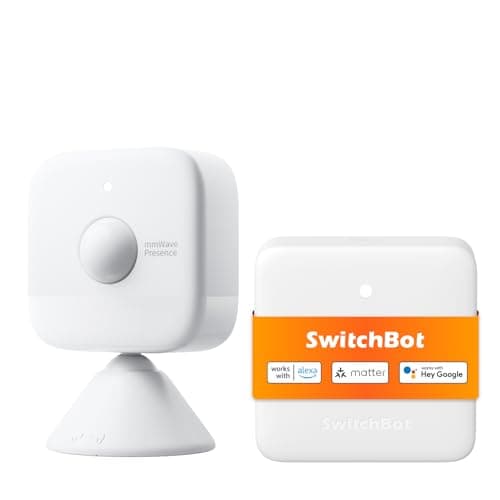
  • SwitchBot mmWave Radar Presence Sensor with Hub Mini (Matter)
    03 SwitchBot mmWave Radar Presence Sensor with Hub Mini (Matter)

    Different technology, different problem. A PIR sensor sees a warm body MOVE; this one uses mmWave radar to see that a body is THERE, including one sitting still at a desk. That is the fix for every light that has ever switched off while you were in the room — and this bundle includes the Matter hub that carries it to Apple Home, Alexa and Google.

    Best for: Rooms where people sit still — offices, reading chairs, bathrooms · Matter via SwitchBot Matter-enabled hubs (Hub Mini included in this bundle)

    • mmWave radar + PIR + light sensor
    • Up to 8 m moving, 5 m stationary
    • 120-degree detection angle
    • 2x AAA, up to 2 years
    • Matter via the included Hub Mini
    • Adjustable detection distance
    $42.99View on Amazon

    $59.9928% off

    #ad · we may earn a commission from this link to SwitchBot mmWave Radar Presence Sensor with Hub Mini (Matter)

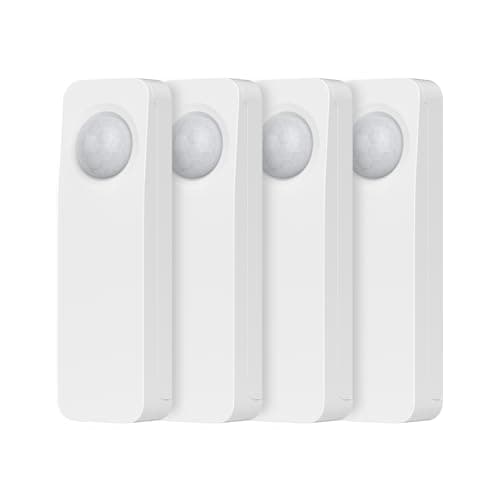
  • THIRDREALITY Zigbee Motion Sensor (4-Pack)
    04 THIRDREALITY Zigbee Motion Sensor (4-Pack)

    The cheapest honest way to cover a whole floor. Four Zigbee PIR sensors for roughly what one premium sensor costs, with a pet-friendly design and a 9 m / 120-degree pattern — on the strict condition that you already own a Zigbee hub, because without one these do nothing at all.

    Best for: Covering four rooms at once, if you already run a Zigbee hub · No Matter — Zigbee to a third-party hub

    • Zigbee — hub mandatory
    • Detection up to 9 m / 30 ft
    • 120-degree field of view
    • Pet-friendly design (published)
    • 2x AAA, up to 2 years
    • Works with SmartThings, Hubitat, Home Assistant, Aeotec, Homey, Zigbee Echo devices
    $49.99View on Amazon

    $75.9934% off

    #ad · we may earn a commission from this link to THIRDREALITY Zigbee Motion Sensor (4-Pack)

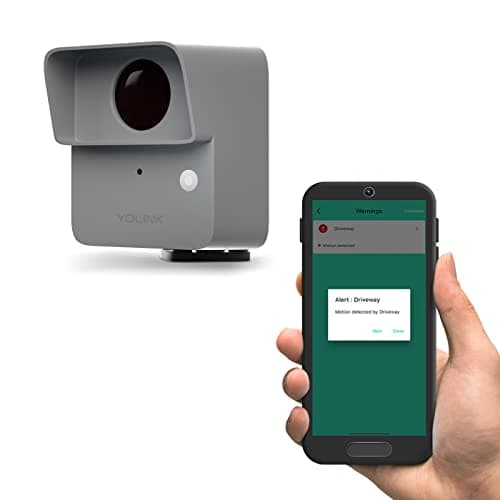
  • YoLink Outdoor Motion Sensor (YS7805)
    05 YoLink Outdoor Motion Sensor (YS7805)

    The sensor for everything past the house. IP67 sealing, a published operating floor of -4 F and a LoRa radio that reaches far beyond Wi-Fi mean this is the one you put at the end of a driveway, on a gate or inside a detached garage — the places every other sensor on this page cannot go.

    Best for: Driveways, gates, sheds and detached garages · No Matter — YoLink hub, with Alexa, IFTTT and Home Assistant

    • LoRa long-range radio
    • Published open-air range up to 2,034 ft / 620 m
    • 60 degrees horizontal, 30 degrees vertical
    • IP67 weatherproof
    • Operating range -4 to 122 F
    • 2x AA; YoLink hub required
    $28.47View on Amazon

    $35.9921% off

    #ad · we may earn a commission from this link to YoLink Outdoor Motion Sensor (YS7805)

#ad · Live prices from the Amazon Product API, as of October 6, 2026. Where we have no verified live price we show none — we would rather leave a gap than print a number that has rotted.

Motion sensors are the cheapest meaningful upgrade to a home security system and the most commonly switched off. Both of those facts have the same cause: a motion sensor is the only sensor that reports on a space rather than a thing. A contact sensor on a window is binary and never wrong. A motion sensor in a living room is making a judgement about a warm shape crossing a field of view, and whether you keep it armed comes down to how well that judgement matches your household — your pets, your layout and the ceiling it is stuck to. Four things decide it.

One: the detection pattern, not the range

Every maker leads with a distance figure and it is the less useful half of the spec. What matters is the pattern— distance multiplied by the horizontal and vertical angle — because that is the shape of the volume being watched. The Aqara P2's 170 degrees across 23 feet is a wide, shallow fan: ideal stuck in a corner watching a whole room or a hallway junction. The Ring's 90 degrees across 30 feet is a narrow, long corridor: ideal pointed down a hall or at a single doorway, and poor at a room with two entrances. The YoLink's 60 by 30 degrees is a beam, which outdoors is exactly right and indoors would be nearly useless. Choose the shape that matches the space, then check the distance reaches the far side of it. Our guide to how home security sensors work covers the physics underneath those numbers.

Two: PIR or radar — and they are not competing

Four of the five sensors here are passive infrared. A PIR sensor watches for a change in infrared across a segmented lens, which means it detects a warm body moving and, crucially, stops detecting one that holds still. That is why a PIR-controlled light switches off while you are reading, and why PIR is nonetheless the right technology for almost every security job: an intruder moving through a house is exactly what it is built to catch, it draws almost no power, and it does not see through walls.

The SwitchBot is a mmWave radar sensor, which emits a radio signal and reads the reflection. It detects presence rather than movement — SwitchBot publishes up to 8 m for a moving person and 5 m for a stationary one — so it knows a room is occupied by someone sitting perfectly still. For lighting, comfort and occupancy automations that is a genuine upgrade. For intrusion detection it is not obviously better than PIR and it is harder to tune, because radar does not respect the edges of a room the way a lens does. Most homes should buy PIR sensors for security and consider one radar sensor for the room where somebody sits still.

Three: pets are the reason people disarm their systems

A sensor that triggers on a cat produces a false alarm, a false alarm produces an irritated human, and an irritated human disarms the system. Pet immunity on a PIR sensor is achieved by masking the lowest segments of the lens, which is why "pet-friendly" is really a statement about mounting height and animal size rather than a magic filter. The Ring publishes a pet-friendly mode and the THIRDREALITY a pet-friendly design; neither publishes a weight threshold, so treat both as helpful rather than guaranteed. Three practical fixes work better than any spec: mount the sensor high and angle it slightly up, aim it across a room rather than down at the floor, and use the sensor as a confirming signal rather than a trigger — motion and a door contact is a far better alarm rule than motion alone. We go through building rules like that in smart home security automations.

Four: the hub question decides what you can actually buy

This is where most motion-sensor purchases go wrong, because four of these five need something else to work. The Aqara P2 needs a Thread border router — an Apple TV, a HomePod, a newer Echo, a Nest Hub or an Aqara hub. The THIRDREALITY sensors need a Zigbee hub. The YoLink needs a YoLink hub. The SwitchBot bundles its hub in the box. Only the Ring, on Amazon Sidewalk, genuinely works with nothing else bought — and even then it wants the Ring base station to arm as part of an alarm. Before you choose a sensor, work out what you already own; it eliminates most of this page instantly. Start with do I need a smart home hub and, if Thread is new to you, what is a Thread border router.

What a motion sensor is not for

It is not a replacement for a camera and it is not a perimeter. A motion sensor tells you something is moving in a room; it cannot tell you who, and it has no record. Its job in a proper layered system is to be the interior catch — the sensor that fires when someone is already inside, having come through a route your door and window sensors do not cover. That is why the standard advice is contact sensors on the perimeter, motion sensors in the interior choke points (the hallway everyone must cross, the top of the stairs), and a camera where you need identification. The perimeter half of that is in best door and window sensors, and the full layered picture in best DIY home security systems. If what you actually want is to see who it was, best indoor security cameras is the right page.

Motion sensors compared — detection pattern, technology, what it needs to work, weather rating and published battery
DevicePatternTechnologyNeedsWeatherPublished battery
Aqara Motion and Light Sensor P2170 x 45 degrees, 23 ftPIR + light sensorThread border routerNo IP rating; 14 to 131 FUp to 2 years (2x CR2450)
Ring Motion Detector (2-pack)90 degrees, 30 ftPIR, pet-friendly modeNothing (Sidewalk) / base station for Z-WaveNo IP rating; 32 to 120 FUp to 2 years (2x AA)
SwitchBot mmWave Presence Sensor120 degrees, 8 m moving / 5 m stillmmWave radar + PIR + lightHub Mini included in boxNot published — indoorUp to 2 years (2x AAA)
THIRDREALITY Zigbee Motion Sensor (4-pack)120 degrees, 9 m / 30 ftPIR, pet-friendly designZigbee hub (mandatory)No IP rating; indoorUp to 2 years (2x AAA)
YoLink Outdoor Motion Sensor (YS7805)60 x 30 degreesPIR, LoRa radioYoLink hub or SpeakerHubIP67; -4 to 122 FNot published (2x AA)

In detail

The picks, in full

01

Aqara Motion and Light Sensor P2

Top pick
Aqara Motion and Light Sensor P2
$26.99View on Amazon

$33.9921% off

Price as of October 6, 2026. Amazon's price at checkout is the one that counts.

#ad · we may earn a commission from this link to Aqara Motion and Light Sensor P2

The sensor to buy if you do not want to be locked into anyone's app. Native Matter over Thread means it joins Apple Home, Alexa, Google Home, SmartThings or Home Assistant as a first-class device, and the independent light sensor means your automations can finally say 'turn the light on only if it is actually dark' instead of firing at noon.

  • Native Matter over Thread; Bluetooth 5.0
  • 170 degrees horizontal, 45 degrees vertical
  • Detection up to 7 m / 23 ft
  • Independent light (lux) sensor
  • 2x CR2450 included, up to 2 years
  • Operating range 14 to 131 F
Matter: Matter over Thread (needs a Thread border router)Fee: None — no subscriptionResearched, not hands-on tested

Good

  • Matter over Thread is the whole argument: Aqara lists Aqara Home, Apple Home, Alexa, Google Home, SmartThings, Home Assistant and Homey, so this is the one sensor on the page you can move between ecosystems without rebuying
  • 170 degrees of horizontal coverage is by far the widest published pattern here — nearly double the Ring's 90 degrees — which is what lets one sensor watch a hallway junction instead of a single doorway
  • The built-in light sensor is a genuinely separate reading, not a motion side effect. It turns 'someone walked past' into 'someone walked past and the room is dark', which is the difference between a useful automation and an annoying one
  • Two CR2450 cells are in the box and Aqara publishes up to two years, on a device with no mains dependency of any kind

Less good

  • Thread needs a border router. If you do not already own an Apple TV, HomePod, newer Echo, Nest Hub or Aqara hub, this sensor has nothing to talk to — budget for one and read our Thread guide first
  • Aqara publishes no IP rating for it, so treat it as an indoor sensor. The published 14 to 131 F range is wide, but weather sealing is a separate claim and it is not made here
  • Aqara notes the light-sensor function is unavailable through Amazon Alexa, so the feature that most distinguishes this sensor is Apple, Google, SmartThings and Home Assistant only
  • Its 23 ft detection distance is the shortest here. In a long open-plan room you will be covering the near half, not the far wall

Skip it if: you own no Thread border router and no plans to buy one — without it this is a Bluetooth device sitting in a drawer, and the Zigbee 4-pack below will serve a hub-owning household better.

02

Ring Motion Detector 2-Pack (newest model)

Ring Motion Detector 2-Pack (newest model)
$48.99View on Amazon

$69.9930% off

Price as of October 6, 2026. Amazon's price at checkout is the one that counts.

#ad · we may earn a commission from this link to Ring Motion Detector 2-Pack (newest model)

The right sensor for a Ring household and nobody else. It arms and disarms with the rest of your Ring system, shows up in the same app as your cameras and doorbell, and — unusually for this price — Ring publishes a pet-friendly mode rather than leaving you to guess. This is the 2-pack, which is how most people buy it.

  • 30 ft range, 90-degree field of view
  • Pet-friendly mode (published)
  • Amazon Sidewalk or Z-Wave
  • No base station required (Sidewalk)
  • 2x AA included, up to 2 years
  • Operating range 32 to 120 F
Matter: No Matter — Ring app and AlexaFee: A Ring plan is not required for sensor alerts; video features are separateResearched, not hands-on tested

Good

  • It joins a Ring system properly: one app, one arm/disarm, and motion that can trigger the siren rather than just sending you a notification you swipe away
  • Ring publishes a pet-friendly mode on the listing itself. Most sensors in this price bracket say nothing about pets, and a sensor that cries wolf at a terrier gets switched off within a week
  • Ring's newest model runs over Amazon Sidewalk with no base station required, so it works as a standalone sensor and does not force a kit purchase first
  • Two AA cells included and a published up-to-2-year life, with the honest caveat on the listing that it depends on event count and gateway proximity

Less good

  • 90 degrees is the narrowest pattern on this page. This is a sensor for a doorway, a stairwell or a corridor, not a wide room — point it at a junction and it will miss one of the approaches
  • The Sidewalk path means the connection leans on Amazon's network rather than purely your own. To arm it as part of a Ring Alarm you want the Z-Wave path, which does need the base station
  • Its published operating floor is 32 F. That rules out an unheated garage, a porch or a shed in most of the country for part of the year
  • No Matter and no Thread, so it is a Ring sensor. Outside Ring and Alexa it does not exist

Skip it if: you do not run Ring. The whole value here is that it arms with the rest of your Ring gear, and bought in isolation it is a narrow 90-degree sensor in someone else's app.

03

SwitchBot mmWave Radar Presence Sensor with Hub Mini (Matter)

SwitchBot mmWave Radar Presence Sensor with Hub Mini (Matter)
$42.99View on Amazon

$59.9928% off

Price as of October 6, 2026. Amazon's price at checkout is the one that counts.

#ad · we may earn a commission from this link to SwitchBot mmWave Radar Presence Sensor with Hub Mini (Matter)

Different technology, different problem. A PIR sensor sees a warm body MOVE; this one uses mmWave radar to see that a body is THERE, including one sitting still at a desk. That is the fix for every light that has ever switched off while you were in the room — and this bundle includes the Matter hub that carries it to Apple Home, Alexa and Google.

  • mmWave radar + PIR + light sensor
  • Up to 8 m moving, 5 m stationary
  • 120-degree detection angle
  • 2x AAA, up to 2 years
  • Matter via the included Hub Mini
  • Adjustable detection distance
Matter: Matter via SwitchBot Matter-enabled hubs (Hub Mini included in this bundle)Fee: None — no subscriptionResearched, not hands-on tested

Good

  • Stationary-presence detection is the one thing no PIR sensor on this page can do, and SwitchBot publishes 5 m for it — that is a home office, a bathroom or a nursery where the lights stop guessing
  • It carries a PIR sensor and a light sensor alongside the radar, so you get fast motion triggering and a darkness condition in the same device rather than choosing
  • The Hub Mini is included in this bundle, which means Matter — and therefore remote access and Apple Home, Alexa or Google — is in the box rather than a separate purchase
  • The detection distance is adjustable, so you can pull the zone in to stop it reading the hallway through a doorway

Less good

  • Radar needs tuning in a way a PIR never does. Set the range too long and it reports an occupied room from the corridor outside; expect to spend an evening getting the zone right
  • You are buying a bundle, so it costs more than a bare PIR sensor — and if you already own a SwitchBot Matter hub you are paying for a second one
  • SwitchBot does not publish an IP rating or an operating temperature range for it, so this is an indoor device and we would not put it in a garage
  • The sensor itself is Bluetooth; the hub is what makes it remote. If the hub loses power, the presence detection stops reaching your phone

Skip it if: you want a cheap sensor for a hallway. Radar is a premium answer to a specific problem — people sitting still — and for walk-through detection a PIR costs a third as much.

04

THIRDREALITY Zigbee Motion Sensor (4-Pack)

THIRDREALITY Zigbee Motion Sensor (4-Pack)
$49.99View on Amazon

$75.9934% off

Price as of October 6, 2026. Amazon's price at checkout is the one that counts.

#ad · we may earn a commission from this link to THIRDREALITY Zigbee Motion Sensor (4-Pack)

The cheapest honest way to cover a whole floor. Four Zigbee PIR sensors for roughly what one premium sensor costs, with a pet-friendly design and a 9 m / 120-degree pattern — on the strict condition that you already own a Zigbee hub, because without one these do nothing at all.

  • Zigbee — hub mandatory
  • Detection up to 9 m / 30 ft
  • 120-degree field of view
  • Pet-friendly design (published)
  • 2x AAA, up to 2 years
  • Works with SmartThings, Hubitat, Home Assistant, Aeotec, Homey, Zigbee Echo devices
Matter: No Matter — Zigbee to a third-party hubFee: None — no subscriptionResearched, not hands-on tested

Good

  • Four sensors in one box is what makes whole-floor coverage affordable. Motion sensing gets dramatically more useful once it is in every room rather than one, because that is when 'someone is home' becomes something your house can actually know
  • Zigbee is a mesh, so each sensor's reliability improves as you add mains-powered Zigbee devices — the opposite of the Wi-Fi sensors that all compete for the same airtime
  • The listing publishes a pet-friendly design, and 30 ft at 120 degrees is a genuinely wide, long pattern for the money
  • Broad hub support on the listing — SmartThings, Aeotec, Hubitat, Homey, Home Assistant and Echo devices with a built-in Zigbee radio — so it is not tied to one maker's controller

Less good

  • A Zigbee hub is not optional. There is no Bluetooth fallback, no Wi-Fi mode and no Matter — buy these without a hub and you have four plastic bricks
  • THIRDREALITY publishes less specification detail than Aqara or Ring do, and no IP rating, so these are indoor sensors with figures largely taken from retailer spec listings rather than a full datasheet
  • No light sensor, so you cannot build an 'only when dark' condition into the sensor itself — you will be doing that in the hub with a sunset schedule
  • Pet-friendly is a design claim rather than a published weight or height threshold, so a large dog on furniture may still trigger it

Skip it if: you have no Zigbee hub and no intention of running one — the Aqara P2 reaches more ecosystems and the Ring works standalone, and either beats four sensors you cannot connect.

Work out your choke points before you buy anything

Walk your house the way a burglar would and find the places anyone must pass through. In most homes that is a ground-floor hallway, the bottom or top of the stairs, and the landing. Two sensors in genuine choke points beat six sensors scattered in bedrooms, because an intruder can avoid a bedroom and cannot avoid the stairs. Then add sensors to the rooms with the easiest external access — a ground-floor room with a patio door, a garage that connects to the house. Everything after that is automation convenience rather than security, which is a perfectly good reason to buy more, but price it as convenience.

Mount high, aim across, and never point one at a heat source

PIR sensors read infrared change, so anything that changes temperature in their field of view can trigger them. The classic false-alarm sources are a radiator coming on, a wood stove, direct sunlight tracking across a floor, an air vent blowing warm air, and a south-facing window with a car windscreen reflecting through it. Mount at around 7 to 8 feet, angle slightly downward but not at the floor, aim acrossthe likely path of travel rather than straight down it — a PIR's lens segments detect lateral movement far better than movement toward the sensor — and keep the field clear of vents and glass. A sensor that false-alarms twice gets disabled, so this ten-minute decision matters more than the brand.

Decide whether you need the light sensor

Two picks here publish a built-in light (lux) sensor: the Aqara P2 and the SwitchBot. If any part of your plan is "turn the light on when someone walks in," you want one, because the alternative is a sunset-based schedule that is wrong on dull afternoons and wrong again in a windowless room. If your plan is purely security — arm the system, catch the intruder — the light sensor is irrelevant and you should spend the money on pattern and placement instead. Note Aqara's own caveat that the light reading is not exposed through Alexa, which matters if Alexa is where your automations live.

Put the outdoor sensor outdoors, not the indoor one under an eave

An indoor PIR sensor mounted under a porch roof will survive for a while and then fail, usually in a way that leaves it reporting motion continuously. Only the YoLink here publishes an IP rating, and that is the whole reason it is on the page: IP67 and a -4 F floor are what a gate, a driveway or an unheated garage actually demand. Outdoors also changes what you want from the pattern — a narrow beam aimed at a path, not a wide fan that triggers on every car and every branch. If driveway alerts are the goal, pair it with the camera coverage in best security cameras for driveways so the alert arrives with a picture attached. And if the spot you want watched should also be lit, a floodlight camera carries its own motion sensing and does both jobs from one fixture — the no-subscription version is reviewed in our eufy Floodlight Cam E340 review.

Budget the hub, and check it twice

A $27 sensor that needs a $60 hub is an $87 sensor the first time. That is fine if the hub is doing other work — and a Thread border router or a Zigbee hub earns its keep across sensors, locks and lights — but it has to be in the sum. Check compatibility against the actual hub model you own, not the brand: "works with SmartThings" and "works with an Echo with a built-in Zigbee radio" are different claims, and not every Echo has the radio. The hub field is ranked in best smart home hubs, with the Matter-specific options in best Matter smart home hubs.
How we chose

We don't run a test lab

We don't wire every one of these into a test rig, and we won't write "in our testing" as if we do. What we did instead: pulled each product's published specifications, confirmed its Matter/Thread/HomeKit support from the manufacturer's own documentation, added up the real 3-year cost with any monthly fee included, and read the aggregated verified-buyer sentiment. Every pick is chosen against that published method. Where a number came from someone else, we name and link them in Sources.

Questions

Frequently asked

Do motion sensors work with pets in the house?
Reasonably well, if you choose and mount for it. Pet immunity on a PIR sensor works by masking the lowest part of the lens, so the sensor ignores whatever is close to the floor — which means it depends on mounting height and on how large your animal is. Ring publishes a pet-friendly mode on this sensor and THIRDREALITY publishes a pet-friendly design, but neither states a weight limit, so treat both as a real help rather than a guarantee. Mount high, angle slightly up rather than down, and where you can, require motion plus a door or window contact before the alarm sounds. A large dog that climbs on furniture will defeat lens masking regardless of brand.
What is the difference between a motion sensor and a presence sensor?
A motion sensor (PIR) detects movement and stops detecting a person who holds still. A presence sensor (mmWave radar, like the SwitchBot here) detects that a body is in the space at all — SwitchBot publishes up to 8 m for a moving person and 5 m for a stationary one — so it keeps reporting an occupied room while you sit and read. For lights and occupancy automations, presence is clearly better. For intrusion detection, PIR is cheaper, lower power, easier to tune and entirely sufficient, because an intruder is moving.
Can I use a motion sensor outside?
Only one on this page is rated for it. The YoLink Outdoor Motion Sensor publishes IP67 sealing and an operating range of -4 to 122 F, which is what a gate, a driveway or an unheated garage needs. The Aqara, SwitchBot and THIRDREALITY sensors publish no IP rating at all and should be treated as indoor devices; the Ring publishes an operating floor of 32 F, which rules out most unheated spaces for part of the year. An indoor sensor under a porch roof is a slow failure, not a clever workaround.
How many motion sensors does a house need?
Fewer than most kits suggest, if you place them well. Two in genuine choke points — the ground-floor hallway and the stairs — do more security work than six spread around bedrooms, because an intruder can avoid a bedroom and cannot avoid the route between floors. Add one per room with easy external access, such as a ground-floor room with a patio door or a connecting garage. Beyond that you are buying automation coverage rather than security coverage, which is a fine reason to buy a 4-pack — just be clear which one you are paying for. See how to choose a home security system for how sensors fit the wider plan.
Do motion sensors need a hub?
Four of the five here do. The Aqara P2 needs a Thread border router (an Apple TV, HomePod, newer Echo, Nest Hub or Aqara hub), the THIRDREALITY sensors need a Zigbee hub, and the YoLink needs a YoLink hub or SpeakerHub. The SwitchBot bundle includes its Hub Mini in the box. Only the Ring Motion Detector works with nothing else purchased, over Amazon Sidewalk — though to arm it as part of a Ring Alarm you want the Z-Wave path, which does need the base station. Work out what you already own before you shortlist anything.
Will a motion sensor set off the alarm every time my heating comes on?
It can, and it is one of the most common causes of false alarms. A PIR sensor detects changes in infrared, so a radiator warming up, a wood stove, a warm-air vent or a patch of direct sunlight moving across the floor all look like something to a badly placed sensor. The fix is placement rather than product: keep vents, radiators and direct sun out of the field of view, mount at around 7 to 8 feet, and aim across the room rather than at the floor. If a sensor false-alarms repeatedly in one spot, move it before you blame it.

Keep reading

Receipts

Sources

We do not run a test lab, and we do not pretend to. Compatibility and subscription-cost claims come from the manufacturer's own documentation and the live retailer listing, read on the dates shown. Read our full method.