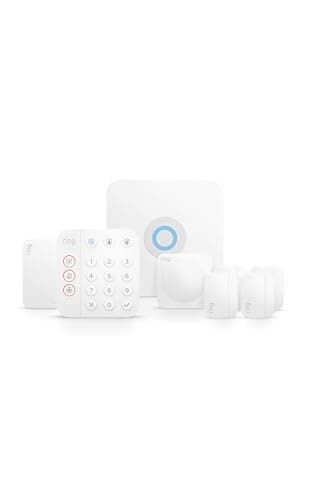
Ring Alarm and Cove are both DIY, no-contract security systems, which is why they end up on the same shortlist. Both install yourself with adhesive sensors and an app, both let you skip a long-term agreement, and both have satisfied owners. So this isn't a case of one being a "real" alarm and the other a toy - they're genuinely in the same category. The differences that decide it are narrower and more practical: whether you can self-monitor for free, how big the accessory ecosystem is if you want to grow the system, and - the part most comparison pages hide - where you can actually buy each one. We'll be upfront: our buy links go through Amazon, and the Ring Alarm is sold there while Cove is sold direct from its own site. So there's a real buy button for Ring here and not for Cove. We'll still give you the straight comparison.
Self-monitoring: Ring is free, Cove leans on plans
This is the clearest split between the two. Ring lets you self-monitor at no cost, indefinitely: arm the system, trip a sensor, and the base station sirens while your phone gets an alert - no plan, no fee. That's a real advantage for anyone comfortable responding to their own alerts. Cove is a no-contract system too, but its experience is built around its monitoring plans; the remote and app features tend to center on paying for a plan rather than a robust free tier. If running with no monthly fee matters to you, confirm exactly what Cove's no-plan mode includes on its own site before deciding. For the full argument on when free self-monitoring is genuinely enough, see our best no-subscription systems roundup - it's the money page if avoiding a monthly bill is your whole goal.
Ecosystem: Ring is far larger
Both systems handle the basics the same way - door/window sensors, motion sensors, a base station and a keypad - but Ring's ecosystem is in a different league. It has the widest accessory catalog of any DIY system, so you can add more sensors, extra keypads, and Ring cameras and doorbells over the years, all from one app. It also plugs deep into Alexa, so you can arm, disarm and check status by voice on any Echo. Cove's hardware range and smart-home integrations are narrower, which is fine if you want a simple, focused system, but limiting if you plan to build out coverage over time. If you like the idea of a system you can keep expanding, that ecosystem depth is a big reason Ring leads our best DIY home security systems ranking.
Contracts and monitoring cost
Neither system locks you into a multi-year contract, which is a point in both their favor and a big reason to prefer either over a traditional provider like Vivintor ADT. Where they differ is the shape of the optional monitoring: Ring's professional monitoring is inexpensive and strictly optional on top of a free tier, while Cove's value proposition is more tied to subscribing to one of its plans. We're not going to quote figures for either - plan pricing moves - so confirm current pricing on Cove's site and on Ring's plans page before you buy. If you're still weighing whether to pay for monitoring at all, our do you need a monitoring plan guide is the place to start.
Install and everyday use
Both are true DIY: no drilling into wiring, adhesive sensors, and app-guided setup you can finish in an afternoon. Cove is often praised for a friendly, guided onboarding experience, and that's a fair strength if hand-holding matters to you. Ring's setup is equally approachable, and once you're running, the payoff is the breadth of what you can do from a single app - alarm, cameras, doorbells, and voice control all in one place. Neither system works with Apple HomeKit, so an iPhone-first household that wants the alarm in the Home app should look at the abode iota instead.
Long-term ownership: which is easier to live with
A security system is something you live with for years, so it's worth thinking past the unboxing. Ring's advantage compounds over time: because the accessory catalog is so deep and everything runs through one well-supported app, adding a sensor to a new room, dropping in a camera, or handing voice control to the household stays straightforward years down the line. Cove's more focused range is simpler at the start but gives you less to grow into, and because the experience leans on its plans, the shape of your ongoing relationship with it is more subscription-driven. Neither is a wrong choice - a smaller, simpler system genuinely suits some homes - but if you expect your needs to change, Ring gives you more room to adapt without starting over. And if you're not yet sure how a DIY alarm fits alongside cameras and other gear, our home security system basics guide lays out how the pieces work together before you commit to a platform.
Why we point you to Ring
To be plain about it: our buy links go through Amazon, and Ring is on Amazon while Cove is sold direct. That's part of why Ring is our pick here - but it isn't the only reason, and we wouldn't recommend it if the value weren't real. Ring genuinely self-monitors free, has the deepest accessory ecosystem in DIY, and offers inexpensive optional monitoring with no contract - which is why it also leads our main systems roundup. If you'd rather buy Cove after reading this, that's a perfectly reasonable choice - you'd just do it on Cove's own site.
Buy Ring if...
You want to self-monitor free to start, you like having the largest accessory ecosystem to grow into, your home uses Alexa, or you simply want a proven kit you can order today with a live price. That covers most buyers, which is why Ring is our recommendation between the two. The full write-up is in the Ring Alarm review, and if you want a version with a built-in router and stronger backup, the Ring Alarm Pro steps up from there.
Consider Cove if...
You specifically prefer Cove's hardware or its guided, plan-centric experience and don't mind buying direct and leaning on a monitoring plan. It's a legitimate no-contract DIY system - just one you'd buy from Cove rather than through us, and one where you should confirm current plan pricing on Cove's own site first. And if neither quite fits because you want Apple HomeKit or an all-in-one with a built-in camera, weigh both against the field in our Ring Alarm vs abode iota comparison.
What both get right
Whichever you choose, you get a contract-free DIY kit you install yourself and can cancel monitoring on at any time - that alone puts both ahead of the old-school, locked-in providers. Both use adhesive sensors and app-guided setup, both let you add professional dispatch if life changes, and both are backed by real companies rather than fly-by-night brands. So this isn't a decision you can get badly wrong; it's a decision about fit. If you want the biggest ecosystem, free self-monitoring and a system you can buy in one click, Ring is the clearer pick and our recommendation. If a simpler, guided, plan-led experience appeals more and you're happy to buy direct, Cove is a fair alternative. Either way, confirm each brand's current plan pricing on its own site before you commit, since rates move. For the wider cost picture across the whole category, our cost guide does the math.