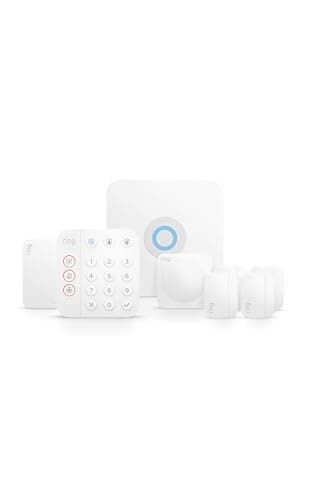
Ring and ADT sit at opposite ends of the home-security spectrum, which is exactly why people cross-shop them. Ring Alarm is a contract-free DIY kit: you install it yourself in an afternoon, you can self-monitor it for free, and any professional monitoring you add is optional and month to month. ADT is the classic full-service model: a technician installs the system, a monitoring center watches it around the clock, and you typically commit to a multi-year agreement. Neither is "better" in the abstract - they solve the problem differently, and the right answer depends on how hands-on you want to be and what you're willing to pay every month. We'll be upfront about one thing too: our buy links go through Amazon, and the Ring Alarm is sold there while ADT is sold direct and through dealers, so there is a real buy button for Ring here and not for ADT. We'll still give you the straight comparison so you can decide either way.
Install: do it yourself, or have it done for you
This is the first real fork. The Ring Alarm is designed to be self-installed: the sensors are adhesive, the base station plugs into an outlet, and setup runs through the app with no drilling into your wiring. Most people finish in an afternoon, and if you move, you peel the system off the walls and take it with you. That's a genuine advantage for renters and for anyone who likes to tinker - and if the DIY route appeals to you in general, our best DIY home security systems roundup ranks Ring against the rest of the field.
ADT's pitch is the opposite: a professional shows up, installs and tests the system, and walks you through it. If the idea of mounting sensors and configuring an app yourself fills you with dread, that hands-off setup is worth something real. It also means someone else is accountable for the install being correct - a reassurance that matters more to some buyers than the savings of doing it themselves. If you're still deciding whether you even want the DIY route, our DIY vs monitored guide walks through the trade-off in depth.
Contracts: month to month vs a multi-year commitment
Ring has no contract. You buy the hardware, and if you want professional monitoring you turn it on and off whenever you like - there's nothing to cancel early and no penalty for walking away. ADT, by contrast, is typically sold on a multi-year monitoring agreement, priced on a custom quote rather than a flat published number. That commitment is part of what funds the pro install and the always-on service, but it also means you're locked in for a period, and the monthly professional-monitoring cost is generally higher than a DIY plan. We're not going to quote figures for either side - plan pricing moves and ADT's is quote-based anyway - so confirm current pricing on each company's own site before you commit. For a broader look at what a system actually costs over its life, see how much a home security system costs.
Monitoring: free self-monitoring vs full-service dispatch
Ring lets you self-monitor at no cost, forever: trip a sensor and the base station sirens while your phone gets an alert, with no plan required. If you want a monitoring center to watch the house and call for help when you can't, Ring offers that too - inexpensive, optional, and contract-free. ADT's whole identity is that full-service, professionally monitored experience: the monitoring center is the product, and dispatch is baked in from day one. If you travel a lot, aren't reliably reachable, or simply want a professional response you never have to think about, that always-on dispatch is exactly what you're paying the higher monthly cost for. Whether you personally need paid monitoring at all is its own question - we cover it in do you need a monitoring plan.
Ecosystem and flexibility
Ring plugs into the Alexa world and a very large accessory catalog, so you can add door sensors, keypads and Ring cameras from a single app over time. It does not work with Apple HomeKit and does not support Matter, so an iPhone-first household set on Home-app control should look elsewhere - the abode iotais the DIY kit that does HomeKit. ADT runs on its own professionally managed platform; its strength isn't tinker-friendly smart-home flexibility, it's a coherent, supported service. If you want a system you can extend and reconfigure yourself, Ring is the more flexible choice by a wide margin, which is part of why it leads our best home security systems ranking.
Who each one really suits
Step back from the spec sheet and the two systems sort into two kinds of buyer. Ring suits the person who wants control and flexibility: a renter who'll take the kit to the next apartment, an owner who likes adjusting things themselves, or anyone who bristles at a monthly bill they can't cancel. Because there's no contract and self-monitoring is free, the cost of trying Ring and changing your mind later is low. ADT suits the person who wants a decision made once and then handled: the install, the testing, the monitoring and the accountability all belong to the provider. For an older relative's home, a household that travels constantly, or anyone who simply doesn't want to think about security again, that fully managed experience can be worth the premium. Ask yourself honestly which of those two people you are - it predicts your satisfaction better than any feature list. If you're still not sure a system is worth it at all, our is a home security system worth it guide is a good gut check before you spend anything.
Why we point you to Ring
To be plain: our buy links go through Amazon, and Ring is on Amazon while ADT is sold direct and through dealers. That's part of why Ring is our pick here - but it isn't the only reason. For the majority of homes, a no-contract DIY kit that self-monitors free and offers inexpensive optional monitoring simply delivers more security per dollar than a multi-year full-service agreement. ADT earns its keep for a specific buyer: someone who wants the install and the monitoring entirely handled and is happy to pay a premium for that peace of mind. If that's you, ADT is a legitimate choice - you'd just buy it on ADT's own site, not here.
Buy Ring if...
You want to avoid a contract, you're comfortable installing the kit yourself (it's genuinely straightforward), and you like the idea of self-monitoring free with the option to add inexpensive 24/7 monitoring later. You also want a system you can extend yourself and, if you use Alexa, control by voice. That describes most buyers, which is why Ring is our recommendation between the two - and why it's the pick you can actually order here today. The full write-up is in the Ring Alarm review. If you want a version with a built-in router and stronger backup, the Ring Alarm Pro steps up from there.
Consider ADT if...
You want the whole thing handled - a technician who installs and tests the system, and a monitoring center that owns the experience end to end - and you're willing to sign a multi-year agreement and pay a higher monthly cost for that hands-off peace of mind. For a household that travels often, isn't reliably reachable, or simply doesn't want to touch any of the setup, ADT's full-service model is a legitimate, and sometimes better, fit. It's just one you'd buy direct from ADT rather than through us. And if you genuinely want a system with zero ongoing fees, weigh both against the field in our best no-subscription systems roundup - that's the money page if avoiding a monthly bill is the whole point.