If you live in a Google or Android household, most smart-lock roundups quietly work against you. They rank locks on Apple Home Key and HomeKit features your phone cannot use, and treat Google as an afterthought - or credit a lock with "works with Google" when the listing never actually says so. We hold every lock to one honest standard: we credit only the platforms a listing names. On that rule, four of the locks we cover claim Google directly on their own listings. This page is those four, ranked for a Google home - and it is defined as much by the popular lock we deliberately left off as by the ones we kept.
What "works with Google" actually means for a lock
Two things get blurred together, and the difference decides whether a lock belongs on this page. "Works with Google" should mean the lock's own listing names Google - that you can add it to the Google Home app, control it with a Google Assistant voice command, and fold it into your routines. That is the standard here. What it should not mean is a lock that only reaches Google indirectly - for instance, a Bluetooth lock that needs its maker's hub before Google ever sees it. That is a real caveat, not a clean Google integration, and the difference shows up the day your setup changes.
So the filter for this list is simple and strict: the lock's listing has to claim Google directly, as a first-class platform. Every pick here does. That is why you will not see the excellent Aqara U100 ranked as a Google lock even though it mentions Google - it reaches Google through its own hub rather than a built-in connection, which is a different promise. If you want the deeper map of how the assistants, HomeKit, hubs and Matter fit together, our smart lock ecosystem compatibility guide is the explainer behind this shortlist.
Why the Schlage Encode Plus is not on this page
This is the most important thing on the page, so we are being explicit about it. The Schlage Encode Plus is one of our favorite locks - it tops other lists we publish and it is our top pick for an Apple household. It is not on this page, and that is deliberate, not an oversight. The reason is our own honesty rule: the Encode Plus's listing names Apple HomeKit, Apple Home Key and Amazon Alexa - but it does not name Google. On a page whose entire promise is "locks that claim Google directly," a lock whose listing is silent on Google cannot appear, however good it is elsewhere.
This is the exact line that separates this page from its mirror image, the best smart locks for Apple Home page. There, the Encode Plus is the top pick, because it names Apple and Home Key. Here, that same lock is disqualified, because it does not name Google - while three locks that are absent or secondary on the Apple page (the Kwikset Halo, the Yale Assure Lock 2 and the retrofit August) become front-runners precisely because they do name Google. It is the same catalog of locks, filtered by a different question, and the Schlage falling out is the clearest proof that this page is filtered honestly rather than padded. If you run a mixed Apple-and-Google home, that is a genuine dividing line worth knowing before you buy - and the deep dive in our August vs Schlage comparisonspells out where the Schlage's ecosystem gaps bite.
The four locks that name Google, and how they differ
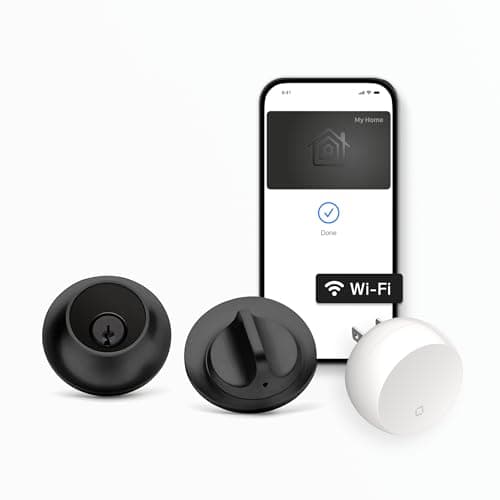
The Level Lock+ is the top pick, and the broadest. Its listing names the widest platform set of any lock here - Apple, Alexa and Google - so a Google home is fully covered and you are not boxed in if your setup shifts later. It is also the hidden one: nearly all the hardware lives inside the door, so it looks like an ordinary deadbolt from both sides, with built-in Wi-Fi and no hub. The trade is the flip side of that disappearing act - there is no exterior keypad by default, so entry is by phone, key card or physical key rather than a code you hand a guest. For a Google user who values looks and breadth over a keypad, it is the standout, which is why our full Level Lock+ review goes deeper on it.
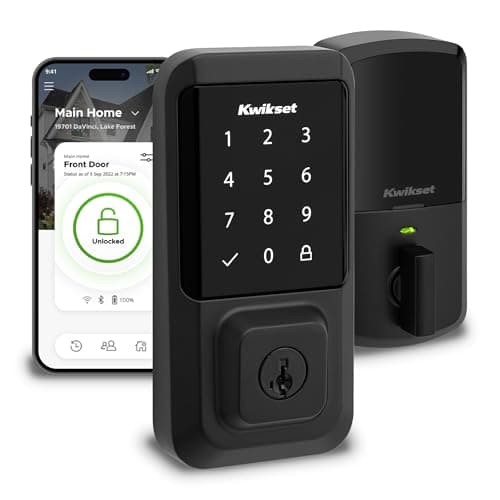
The Kwikset Halo is the simplest. It is a touchscreen-keypad deadbolt with Wi-Fi built into the lock, so Google voice, remote control and code management all work with no hub and no plan. It is also Grade AAA and UL listed - the physical-security credentials you actually want on a front door - and it installs easily. It names Alexa and Google, with no Apple and no Matter, which is a non-issue for a Google-first home and a hard stop for an Apple one. If you want the least fuss, this is the one; our Kwikset Halo review has the full picture.
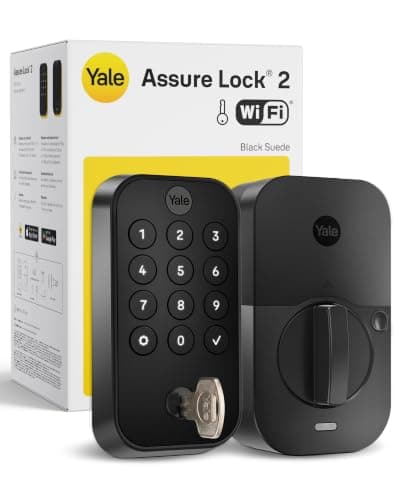
The Yale Assure Lock 2 is the flexible one. It is a clean full touchscreen deadbolt built on a swappable-module system, and this Wi-Fi configuration adds Google, Alexa and remote access through the included module. The appeal is that you can change how the lock connects later without buying a new lock, and it offers an optional keyed backup for anyone who wants a physical key as a fallback. The catch is that what you get depends on which module is fitted, so you have to read the exact variant before ordering - our Yale Assure Lock 2 review walks through the module system.
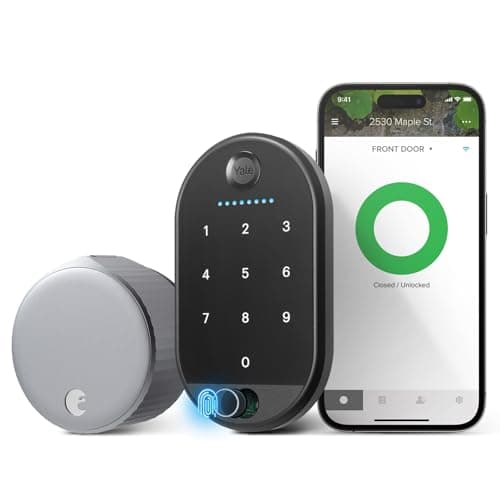
The August is the renter's answer. Unlike the other three, it does not replace your deadbolt - it retrofits onto the inside of your existing one, so the exterior face and your current keys stay exactly as they are. That makes it the pick for anyone who cannot change the door: a renter, or a homeowner who does not want to swap hardware. It has built-in Wi-Fi, names Alexa, Google and SmartThings, and the included Keypad Touch gives guests a code. Our August Wi-Fi Smart Lock review covers the retrofit approach in detail.
Own the door, or just rent it? That splits the list
The biggest practical fork is whether you can change the door hardware at all. If you own the door, three of these four replace your deadbolt with fresh, keyless hardware: the Level Lock+ hides inside the door, while the Kwikset Halo and Yale Assure Lock 2 give you a keypad on the exterior face. These full-replacement options are compared as a group in our best smart deadbolts roundup if you want to weigh only the locks that swap out the old bolt.
If you rent, or a landlord will not let you change the exterior, the retrofit Augustis built for you. It clamps onto the inside of the existing deadbolt, so the outside face and the landlord's keys are untouched, while you gain built-in Wi-Fi, Google control and - with the included Keypad Touch - code entry. It is the one lock here that lets a Google/Android renter run app control and codes without touching hardware their lease says they cannot. Every one of these also appears, ranked against locks for every use case, in our best smart locks overall guide.
A word on Matter, and on subscriptions
Two quick reassurances before the caveat. First, none of these four charges a subscription - Google voice, remote control, the keypad and code management are all part of the lock, not a monthly plan. That is the norm for smart locks and a genuine relief compared with the camera world, where the useful features often live behind a fee. For a Google home you can buy any of these and never see a recurring charge for the lock itself.
Second, a note on Matter for anyone future-proofing. None of these four listings claims Matter as of our review date - the Kwikset Halo reads a plain "No," and the others read "Not listed" - so we do not credit any of them with it. That does not affect Google today: all four work through the Google Home app and Google Assistant right now. But if a cross-ecosystem Matter lock is on your must-have list, none of these is the one that promises it, so confirm the exact model and firmware before you buy rather than assuming a future upgrade will appear.
The honest caveat
The same caveat sits on every page here: we do not run a lock lab. We built this list from each lock's own Amazon listing and manufacturer documentation, recorded only the platforms and features each one actually names, and marked anything a listing left unsaid as "Not listed" rather than assuming it. That discipline is exactly why the Schlage Encode Plus is off this page - its listing does not name Google, so we do not claim it does. This is a researched roundup, not a hands-on test, and where a listing goes quiet on Google, so do we.
Start with the door you are allowed to change
Before ecosystem, before features, answer one question: can you replace the exterior hardware? If you own the door, yes - and a full-replacement lock (the hidden Level, or the keypad Kwikset or Yale) gives you fresh hardware and, on the two keypad picks, a code pad built into the outside face. If you rent the unit or a landlord says no, the retrofit Augustis the only pick here that works without touching the exterior, since it mounts on the inside and adds Google control and a guest keypad without replacing the landlord's lock. This single question removes most of the field before you even think about voice assistants.
Then decide how much hardware you want to manage
For a Google home, favor built-in Wi-Fi so the lock reaches Google Home directly with nothing extra to power and place. The Level Lock+, Kwikset Halo and August all connect directly with no separate hub, so Google voice and remote control work out of the box. The Yale Assure Lock 2does the same through its included Wi-Fi module - which is genuinely built-in for this configuration, just implemented as a swappable card you can upgrade later. None of these four needs a maker's bridge sitting between the lock and Google, which is exactly why they made this page and a hub-dependent lock did not.
Then choose keypad, hidden, or retrofit - and a backup
Now the shape of the lock. If you want a code pad so guests and helpers can enter without your phone, the Kwikset Halo and Yale Assure Lock 2 are your keypad picks, and the Yale adds an optional keyed backup if you like a physical key as a fallback. If you would rather the lock vanish into the door and you do not need a keypad, the Level Lock+ is the reason this list has a hidden option - just remember entry is then by phone, key card or key. And if you cannot alter the door at all, the August retrofit is the answer, keypad included. On ecosystem, all four name Google directly, so a Google/Android home is covered whichever you pick; only the Level also adds Apple Home Key if your household is mixed. Because an internet blip should never leave you locked out, read our do smart locks work without Wi-Fi guide so you know what each of these still opens on the keypad when the connection drops. And if you are still weighing Google against the other platforms, our best smart locks for Apple Home page is the mirror of this one for an iPhone household.