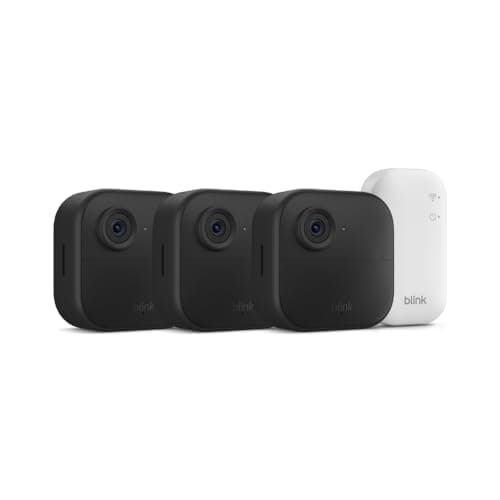
These two wireless cameras get cross-shopped constantly, but they sit at opposite ends of the same shelf. The Reolink Argus 4 Pro is a premium 4K solar camera built to run for years with no subscription and its own local storage. The Blink Outdoor 4 is a budget battery camera, often sold in multi-camera kits, that leans on Alexa and - for saved clips - either a subscription or an add-on module. So "which is better" is really "how much detail and independence do you want, and how little do you want to spend up front" - and once you frame it that way, the winner for you is usually clear.
The verdict up front
For most buyers who plan to keep a camera for years, the Reolink Argus 4 Pro is the better long-run value, and that is why it is our pick. It records 4K through a dual-lens 180-degree view, sees in color at night with ColorX, and saves everything to an expandable microSD card with no monthly fee - so the price you pay up front is close to the price you pay, ever. A solar panel tops the battery up, so it is genuinely mount-and-forget. If you want the most detail and the least ongoing cost, buy the Reolink.
The Blink Outdoor 4 wins on the two things the Reolink cannot touch: the lowest upfront cost - especially in a multi-camera kit - and deep, native Alexa integration. If you already live in Alexa, want to blanket a property with several cameras cheaply, and are comfortable either paying a small subscription or adding a Sync Module 2 with a USB drive to keep clips locally, the Blink is not a compromise - it is the right tool. It is 1080p rather than 4K and its night vision is black-and-white infrared, but for a lot of homes that is plenty. Both cameras also appear in our best outdoor cameras roundup, in the context of the wider field.
Storage and the true cost over time
This is the sharpest practical difference, and it is where the Reolink earns its price back. The Argus 4 Pro records to a microSD card you can expand, with no subscription - the footage lives in the camera, and the cost stops at the hardware. The Blink is different: to save clips off the camera you either pay for a Blink Subscription Plan or add a Sync Module 2 and plug a USB drive into it to store them locally. Neither of those is a trap, but both are a line item the Reolink simply does not have. Over a few years, a "cheaper" camera on a plan can quietly cost more than a pricier one that stores locally for free.
If keeping footage local and fee-free matters to you, that tilts the decision hard toward the Reolink - and if you go Blink, plan on the Sync Module 2 route rather than the subscription to match it. We walk through this exact math on the subscription costs page and the local vs cloud storage guide, and the no-subscription cameras roundup ranks the options that avoid a monthly fee entirely.
Resolution and night vision
The Reolink shoots 4K through a dual-lens, 180-degree setup; the Blink shoots 1080p HD. That gap shows up the moment you need to zoom - a face at the gate, a plate at the curb, a package on the step. 4K gives you far more pixels to crop into, which is the whole point of buying detail rather than just presence. For a wide driveway or a long approach, the Reolink's resolution and 180-degree view do real work that 1080p cannot match. See our 2K vs 4K explainer for how much that difference matters in practice, and the best 4K cameras roundup for the high-resolution field.
At night the difference is just as clear. The Reolink lists ColorX color night vision, so it can render a scene in color after dark; the Blink lists infrared night vision, which is the classic black-and-white image. Color at night is genuinely more useful for identifying clothing or vehicles - but it typically wants some ambient light to work with, so the win is real but conditional. Our night vision guide explains exactly when color beats infrared and when it does not, which is worth reading before you assume color always wins.
Power: both wire-free, but not the same
Both cameras skip the outlet, which is why they both qualify as easy, mount-anywhere installs. But they get there differently. The Reolink is a solar camera: the panel trickle-charges the battery, so in a reasonably sunny spot you rarely think about charging at all. The Blink runs on batteries rated for up to two years, which is excellent, but when they run down you swap them rather than letting the sun do the work - the base listing does not name a solar panel. Both are simple to place; the Reolink just leans harder on "set it and forget it," and the Blink on "change the batteries every couple of years." For the fully wire-free, self-charging category, our best solar cameras page is the place to start.
Ecosystem and weatherproofing
On the smart-home side, the Blink has the clear edge for one specific home: it works with Alexa, so you can pull a live feed onto an Echo Show and fold it into routines. The Reolink's listing does not name Alexa, Google or Apple Home - it lives in the Reolink app. So if voice-assistant integration is central to how you run your house, that is a point for the Blink; if you mostly open an app to check a feed, it matters less. Neither camera lists Matter, which is expected - Matter does not cover cameras yet. The full picture for both is in our camera ecosystem compatibility guide. On weatherproofing, the Reolink is rated IP66 and the Blink IP65; both are built for the outdoors, with the Reolink carrying a slightly higher dust-and-water rating on paper.
So which one?
Want the most detail, color at night, and footage that stores locally for free with a solar panel doing the charging? Buy the Reolink Argus 4 Pro - it costs more up front but asks for almost nothing after. Want the lowest price, a multi-camera kit to cover a whole property, and deep Alexa integration, and are you fine with 1080p, infrared night vision, and either a plan or a Sync Module for saved clips? Buy the Blink Outdoor 4. There is no universally better camera here - there is the premium, no-fee, high-detail pick and the cheap, Alexa-native, cover-everything pick. Each has a dedicated review (Reolink / Blink), and if a different rival is on your list, we also compare the Blink against the eufy SoloCam S340 and the Reolink against that eufy.
The honest caveat, the same on every page here: we did not lab-test these cameras. The resolution, power, storage and compatibility points above come from reading each product's Amazon listing and manufacturer documentation on August 1, 2026 - not from our own bench testing. Where a judgment would need hands-on time, we say so; the full method is on the methodology page.